

White-throated Honeyeater vs Black-headed Honeyeater
Melithreptus albogularis contro Melithreptus affinis
Fai un quiz con White-throated Honeyeater e Black-headed Honeyeater
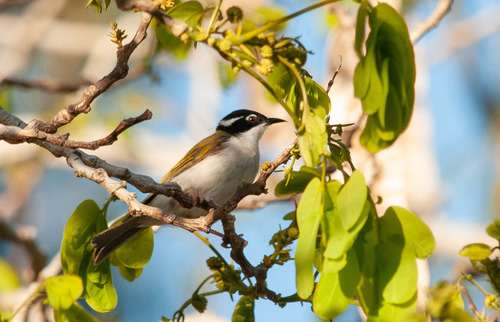 White-throated Honeyeater
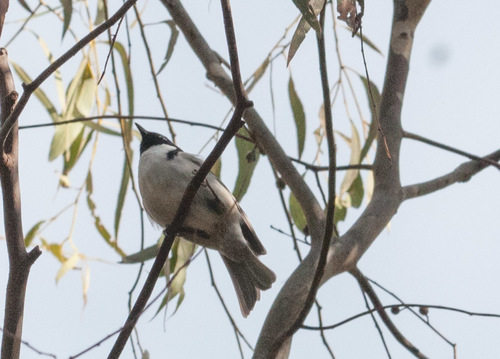 Black-headed Honeyeater
In breve
Il modo più affidabile per separare il White-throated Honeyeater dal Black-headed Honeyeater è la distribuzione: il White-throated si trova nel nord e nell'est dell'Australia e in Nuova Guinea, mentre il Black-headed è endemico della Tasmania. Se visto al di fuori della Tasmania, è quasi certamente un White-throated. In un confronto diretto, entrambi sono piccoli Melithreptus honeyeaters con teste nere e parti inferiori bianche, ma il White-throated mostra una striscia bianca diagnostica sulla nuca e una macchia pallida (blu-bianca) sopra l'occhio, mentre il Black-headed manca della striscia sulla nuca e ha una testa nera uniforme. Entrambe le specie sono simili in dimensioni e struttura, quindi i dettagli del piumaggio e la posizione sono fondamentali. Gli uccelli immaturi e adulti non sono descritti come differenti nel motivo delle ali superiori, quindi concentrati sui segni della testa e della nuca.
Consigli di identificazione
- La distribuzione è il primo controllo: Se sei in Tasmania, aspettati il Black-headed Honeyeater; se sei nel nord o nell'est dell'Australia continentale o in Nuova Guinea, aspettati il White-throated Honeyeater.
- Striscia bianca sulla nuca (solo White-throated): Cerca una striscia bianca netta sulla nuca—questa è assente nel Black-headed Honeyeater. Funziona per tutte le età e i sessi.
- Colore della macchia sopra l'occhio: Il White-throated mostra una macchia di pelle nuda blu-bianca sopra l'occhio; il Black-headed ha una testa nera uniforme senza una macchia sopra l'occhio in contrasto.
- Motivo della testa: La testa nera del Black-headed Honeyeater si fonde dolcemente nella gola e nelle parti inferiori bianche, mancando della striscia sulla nuca e della macchia sopra l'occhio del White-throated.
- Colore delle parti superiori: Il White-throated ha parti superiori di colore verde oliva o giallo-verde con un posteriore più giallo; il Black-headed non è descritto come avente questa colorazione—cerca un dorso di tonalità più neutra nel Black-headed.
- Becco, zampe e occhi: Entrambe le specie hanno becchi neri. Il White-throated ha occhi rosso-marroni e zampe viola-marroni, ma questi sono sottili e non facilmente visibili sul campo.
- Nessun utile motivo delle ali o del volo: Nessuna delle due specie è descritta come avente segni distintivi sulle ali superiori o nel volo a qualsiasi età. Non fare affidamento sul motivo delle ali per la separazione.
- Confusione giovanile/immatura: Non ci sono prove di differenze specifiche per età che confonderebbero queste due specie nel piumaggio immaturo o giovanile.
- Comportamento di foraggiamento: Entrambi foraggiano nel fogliame e possono appendersi a testa in giù, quindi il comportamento non è un separatore affidabile.
- Contesto dell'habitat: Nelle foreste sclerofille e nella savana del continente, aspettati il White-throated; nelle foreste temperate della Tasmania, aspettati il Black-headed.
- Dimensione dei gruppi: Il White-throated può essere visto in gruppi più numerosi; il Black-headed forma anche gruppi, ma questo non è un separatore forte.
- Confusione con specie simili: Se vedi un Melithreptus honeyeater con una macchia rossa sopra l'occhio, non è nessuna di queste specie (probabilmente un White-naped Honeyeater). Se vedi una macchia bianca sopra l'occhio ma nessuna striscia sulla nuca e sei in Australia Occidentale, considera il Gilbert's Honeyeater, ma le distribuzioni non si sovrappongono con queste due.
- Non usare il canto o il richiamo: Non ci sono differenze vocali diagnostiche descritte nelle fonti disponibili.
- La dimensione non è affidabile: Entrambi sono piccoli honeyeaters con proporzioni simili; non usare la dimensione come separatore.
- Sesso e stagione: Non ci sono differenze stagionali o sessuali descritte per nessuna delle due specie che influenzerebbero l'identificazione.
Taglia
Entrambe le specie sono simili in dimensioni e struttura complessive, tipiche dei Melithreptus honeyeaters. Il Black-headed Honeyeater ha una massa corporea media riportata di 15,4 g [wikidata], mentre la massa del White-throated Honeyeater non è specificata ma è all'interno della stessa gamma di piccoli honeyeaters (lunghezza 11,5–14,5 cm per il White-throated [wikipedia]). Sul campo, nessuna delle due specie è visibilmente più grande o più robusta dell'altra, e la dimensione non è un separatore affidabile.
Piumaggio
Le differenze nel piumaggio sono sottili ma diagnostiche. Il White-throated Honeyeater di tutte le età e sessi mostra una chiara striscia bianca sulla nuca (parte posteriore del collo), una macchia bianca o blu pallido di pelle nuda sopra l'occhio, e parti superiori di colore verde oliva a giallo-verde con un posteriore più giallo. La sua gola e le parti inferiori sono bianche. Il Black-headed Honeyeater, al contrario, manca della striscia bianca sulla nuca e della macchia sopra l'occhio pallida, presentando una testa nera uniforme che si fonde dolcemente nella gola e nelle parti inferiori bianche. Le sue parti superiori non sono descritte come olive o giallo-verdi, e non c'è menzione di un posteriore giallo. I piumaggi giovanili e immaturi non sono dettagliati per nessuna delle due specie nelle fonti, e non c'è menzione di segni distintivi sulle ali superiori o nel volo per nessuna età, quindi questi non sono utili per la separazione.
Comportamento
Entrambe le specie foraggiano attivamente nel fogliame, spesso in gruppi. Il Black-headed Honeyeater si specializza nella ricerca tra le foglie e a volte si appende a testa in giù mentre foraggia. I White-throated Honeyeaters foraggiano anche nella chioma o nel fogliame, non sulla corteccia, e sono noti per riunirsi in gruppi più numerosi. Sul campo, il loro comportamento di foraggiamento è piuttosto simile e non è affidabilmente diagnostico.
Habitat
L'habitat è un forte separatore. Il White-throated Honeyeater si trova in foreste sclerofille aperte e secche, savane e boschi del nord e dell'est dell'Australia e in Nuova Guinea. Il Black-headed Honeyeater è ristretto alla Tasmania, abitante di foreste temperate e macchie di tipo mediterraneo. Se sei al di fuori della Tasmania, è estremamente improbabile incontrare il Black-headed Honeyeater. All'interno della Tasmania, ci si aspetta solo il Black-headed, poiché il White-throated non si trova lì.
Voce
Entrambe le specie hanno richiami registrati, ma non sono descritte vocalizzazioni distintive nelle fonti disponibili. La voce non è un segno di campo affidabile per la separazione basata sulle informazioni attuali.
White-throated Honeyeater · Black-headed Honeyeater · I miei uccelli difficili