
White Tern vs Black Noddy
Gygis alba contro Anous minutus
Fai un quiz con White Tern e Black Noddy
 White Tern
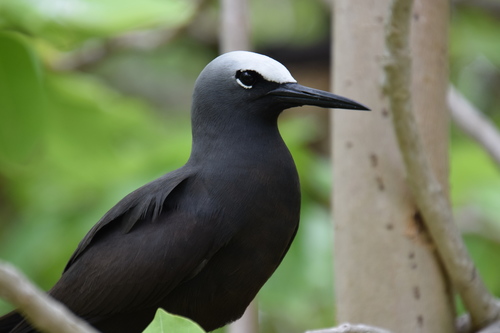 Black Noddy
In breve
Il modo più affidabile per separare il White Tern dal Black Noddy è attraverso il piumaggio complessivo: il White Tern è completamente bianco (adulti), mentre il Black Noddy è di un marrone scuro fino al nero con un cappello bianco a contrasto. Anche da lontano o in volo, il corpo e le ali bianche del White Tern si distinguono, mentre il Black Noddy mostra sempre un corpo scuro con una corona chiara. I giovani White Tern sono bianchi con alcune macchie grigie, ma non si avvicinano mai all'aspetto scuro complessivo di un noddy. Il colore e la forma del becco, così come la struttura della coda e delle ali, forniscono ulteriori indizi se il piumaggio è oscurato. Queste specie possono sovrapporsi su isole tropicali, ma il loro aspetto è notevolmente diverso in tutti i piumaggi.
Consigli di identificazione
- Overall color: Il White Tern è completamente bianco in tutti i piumaggi tranne che nei giovani, che sono bianchi con alcune macchie grigie; il Black Noddy è sempre di un marrone scuro fino al nero con un cappello bianco. Questo è il segno di campo più rapido e affidabile.
- Crown and cap: Il Black Noddy ha un cappello bianco ben definito che contrasta con il viso e il corpo scuri; il White Tern non ha alcun cappello o corona a contrasto, rimanendo bianco in tutto.
- Bill: Entrambi hanno becchi neri, ma quello del White Tern è più lungo, più snodato e talvolta bluastro alla base; il becco del Black Noddy è più corto e più robusto.
- Eye and lores: Il White Tern ha un occhio nero con un anello di piume nere stretto; il Black Noddy ha lore scure (l'area tra l'occhio e il becco), che accentua ulteriormente il cappello bianco.
- Tail shape: La coda del White Tern è leggermente biforcuta, con le piume più lunghe che sono la seconda dall'esterno; la coda del Black Noddy è più squadrata o leggermente incisa, mai profondamente biforcuta.
- Wing shape and flight: Il White Tern ha ali lunghe e appuntite e uno stile di volo galleggiante ed elastico; le ali del Black Noddy sono anch'esse lunghe e appuntite, ma il suo volo è più stabile e diretto.
- Juvenile confusion: Il giovane White Tern è bianco con macchie grigiastre, mai scuro nel complesso; il giovane Black Noddy è scuro con un cappello bianco, proprio come l'adulto.
- Perching behavior: Il White Tern spesso si posa in luoghi esposti su rami sottili o fili; il Black Noddy preferisce sporgenze o posatoi più densi in colonie.
- Habitat context: Entrambe le specie si trovano su isole tropicali, ma il White Tern è più probabile che venga visto singolarmente o in coppie, mentre il Black Noddy è spesso in gruppi più grandi o colonie.
- Leg color: Il White Tern ha gambe di un grigio scuro fino a un grigio chiaro a seconda della sottospecie; le gambe del Black Noddy sono nere (eccetto arancioni in alcune sottospecie, non rilevanti per la maggior parte degli incontri sul campo).
- Facial pattern: Il Black Noddy mostra una piccola mezzaluna bianca sotto l'occhio e una macchia bianca sopra, aggiungendo all'aspetto con cappello; il viso del White Tern è bianco semplice tranne che per l'anello dell'occhio.
- Nest placement: Il White Tern è famoso per deporre le uova direttamente su rami nudi senza un nido; il Black Noddy costruisce un nido su sporgenze o alberi.
- Size impression: Il Black Noddy ha un corpo più lungo e può apparire più grande, ma il White Tern ha un'apertura alare più lunga e appare più delicato.
- No seasonal or sex differences: Non ci sono differenze significative stagionali o sessuali nel piumaggio per nessuna delle due specie che influenzerebbero l'identificazione.
- No voice cues: Le vocalizzazioni non sono distintive o descritte nelle fonti per la separazione sul campo tra queste due specie.
Taglia
Il White Tern è leggermente più piccolo e leggero: misura 23–30 cm di lunghezza con un'apertura alare di 76–87 cm e una massa corporea di circa 138 g. Il Black Noddy è più lungo (35–37 cm), ma con un'apertura alare leggermente più corta (66–72 cm) e una massa simile (98–144 g). Sul campo, il Black Noddy può apparire più allungato a causa del suo corpo e della sua coda più lunghi, ma l'apertura alare più grande del White Tern e il suo piumaggio completamente bianco possono farlo apparire più galleggiante e delicato in volo.
Piumaggio
-
Adults: Il White Tern è completamente bianco, con solo una stretta striscia scura lungo i fusti delle primarie esterne in alcune sottospecie (G. a. candida), e un occhio nero con un sottile anello di piume nere. Il Black Noddy è di un marrone scuro fino al nero su gran parte del corpo, con un cappello bianco ben definito e una piccola mezzaluna bianca sotto ogni occhio e una macchia bianca sopra. Le lore sono scure, non chiare. Il becco è nero in entrambi, ma quello del White Tern è più lungo e più snodato, talvolta bluastro alla base.
-
Juveniles: Il giovane White Tern è bianco, macchiato di grigio o grigio-marrone, ma mai scuro nel complesso. Il giovane Black Noddy assomiglia all'adulto, rimanendo scuro con il cappello bianco. Non ci sono schemi di ali superiori legati all'età in nessuna delle due specie che causerebbero confusione: entrambe mancano di pannelli, triangoli o bordi di coda a contrasto tipici di altri terns.
-
In flight: Il White Tern mostra sempre un aspetto bianco splendente, mentre il Black Noddy è scuro con un cappello bianco visibile dall'alto e di lato. La coda del White Tern è leggermente biforcuta, con le piume più lunghe che sono la seconda dall'esterno, mentre la coda del Black Noddy è più troncata.
Comportamento
Il White Tern spesso si posa su rami sottili, fili o anche ramoscelli nudi, talvolta in posizioni esposte, ed è famoso per nidificare su rami aperti senza un nido. Il Black Noddy tende a posarsi su sporgenze o in colonie dense, spesso su substrati rocciosi o in alberi, ma di solito non è così esposto come il White Tern. In volo, il White Tern è galleggiante e grazioso, con battiti d'ala profondi ed elastici, mentre il Black Noddy vola con battiti d'ala più stabili e diretti e spesso cerca cibo in gruppi.
Habitat
Entrambe le specie sono uccelli marini tropicali trovati su isole coralline e atolli. Il White Tern è più probabile che venga visto nidificare su piccoli rami, fili o anche strutture artificiali, mentre il Black Noddy preferisce nidificare in colonie su sporgenze rocciose o in alberi, talvolta in aggregazioni più dense. I loro areali possono sovrapporsi su alcune isole, ma il White Tern è più probabile che venga visto da solo o in coppie, mentre il Black Noddy è spesso in gruppi più grandi.