

White-faced Storm-Petrel vs White-bellied Storm-Petrel
Pelagodroma marina contro Fregetta grallaria
Fai un quiz con White-faced Storm-Petrel e White-bellied Storm-Petrel
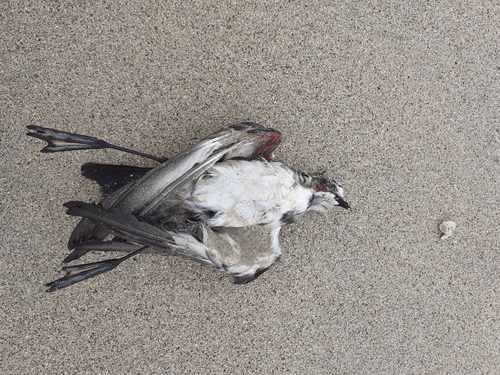 White-faced Storm-Petrel
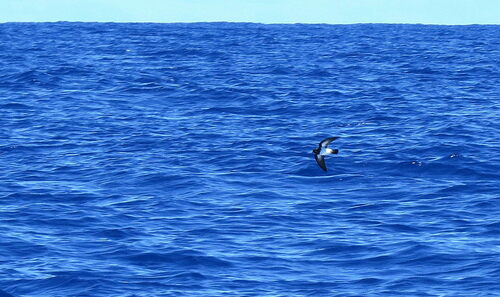 White-bellied Storm-Petrel
In breve
The most reliable field mark for separating White-faced Storm-Petrel from White-bellied Storm-Petrel is the distinctive white face with a black eye mask of the former, visible even at a distance, compared to the more variable, often darker-faced White-bellied. Juvenile White-faced Storm-Petrels may show broader pale fringes above but always retain the white face. In flight, White-faced Storm-Petrel's unique pattering gait—bouncing on long legs with wings outstretched—is diagnostic, while White-bellied Storm-Petrel flies more conventionally. Both are small, black-and-white storm-petrels, but differences in face pattern, rump, and flight style are key for confident identification.
Consigli di identificazione
- White face with black eye mask (all ages): Only White-faced Storm-Petrel shows a crisp white face with a dark mask around the eye, reminiscent of a phalarope. White-bellied Storm-Petrel's face is variable but never as cleanly white or masked.
- Flight style (all ages): White-faced Storm-Petrel constantly patters or bounces on the water with long legs, wings outstretched—look for this 'kangaroo' gait. White-bellied Storm-Petrel flies more like a typical storm-petrel, with less foot contact and more gliding.
- Rump color (adults, some subspecies): White-faced Storm-Petrel may show a pale grey or white rump (subspecies-dependent), while White-bellied Storm-Petrel has white upper tail coverts but a generally darker upper rump. Subspecies variation can blur this mark, so use with caution.
- Tail shape (adults, some subspecies): Most White-faced Storm-Petrels have a square tail, but New Zealand birds (P. m. maoriana) have a forked tail. White-bellied Storm-Petrel is usually square-tailed. Tail shape alone is not always reliable.
- Upperparts tone (all ages): White-faced Storm-Petrel is paler brown-grey above, especially on the back and rump, compared to the more uniformly blackish upperparts of White-bellied Storm-Petrel.
- Underparts (all ages): Both are white below, but White-faced Storm-Petrel's white extends up the face and breast sides, while White-bellied may show more variation and sometimes dark flanks or a darker face.
- Bill and legs (structure): Both have dark, fine bills and long legs, but White-faced Storm-Petrel's legs are especially long and often obvious as it patters. Toes of White-bellied Storm-Petrel do not usually project beyond the tail.
- Juvenile marks: Juvenile White-faced Storm-Petrel may show broader pale fringes above and a shallower tail fork (in New Zealand birds), but the white face remains. Juvenile White-bellied Storm-Petrel is not described as differing from adult.
- Size: White-bellied Storm-Petrel is slightly heavier and longer-winged, but overlap is substantial—do not rely on size alone.
- Face pattern pitfalls: Beware of White-bellied Storm-Petrels with paler faces; they never show the crisp white mask of White-faced. In poor light, the mask of White-faced can be less obvious, so combine with flight style.
- Subspecies confusion: Some White-faced Storm-Petrel subspecies (e.g., P. m. albiclunis) have white rumps and upper tail coverts, which can resemble White-bellied. Use face pattern and flight style for confirmation.
- Behavioral context: If you see a storm-petrel skipping or bouncing for long periods, it's almost certainly White-faced. Short, shallow pattering is not diagnostic.
- Habitat: Both occur in similar pelagic zones; do not use habitat alone for separation.
- Voice: Both are essentially silent at sea; calls are not useful for separation.
- Sex/season: No sexual or seasonal plumage differences in either species; all field marks apply year-round and to both sexes.
Taglia
White-bellied Storm-Petrel is slightly heavier (49.5 g vs 40.0 g) and has a marginally longer wingspan (46–48 cm vs 41–44 cm) than White-faced Storm-Petrel, but these differences are subtle and rarely diagnostic at sea. Both are similar in overall length (White-faced: 19–21 cm; White-bellied: 18–20 cm). Size overlap is considerable, so use structure and plumage first.
Piumaggio
- Juveniles: Both species' juveniles resemble adults, but juvenile White-faced Storm-Petrels may show larger pale fringes and tips on upperparts, and a shallower tail fork (notably in New Zealand birds). However, the white face remains obvious at all ages. Juvenile White-bellied Storm-Petrels are not described as differing from adults; no age-specific upperwing pattern is noted for either species.
- Adults: White-faced Storm-Petrel is pale brown to grey above with black flight feathers, white below, and a striking white face with a black eye mask. The rump is pale grey or white depending on subspecies. White-bellied Storm-Petrel is black above, white below, with white upper tail coverts and a polymorphic face—sometimes dark, sometimes paler, but never with the crisp white face and mask of White-faced. Tail is usually square in both, but some White-faced subspecies (e.g., New Zealand) have a forked tail. White-bellied's face pattern is variable and can be misleading, but it never matches the phalarope-like mask of White-faced.
Comportamento
White-faced Storm-Petrel is famous for its constant pattering on the water, using long legs to bounce or 'skip' across the surface with wings outstretched—this behavior is frequent and distinctive. In strong winds, it swings side-to-side, gliding with one leg lowered. White-bellied Storm-Petrel, while also a surface feeder, does not show this extreme pattering and moves more like a typical storm-petrel, with less frequent foot contact and more conventional flight. The difference in flight style is often the clincher at sea.
Habitat
Both species are pelagic and overlap widely in southern oceans, including Australia and New Zealand. Habitat is not a reliable separator, though White-faced Storm-Petrel is often noted closer to southern Australia and New Zealand, while White-bellied is more widespread but less well-known at sea. Both can occur in similar open ocean contexts.
Voce
White-bellied Storm-Petrel is usually silent at sea, occasionally giving soft, high-pitched twittering calls at the nest. No field-relevant vocal differences are noted for White-faced Storm-Petrel, and both are essentially silent for identification purposes at sea.
White-faced Storm-Petrel · White-bellied Storm-Petrel · I miei uccelli difficili