

White-crowned Forktail vs Bornean Forktail
Enicurus leschenaulti contro Enicurus borneensis
Fai un quiz con White-crowned Forktail e Bornean Forktail
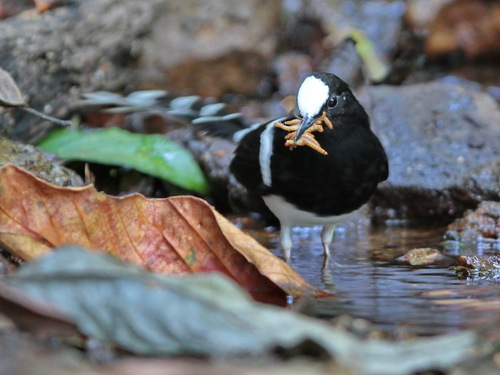 White-crowned Forktail
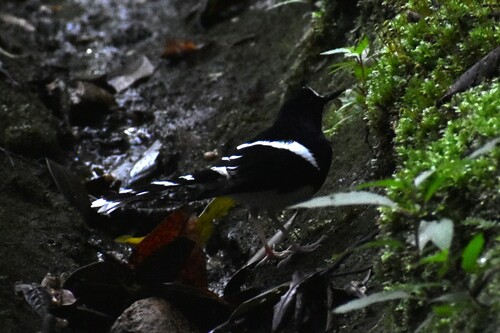 Bornean Forktail
In breve
Il segno distintivo più affidabile tra il White-crowned Forktail e il Bornean Forktail è l'estensione del bianco sulla testa: il White-crowned Forktail mostra una prominente macchia bianca sulla corona, mentre il Bornean Forktail ha una fronte bianca ridotta che non si estende sulla corona. Anche il modello della coda è diagnostico: il White-crowned Forktail ha cinque macchie bianche sulla coda, il Bornean Forktail ne ha quattro. Entrambi sono uccelli stravaganti in bianco e nero lungo i corsi d'acqua con code lunghe e profondamente forked, ma il White-crowned Forktail è più grande e si trova in foreste di pianura e montane in un ampio raggio asiatico, mentre il Bornean Forktail è endemico ai corsi montani di Borneo. Le piume giovanili non sono descritte in dettaglio per il Bornean Forktail, ma i giovani White-crowned Forktail mancano della corona bianca e sono complessivamente più marroni, il che può causare confusione.
Consigli di identificazione
- Bianco sulla testa (Adulti): Il White-crowned Forktail ha una corona e una fronte bianche audaci, mentre il bianco del Bornean Forktail è limitato alla fronte e non si estende sulla corona. Questo è il segno più consistente negli adulti.
- Conteggio delle macchie sulla coda: Conta le macchie bianche sulla coda: il White-crowned Forktail ha cinque, il Bornean Forktail ne ha quattro. Questo è meglio visibile quando la coda è aperta o in volo.
- Lunghezza e struttura della coda: Entrambi hanno code lunghe e profondamente forked, ma la coda del Bornean Forktail è proporzionalmente più lunga rispetto al suo corpo più piccolo. Il White-crowned Forktail è complessivamente più grande e massiccio.
- Trappola giovanile: Il giovane White-crowned Forktail manca della corona bianca ed è più marrone sopra e sui fianchi, potenzialmente somigliando al Bornean Forktail se si controlla solo il modello della testa. Tuttavia, il conteggio delle macchie sulla coda e la dimensione complessiva aiutano ancora a separarli.
- Colore del mantello: Entrambi hanno un mantello nero solido, quindi questo non è un punto di separazione tra questi due (ma utile contro altri forktails).
- Modello delle ali: Il White-crowned Forktail ha una forte banda bianca attraverso le copritrici maggiori; il Bornean Forktail non è descritto in dettaglio, ma probabilmente è simile: non fare affidamento solo su questo.
- Becco e piedi: Entrambi hanno becchi neri e piedi rosati; questi non sono utili per la separazione.
- Voce: I richiami differiscono sottilmente, ma a meno che tu non sia familiare con entrambi, non fare affidamento sulla voce per la separazione.
- Habitat e distribuzione: Se ti trovi a Borneo in una foresta montana sopra le pianure, ci si aspetta di vedere il Bornean Forktail. Nella foresta di pianura o al di fuori di Borneo, è quasi certamente il White-crowned Forktail.
- Variazione delle sottospecie: Alcune sottospecie di White-crowned Forktail (ad es., frontalis) hanno una macchia bianca sulla corona più piccola, che può avvicinarsi all'aspetto del Bornean Forktail: usa il conteggio delle macchie sulla coda e la dimensione per la conferma.
- Contesto: Il White-crowned Forktail può essere trovato in una varietà più ampia di habitat umidi, inclusi i letti degli animali e i fossati, mentre il Bornean Forktail è legato a corsi d'acqua montani incontaminati.
- Viste in volo: In volo, concentrati sul conteggio delle macchie sulla coda e sull'estensione del bianco sulla testa; questi sono visibili anche da lontano.
- Viste in posa: Cerca la corona bianca (White-crowned Forktail) rispetto a una semplice fronte bianca (Bornean Forktail) e alla massa complessiva.
- Stagionalità: Il White-crowned Forktail può spostarsi in altitudine stagionalmente ed è più probabile incontrarlo in inverno in alcune parti della sua distribuzione; il Bornean Forktail è residente nella montagna di Borneo.
- Trappola comune: Il giovane White-crowned Forktail può essere scambiato per un Bornean Forktail a causa della mancanza della corona bianca: usa la dimensione, l'habitat e soprattutto il conteggio delle macchie sulla coda per evitare questo errore.
Taglia
Il White-crowned Forktail è il forktail più grande, misurando 25–28 cm di lunghezza e mediando 34 g di massa ([wikipedia], [wikidata]). Il Bornean Forktail è descritto come più piccolo, ma non sono fornite misurazioni precise; tuttavia, si nota che ha una coda più lunga rispetto alla dimensione del corpo. In un confronto diretto, il White-crowned Forktail apparirà più massiccio e lungo nel complesso, specialmente quando è in posa o in volo.
Piumaggio
- Giovani: I giovani White-crowned Forktail sono di colore marrone-nero sopra, con fianchi marroni e pance macchiate, e mancano della macchia bianca sulla corona. La piumaggio giovanile del Bornean Forktail non è descritto, ma l'assenza della corona bianca negli immaturi può causare confusione.
- Adulti: Gli adulti White-crowned Forktail hanno una corona e una fronte bianche audaci, in netto contrasto con un viso e una gola neri, e un mantello completamente nero. La coda è lunga, profondamente forked, con cinque macchie bianche (create dalle punte bianche delle penne della coda). Le ali sono per lo più nere con una forte banda bianca attraverso le copritrici maggiori. Gli adulti Bornean Forktail hanno una fronte bianca ridotta (che non si estende sulla corona) e solo quattro macchie bianche sulla coda. Entrambe le specie hanno rami e pance bianche, ma il modello della testa e il conteggio delle macchie sulla coda sono i migliori punti di separazione.
Comportamento
Entrambe le specie frequentano corsi d'acqua e fiumi a flusso rapido, spesso viste muovere le loro code e cercare cibo lungo il bordo dell'acqua. Non ci sono forti differenze comportamentali notate nelle fonti, ma il White-crowned Forktail può essere trovato a un'ampia gamma di altitudini e talvolta in vegetazione più densa di pianura, mentre il Bornean Forktail è limitato ai corsi d'acqua forestali montani.
Habitat
Il White-crowned Forktail occupa un'ampia gamma di foreste umide subtropicali e tropicali di pianura e montane, tipicamente lungo fiumi, cascate e corsi d'acqua, ma può anche essere trovato in acque paludose o a lento movimento in inverno. La sua distribuzione si estende su gran parte del Sud e del Sud-est asiatico. Il Bornean Forktail è endemico a Borneo ed è strettamente legato ai corsi d'acqua forestali primari montani, sostituendo il White-crowned Forktail a altitudini più elevate sull'isola. Se visto in una foresta di pianura o al di fuori di Borneo, è quasi certamente non un Bornean Forktail.
Voce
Il White-crowned Forktail emette fischi acuti e squillanti ('tseee, tseee' o 'zweeet'), con richiami di allerta più aspri ('scree chit chit') e una complessa canzone fischiata in mostra. Il Bornean Forktail ha richiami diversi, ma i dettagli non sono forniti nelle fonti. Differenze sottili nel richiamo possono essere evidenti per ornitologi esperti, ma non sono la separazione più affidabile sul campo.
White-crowned Forktail · Bornean Forktail · I miei uccelli difficili