

White-chinned Swift vs White-collared Swift
Cypseloides cryptus contro Streptoprocne zonaris
Fai un quiz con White-chinned Swift e White-collared Swift
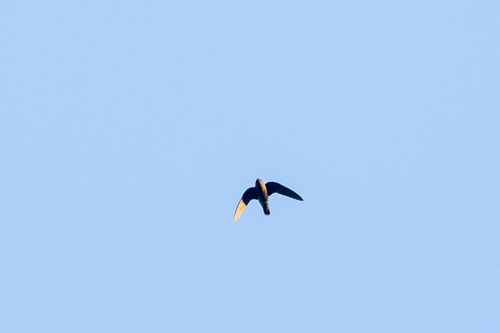 White-chinned Swift
 White-collared Swift
In breve
Il segno distintivo più affidabile tra White-chinned Swift e White-collared Swift è la presenza o l'assenza di un audace collare bianco: White-collared Swift mostra una prominente banda bianca che circonda il collo, più ampia sul petto, mentre White-chinned Swift manca di questo collare e ha invece solo una piccola macchia bianca sul mento. Anche le dimensioni sono un indizio importante, poiché White-collared Swift è molto più grande e pesante. In volo, entrambe le specie sono scure e veloci, ma il collare su White-collared è visibile anche da lontano, mentre il mento pallido di White-chinned è sottile e spesso trascurato. I giovani White-collared Swifts possono mostrare piume con punte bianche, ma mai la macchia isolata del mento di White-chinned. Entrambe le specie sono spesso viste in stormi misti, quindi prestare attenzione a questi segni è essenziale.
Consigli di identificazione
- Collare bianco vs. mento bianco: Il segno più importante—White-collared Swift ha un audace collare bianco che circonda il collo (più ampio sul petto), visibile da quasi tutti gli angoli. White-chinned Swift manca di questo collare e ha invece una piccola macchia bianca sul mento, visibile solo da sotto e da vicino.
- Dimensioni: White-collared Swift è molto più grande e pesante (20–21.5 cm, 90–125 g) rispetto a White-chinned Swift (15 cm, 35 g). Se visti insieme, la differenza di dimensioni è notevole; da soli, confronta con altri swift o rondini nel gruppo.
- Impressione di volo: White-collared Swift appare più robusto e potente in volo, con una coda leggermente forked; White-chinned è più snello e meno robusto.
- Confusione giovanile: I giovani White-collared Swifts sono più opachi e hanno piume con punte bianche, ma mostrano sempre almeno un collare parziale. I giovani White-chinned Swifts assomigliano agli adulti, con la macchia bianca sul mento ma senza collare.
- Segni facciali: White-chinned Swift ha una breve striscia bianca sopra l'occhio e un mento bianco; White-collared Swift ha una fronte scura e nessun segno chiaro sul viso.
- Parti inferiori: Entrambi sono scuri sotto, ma White-chinned Swift è più chiaro nelle parti inferiori e nelle ali inferiori rispetto alle parti superiori; questo è sottile e non è un segno distintivo forte.
- Lucentezza della schiena e del coda: White-collared Swift ha una leggera lucentezza blu sulla schiena, sul coda e sulle copritrici della coda, specialmente in buona luce; White-chinned Swift è più uniformemente marrone scuro fino a marrone nerastro.
- Forma della coda: White-collared Swift ha una coda leggermente forked; la coda di White-chinned Swift è meno distintamente formata, ma questo non è un separatore forte.
- Dimensione del gruppo: I White-collared Swifts si trovano spesso in stormi molto grandi e rumorosi; i White-chinned Swifts sono di solito in gruppi più piccoli.
- Contesto dell'habitat: Se vicino a una cascata o in una foresta umida, specialmente durante la stagione di riproduzione, considera White-chinned Swift, ma non fare affidamento solo sull'habitat.
- Distribuzione: Entrambe le specie si sovrappongono ampiamente, quindi la distribuzione non è un separatore affidabile tranne che nelle Antille e a Trinidad, dove si trova solo White-collared.
- Sessi: Entrambe le specie sono sessualmente monomorfiche—il sesso non può essere determinato dalla livrea.
- Viste in perching: Entrambe le specie raramente si posano in aperto; se viste, il collare bianco di White-collared Swift è ovvio, mentre la macchia del mento di White-chinned può essere difficile da vedere a meno che l'uccello non ti stia fronteggiando.
- Stormi misti: Entrambe le specie possono unirsi a stormi misti di swift; controlla sempre il collare e la macchia del mento su ogni uccello.
- Quando i segni falliscono: In scarsa luce o a grande distanza, le dimensioni e la struttura del gruppo possono essere gli unici indizi—White-collared è il gigante, White-chinned è di dimensioni medie e manca del collare.
Taglia
White-collared Swift è drammaticamente più grande: gli adulti misurano 20–21.5 cm di lunghezza e pesano 90–125 g, con un'apertura alare di 45–55 cm. Al contrario, White-chinned Swift è molto più piccolo, circa 15 cm e 35 g. Questa differenza di dimensioni è ovvia quando entrambi sono visti insieme, ma può essere più difficile da giudicare in isolamento o a distanza. White-collared appare anche più robusto e massiccio in volo, mentre White-chinned è più snello e delicato.
Piumaggio
-
Giovani: I giovani White-collared Swifts sono più opachi e più scuri degli adulti, con punte grigio-bianco a bianche sulla maggior parte delle piume del corpo. Tuttavia, mostrano ancora il collare bianco (anche se può essere più stretto o meno nitido), e non hanno mai una macchia bianca sul mento. I giovani White-chinned Swifts assomigliano agli adulti, con la striscia bianca sul mento già presente.
-
Adulti: Gli adulti White-collared Swifts hanno un audace collare bianco che circonda il collo, più ampio sul petto, in contrasto con la livrea nera altrimenti con una leggera lucentezza blu sulla schiena e sul coda. Il White-chinned Swift manca di qualsiasi collare; invece, mostra una breve striscia bianca sopra l'occhio e una piccola macchia bianca sul mento, con il resto della livrea marrone scuro fino a marrone nerastro, e parti inferiori più chiare. L'ala inferiore di White-chinned è più chiara sotto che sopra, ma questo è sottile e non è un segno distintivo forte.
-
Viste in volo: In entrambe le specie, l'impressione generale è quella di uno swift scuro, ma il collare bianco di White-collared è visibile da quasi tutti gli angoli, mentre il mento pallido di White-chinned è evidente solo da sotto e da vicino. Non sono notati schemi distintivi sulle ali superiori per nessuna delle specie a qualsiasi età.
Comportamento
Entrambe le specie sono insetti aerei e sono spesso viste in volo veloce e diretto sopra le foreste o le aree aperte. I White-collared Swifts sono particolarmente potenti nel volo, spesso ascendendo termiche a grandi altezze e formando grandi stormi (a volte oltre 200 uccelli). I White-chinned Swifts sono meno probabili da vedere in numeri così grandi e possono apparire più delicati e meno robusti in volo. Entrambi possono unirsi a stormi misti di swift, quindi è necessaria un'attenta osservazione.
Habitat
Entrambe le specie si sovrappongono ampiamente nella distribuzione, che va dal Messico attraverso l'America Centrale e Meridionale. White-collared Swift è più diffuso, comprese le Antille e Trinidad, e si trova in una gamma più ampia di altitudini e habitat. White-chinned Swift è anch'esso diffuso ma generalmente meno comune e più localizzato, spesso vicino a cascate o foreste umide, specialmente durante la riproduzione. L'habitat da solo non è diagnostico, ma White-collared è più probabile in aree aperte e a altitudini più elevate.
White-chinned Swift · White-collared Swift · I miei uccelli difficili