

White-backed Mousebird vs Narina Trogon
Colius colius contro Apaloderma narina
Fai un quiz con White-backed Mousebird e Narina Trogon
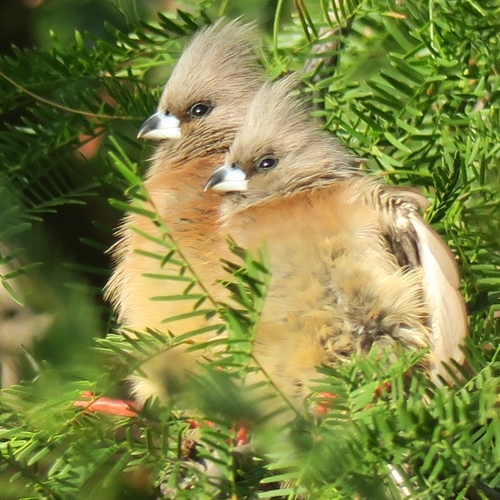 White-backed Mousebird
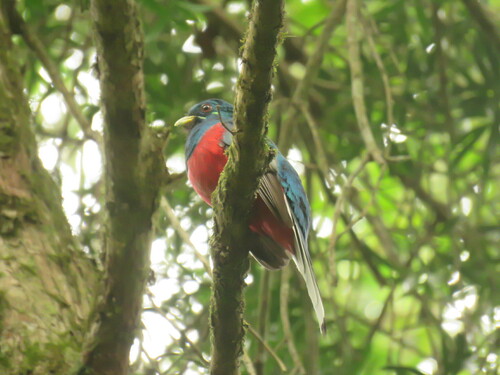 Narina Trogon
In breve
Il segno di campo più affidabile per separare il White-backed Mousebird dal Narina Trogon è la presenza di una marcatura bianca audace sulla schiena (fiancheggiata di nero) sul mousebird, visibile solo quando le ali sono aperte o parzialmente spiegate; il Narina Trogon non mostra mai questo. In vista da posato, il mousebird è un uccello snello, dalla coda lunga e grigia con una cresta prominente e gambe rosse, mentre il trogon è più robusto, con un collo corto, parti superiori di un verde vivido e (nei maschi) parti inferiori di un rosso brillante. I mousebird sono sociali, simili ai pappagalli nella postura, e preferiscono la macchia secca, mentre i trogon sono solitari, eretti e uccelli strettamente forestali. Non sono descritti segni specifici sulle ali per i giovani/immaturi del mousebird, ma i giovani del Narina Trogon mostrano punte bianche sulle terziali. Se vedi un uccello con una coda verde metallica, una parte inferiore bianca e un ventre rosso, è il trogon; se ha una coda lunga e graduata, una cresta grigia e una marcatura bianca sulla schiena, è il mousebird.
Consigli di identificazione
- White back stripe (mousebird only): Cerca una marcatura bianca audace fiancheggiata di nero sulla schiena, visibile quando le ali sono aperte o parzialmente spiegate (ad es., atterrando o in tempo caldo). Il trogon non mostra mai questo.
- Tail shape and length: Il mousebird ha una coda molto lunga, stretta e graduata (circa la metà della lunghezza del corpo); la coda del trogon è più corta, larga e ha una lucentezza blu-verde metallica con punte/frange bianche sotto.
- Crest (mousebird only): Il mousebird mostra sempre una cresta prominente e appuntita; il trogon ha una testa liscia e arrotondata senza cresta.
- Plumage color: Il mousebird è complessivamente grigio sopra con parti inferiori color sabbia e una banda marrone alla base della coda; il trogon è di un verde vivido sopra, con i maschi che mostrano parti inferiori rosse brillanti e le femmine di un rosso più opaco. Il mousebird non mostra mai colori verdi o metallici.
- Bill color: Il becco del mousebird è bianco-bluastro con una punta nera; quello del trogon è scuro, con pelle nuda verde alla bocca (maschio) o pelle orbitaria blu (femmina).
- Leg color: Il mousebird ha gambe e piedi rossi; le gambe del trogon sono scure e non appariscenti.
- Undertail: Il trogon mostra una parte inferiore bianca sorprendente quando è posato, formata da punte/frange bianche sulle piume esterne della coda; la parte inferiore del mousebird è semplice e priva di bianco.
- Juvenile/immature marks: I trogon immaturi hanno punte bianche sulle terziali (ala interna), utili se viste bene; i giovani del mousebird non mostrano segni distintivi sulle ali.
- Social behavior: I mousebird sono quasi sempre in piccoli gruppi attivi; i trogon sono solitari o in coppie.
- Perching posture: I mousebird spesso si appendono o si posano in modo simile ai pappagalli, a volte afferrando rami diversi con ciascun piede; i trogon si posano eretti e immobili.
- Flight style: Il volo del mousebird è debole e ondulato; il trogon vola in brevi scatti diretti tra i posatoi.
- Habitat: I mousebird si trovano in macchie secche e aperte o semi-desertiche; i trogon si trovano in foreste o boschi densi.
- Voice: Il mousebird emette richiami alti, fischiati e ronzanti in gruppo; il trogon emette un hoot basso e stridente, solo dai maschi.
- Sexual dimorphism: Solo il trogon mostra forti differenze tra maschio e femmina (maschio rosso brillante sotto, femmina più marrone); i sessi del mousebird sono simili.
- Context: Se vedi un uccello che si nutre apertamente di frutta o fiori in gruppo, è probabile che sia un mousebird; un uccello solitario e immobile nella foresta è probabilmente un trogon.
Taglia
Il White-backed Mousebird è leggermente più leggero (41.3g vs 61.0g [wikidata]) ma appare più lungo (circa 34 cm, con metà di quella lunghezza che è coda). Il Narina Trogon è di lunghezza simile (32–34 cm) ma è molto più robusto, con una corporatura tozza, corpo profondo e una coda più corta e squadrata. La coda del mousebird è estremamente lunga e sottile, facendo apparire l'uccello ancora più allungato, mentre la coda del trogon è larga, con una lucentezza blu-verde metallica e punte/frange bianche evidenti sotto.
Piumaggio
I giovani/immaturi Narina Trogon hanno punte bianche distinte sulle terziali (piume dell'ala interna), che possono essere un segno di campo sottile ma rivelatore se viste bene; i giovani del mousebird non sono descritti come aventi tali segni. L'adulto White-backed Mousebird è grigio sopra con una marcatura bianca prominente fiancheggiata di nero, visibile solo con le ali aperte o parzialmente spiegate, e una banda marrone alla base della coda. La cresta è sempre prominente. Le parti inferiori sono color sabbia e il becco è bianco-bluastro con una punta nera; gambe e piedi sono rossi. Gli adulti del Narina Trogon sono sessualmente dimorfici: entrambi i sessi hanno parti superiori di un verde zenzero e code blu-verdi metalliche, ma i maschi hanno parti inferiori rosse brillanti e pelle nuda verde alla bocca e intorno agli occhi, mentre le femmine sono più marroni sul viso/schiena e hanno un rosso più opaco sotto. La parte inferiore è sorprendentemente bianca in entrambi i sessi, specialmente dal basso. I trogon immaturi assomigliano alle femmine ma con punte bianche sulle terziali e colorazione della pelle nuda meno distintiva. I mousebird non mostrano parti inferiori verdi, metalliche o rosse e non mostrano mai una parte inferiore bianca.
Comportamento
Il White-backed Mousebird è altamente sociale, spesso visto in piccoli gruppi rumorosi, nutrendosi insieme e pulendosi a vicenda. Si posano quasi in modo simile ai pappagalli, a volte appendendosi ai rami, e sono rapidi a volare via o a rimanere tranquilli se disturbati. Il loro volo è ondulato e debole. Il Narina Trogon è solitario o in coppie, si posano eretti e immobili per lunghi periodi e raramente si uniscono a stormi misti. I trogon sono solitamente silenziosi e discreti, muovendosi con brevi voli diretti tra i posatoi, e sono raramente visti in aree aperte. I mousebird si nutrono spesso di frutta, gemme e fiori all'aperto, anche su prati; i trogon si nutrono principalmente di insetti e piccoli vertebrati, raramente scendendo a terra.
Habitat
Il White-backed Mousebird si trova in habitat secchi e cespugliosi come thornveld, fynbos e semi-deserto in tutta l'Africa meridionale, evitando le foreste dense. Il Narina Trogon è strettamente una specie forestale e boschiva, che va dalle foreste di pianura a quelle montane in gran parte dell'Africa subsahariana, e non si trova mai in macchie aperte o semi-desertiche. Se ti trovi in una foresta fitta, aspettati il trogon; in un paese secco e aperto, aspettati il mousebird.
Voce
Il White-backed Mousebird emette un fischio 'zwee-wewit' e vari richiami ronzanti o crepitanti, spesso uditi da gruppi che mantengono il contatto. Il richiamo del Narina Trogon è un hoot basso e stridente, emesso solo dai maschi, di solito in contesti territoriali o di corteggiamento. I richiami del mousebird sono di tono più alto e sociali; i richiami del trogon sono più profondi, più risonanti e infrequenti.
White-backed Mousebird · Narina Trogon · I miei uccelli difficili