
Porciglione vs Schiribilla grigiata
Rallus aquaticus contro Zapornia pusilla
Fai un quiz con Porciglione e Schiribilla grigiata
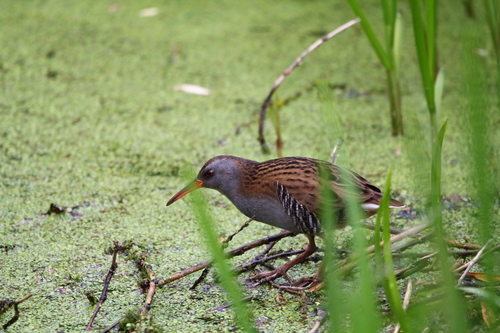 Porciglione
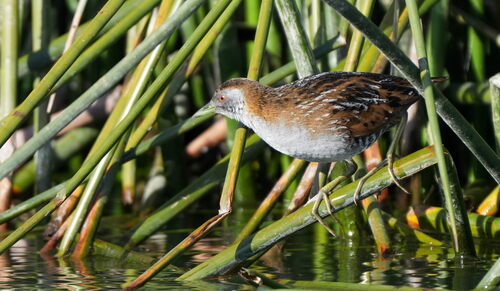 Schiribilla grigiata
In breve
Il segno di campo più affidabile per separare il Porciglione dalla Schiribilla grigiata è la dimensione e la struttura complessiva: il Porciglione è molto più grande, con un lungo becco rosso curvato verso il basso e un corpo appiattito lateralmente, mentre la Schiribilla grigiata è piccola, compatta e ha un becco corto, dritto e giallastro o verdastro. Entrambe le specie possono mostrare parti inferiori blu-grigie e fianchi barrati, ma gli adulti del Porciglione hanno una caratteristica sottocoda bianca e un ampio blu ardesia sul viso e sul petto, mentre la Schiribilla grigiata è più chiara sotto e manca del lungo becco e della sottocoda bianca del Porciglione. I giovani Porciglioni hanno parti inferiori color crema e un becco più opaco, che può essere confuso con la Schiribilla grigiata, ma la dimensione e la forma del becco rimangono affidabili. In volo o quando vengono disturbati, il Porciglione appare molto più robusto e con una coda più lunga rispetto alla più delicata Schiribilla grigiata.
Consigli di identificazione
- La dimensione è il primo controllo: Il Porciglione è molto più grande e robusto della Schiribilla grigiata. Se l'uccello appare piccolo e compatto, è quasi certamente una Schiribilla grigiata.
- Forma e colore del becco: Il Porciglione ha un lungo becco slanciato, leggermente curvato verso il basso e rosso (adulti), mentre la Schiribilla grigiata ha un becco corto, dritto, giallastro o verdastro senza rosso alla base. Questo è affidabile per tutte le età tranne che per i giovanissimi pulcini.
- Schema della sottocoda: L'adulto Porciglione mostra una sottocoda bianca ampia con alcune striature scure, specialmente visibili quando la coda è sollevata o in volo. La Schiribilla grigiata ha barrature nere e bianche sulla sottocoda, ma mai la marcata macchia bianca del Porciglione.
- Viso e parti inferiori: Gli adulti del Porciglione hanno un ampio blu ardesia sul viso, sulla gola e sul petto, in contrasto con le parti superiori marroni. La Schiribilla grigiata è più chiara blu-grigia sotto, con meno contrasto e senza un forte blu sul viso.
- Barrature sui fianchi: Entrambe le specie hanno fianchi barrati in bianco e nero, ma quelli del Porciglione sono più nettamente definiti e contrastano con le parti inferiori blu-grigie; le barrature della Schiribilla grigiata possono apparire più fini e meno audaci.
- Confusione nei giovani: I giovani Porciglioni mancano del blu-grigio e hanno parti inferiori color crema con marcature marroni e color crema sui fianchi, che possono somigliare alla Schiribilla grigiata. Tuttavia, la dimensione e la forma del becco rimangono diagnostiche. La giovane Schiribilla grigiata è ancora molto più piccola, con un becco corto e dritto.
- Colore delle gambe: Il Porciglione ha gambe color carne; la Schiribilla grigiata ha gambe verde oliva. Questo è sottile e meglio utilizzato in buona luce.
- Parti superiori: Le parti superiori del Porciglione sono marrone oliva con striature nere, specialmente sulle spalle. Le parti superiori della Schiribilla grigiata sono marrone ocra con alcune striature nere e bianche, ma meno contrastanti nel complesso.
- Lunghezza e portamento della coda: Il Porciglione ha una coda corta ma evidente, spesso sollevata per mostrare la sottocoda bianca. La coda della Schiribilla grigiata è più corta e meno probabile che venga sollevata.
- Aspetto in volo: Il Porciglione appare pesante, lungo e con ali forti in volo, con una sottocoda bianca ampia. La Schiribilla grigiata è veloce, fluttuante e compatta, senza un evidente lampo di sottocoda bianca.
- Voce: Il Porciglione emette un forte squittio simile a quello di un maiale; la Schiribilla grigiata emette un rapido trill stridulo. Se senti il richiamo, questo è diagnostico.
- Contesto dell'habitat: Il Porciglione è più probabile che si trovi in grandi canneti permanenti; la Schiribilla grigiata preferisce piccole zone umide temporanee o marginali. Se vedi un rall in una piccola pozza incolta, considera la Schiribilla grigiata.
- Contesto stagionale: Il Porciglione può essere residente tutto l'anno in aree più miti; la Schiribilla grigiata è più probabile che venga trovata durante la migrazione o in inverno, ed è generalmente meno comune.
- Differenze sessuali: Entrambe le specie sono sessualmente simili nel piumaggio; la dimensione e lo spessore del becco non sono affidabili per determinare il sesso sul campo.
- Piumaggio dei pulcini: I pulcini di entrambe le specie sono neri e ricoperti di piumino, quindi non separabili in questa fase.
Taglia
Il Porciglione è significativamente più grande, con adulti che pesano circa 111,5 g e misurano 23–28 cm di lunghezza, rispetto alla Schiribilla grigiata che pesa solo 35 g e misura 15–18 cm ([wikidata]). L'apertura alare del Porciglione (38–45 cm) è anche molto maggiore rispetto alla Schiribilla grigiata. Sul campo, il Porciglione appare allungato e compresso lateralmente, mentre la Schiribilla grigiata è notevolmente piccola, con collo corto e compatta, anche a distanza. Questa differenza di dimensione è spesso il modo più semplice per separarli, specialmente quando visti insieme o con specie familiari per scala.
Piumaggio
-
Giovani/uccelli immaturi: I giovani Porciglioni hanno parti inferiori color crema o bianche con barre più scure, marcature marroni e color crema sui fianchi (non nere e bianche), e una sottocoda color crema. Il loro becco e le gambe sono più opachi rispetto agli adulti. Gli immaturi della Schiribilla grigiata sono simili agli adulti ma con barrature più estese e parti inferiori complessivamente più opache. Entrambi possono apparire meno contrastanti rispetto agli adulti, ma i giovani Porciglioni sono ancora molto più grandi e hanno un becco più lungo e leggermente curvato verso il basso, mentre i giovani della Schiribilla grigiata rimangono piccoli e con becco corto.
-
Adulti: Gli adulti del Porciglione hanno parti superiori marrone oliva con striature nere, viso e parti inferiori blu ardesia scuro, fianchi barrati in bianco e nero, e una caratteristica sottocoda bianca con alcune striature scure. Il becco è lungo, rosso e leggermente curvato verso il basso. Gli adulti della Schiribilla grigiata hanno parti superiori marrone ocra con alcune striature nere e bianche, parti inferiori blu-grigie chiare (più chiare sulla gola e sull'addome), fianchi e sottocoda barrati in bianco e nero, ma la sottocoda non è così marcatamente bianca come quella del Porciglione. Il becco è corto, dritto e giallastro o verdastro, privo di rosso.
-
Viste in volo: Il Porciglione mostra una sottocoda bianca ampia e un lungo becco rossastro anche in volo. La Schiribilla grigiata appare compatta, con una coda corta e senza un evidente lampo di sottocoda bianca. Entrambe le specie hanno lunghe dita, ma quelle del Porciglione sono proporzionalmente meno evidenti a causa della sua robustezza.
Comportamento
Entrambe le specie sono riservate e preferiscono nascondersi nella densa vegetazione umida, ma il Porciglione è più probabile che venga visto camminare o correre lungo il bordo delle canne, spesso con la coda sollevata e la sottocoda visibile. La Schiribilla grigiata è estremamente elusiva, spesso solo intravista mentre si muove tra la copertura o si alza brevemente. Il Porciglione è più probabile che venga rilevato dai suoi forti squittii simili a quelli di un maiale, mentre la Schiribilla grigiata viene solitamente udita emettere un richiamo stridulo. Il Porciglione può apparire più audace e più deliberato nei movimenti, mentre la Schiribilla grigiata è veloce e simile a un topo.
Habitat
Entrambe le specie abitano zone umide ben vegetate, ma il Porciglione è diffuso in tutta Europa, Asia e Nord Africa, riproducendosi in grandi canneti e paludi. La Schiribilla grigiata preferisce zone umide più piccole, spesso temporanee, con copertura densa, ed è generalmente meno comune e più localizzata. Il Porciglione è un residente permanente nelle regioni più miti, mentre la Schiribilla grigiata è più migratoria e spesso rilevata solo durante il passaggio o in inverno. Se viste insieme, il Porciglione dominerà i canneti più grandi e consolidati, mentre la Schiribilla grigiata potrebbe essere limitata a piccole pozze o bordi.
Voce
Il Porciglione emette un distintivo e forte squittio simile a quello di un maiale, che è molto diverso dal richiamo stridulo e simile a quello di una rana della Schiribilla grigiata. La Schiribilla grigiata viene solitamente udita emettere un rapido trill stridulo, a volte paragonato alla rana edibile o al germano reale. Entrambi sono più spesso uditi che visti, specialmente durante la stagione riproduttiva.
Porciglione · Schiribilla grigiata · I miei uccelli difficili