

Townsend's Warbler vs Canada Warbler
Setophaga townsendi contro Cardellina canadensis
Fai un quiz con Townsend's Warbler e Canada Warbler
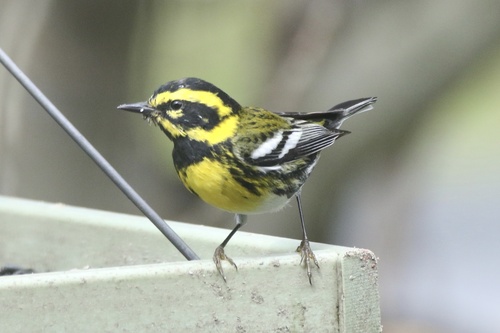 Townsend's Warbler
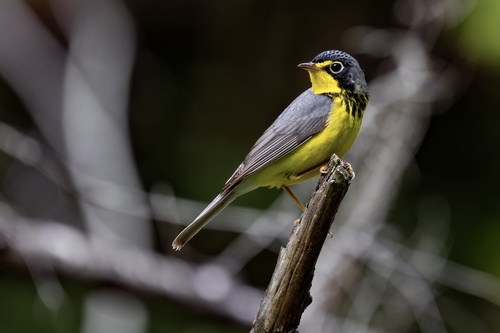 Canada Warbler
In breve
Il segno distintivo più affidabile per separare il Townsend's Warbler dal Canada Warbler è la presenza di bande alari bianche audaci e di una macchia nera sulla guancia nel Townsend's, rispetto all'assenza di bande alari nel Canada Warbler e al suo distintivo anello oculare bianco ('occhiali') e 'collana' nera di striature sul petto giallo. I Townsend's immaturi possono assomigliare al Canada Warbler per la loro opacità, ma il motivo del viso e le bande alari rimangono diagnostici. In volo o posati, controlla prima le bande alari e il contrasto facciale. Entrambi sono piccoli, attivi warbler, ma i loro motivi facciali e alari sono il modo più veloce per evitare confusione.
Consigli di identificazione
- Wingbars: Il Townsend's Warbler (tutte le età) ha due bande alari bianche audaci; il Canada Warbler (tutte le età) ha ali semplici senza bande alari. Questo è il modo più veloce per separarli, specialmente in volo o in scarsa illuminazione.
- Facial Pattern: Il Townsend's mostra un viso giallo con una macchia nera (maschio adulto) o verde scuro (immaturo/femmina), e un becco sottile e appuntito. Il Canada Warbler ha un viso giallo brillante con un prominente anello oculare bianco ('occhiali') e senza macchia sulla guancia.
- Chest Markings: Il Canada Warbler ha una 'collana' nera di striature sul petto giallo (più audace nei maschi, presente ma più tenue negli immaturi/femmine). Il Townsend's ha striature nere sui fianchi ma non una collana; i maschi adulti hanno una gola nera, le femmine/immaturi una gola gialla.
- Cap and Throat: I maschi adulti del Townsend's hanno un cappello e una gola neri; le femmine/immaturi hanno un cappello più scuro o verdastro e una gola gialla. Il Canada Warbler ha una corona grigia semplice e una gola gialla brillante (senza cappello o gola neri).
- Back Color: Il Townsend's ha parti superiori olivastre con striature nere; il Canada Warbler ha un dorso grigio scuro semplice.
- Belly and Flanks: La pancia del Townsend's è bianca con striature nere sui fianchi. Le parti inferiori del Canada Warbler sono uniformemente gialle tranne che per la collana.
- Undertail: Il Canada Warbler mostra bianco sulla parte inferiore della coda; questo non è notato per il Townsend's.
- Bill Shape: Entrambi hanno becchi sottili e appuntiti tipici dei warbler; non è un forte separatore.
- Flight View: In volo, cerca le bande alari del Townsend's e il contrasto facciale; il Canada Warbler mostrerà un'ala semplice e una coda bianca.
- Habitat: Durante la stagione di nidificazione, il Townsend's si trova in foreste conifere mature in alto nella chioma; il Canada Warbler si trova in sottoboschi densi e cespugliosi o vicino al suolo in foreste boreali/miste. Durante la migrazione, controlla l'altezza di foraggiamento e la struttura dell'habitat.
- Behavior: Il Townsend's spesso foraggia in alto e attivamente nei coniferi, a volte sospendendosi; il Canada Warbler è più schivo, basso in copertura densa o nel sottobosco.
- Voice: Se senti un canto ronzante simile a quello del Black-throated Green, sospetta il Townsend's. Il canto del Canada Warbler non è descritto qui, quindi usalo con cautela.
- Sex/Age Pitfalls: I Townsend's immaturi possono essere opachi e potrebbero mancare del cappello/gola neri completi, ma mostrano sempre bande alari e una macchia sulla guancia. I Canada Warbler immaturi sono più opachi ma mantengono la collana e l'anello oculare.
- Seasonal Context: Nel Pacifico Nord-Ovest, ci si aspetta il Townsend's; nel Nord-Est, è più probabile il Canada Warbler. Durante la migrazione, controlla attentamente sia il piumaggio che l'habitat.
- When in Doubt: Dai priorità alle bande alari (presenti = Townsend's), anello oculare/collana (presenti = Canada), e macchia sulla guancia (presente = Townsend's). Questi tre segni raramente falliscono, anche sugli immaturi.
Taglia
Entrambe le specie sono piccoli warbler e si sovrappongono considerevolmente in dimensioni. Il Canada Warbler misura in media 12–15 cm di lunghezza con un'apertura alare di 17–22 cm e una massa di 9–13 g [wikipedia]. Il Townsend's Warbler è simile in dimensioni (nessun numero preciso nelle note), quindi la dimensione non è un segno distintivo affidabile per la separazione.
Piumaggio
I Townsend's Warblers immaturi e adulti mostrano sempre due bande alari bianche chiare, che il Canada Warbler non ha a tutte le età. Il Townsend's ha anche un viso giallo con una macchia nera audace (adulti) o una guancia verde scura (immaturi), e una pancia bianca con striature nere sui fianchi. I maschi adulti hanno un cappello e una gola neri, mentre le femmine e gli immaturi hanno un cappello scuro o verdastro e una gola gialla. Il Canada Warbler, al contrario, ha un dorso grigio scuro pulito, nessuna banda alare, e una gola, un petto e una pancia gialli brillanti. La sua caratteristica più distintiva è la 'collana' nera di striature sul petto (più audace nei maschi) e un prominente anello oculare bianco ('occhiali'). I Canada Warblers immaturi sono più opachi ma mantengono l'anello oculare e la collana, sebbene meno pronunciati. In volo, le bande alari e il motivo facciale del Townsend's sono visibili; il Canada Warbler mostra un'ala semplice e una coda bianca.
Comportamento
Entrambe le specie sono foraggiatori attivi ma utilizzano diverse parti della foresta. Il Townsend's Warbler tende a foraggiare in alto negli alberi conifere, spesso raccogliendo insetti dal fogliame, a volte sospendendosi o lanciandosi per la preda. Il Canada Warbler è più probabile trovarlo più in basso nel sottobosco denso, sul o vicino al suolo, o nei cespugli, specialmente al di fuori della stagione di nidificazione. Dopo la schiusa, i giovani Canada Warblers rimangono bassi nel sottobosco. Entrambi si uniscono a stormi misti al di fuori della stagione di nidificazione, ma i loro strati di foraggiamento preferiti differiscono.
Habitat
Il Townsend's Warbler nidifica in foreste conifere mature con grandi alberi lungo la costa nord-occidentale del Nord America. Il Canada Warbler nidifica in foreste boreali e miste, specialmente in sottoboschi densi e cespugliosi, spesso vicino all'acqua, in tutto il Canada e nel nord-est degli Stati Uniti. Durante la migrazione e l'inverno, il Townsend's è più probabile trovarlo in foreste conifere o miste, mentre il Canada Warbler preferisce cespugli densi e bordi forestali, spesso più vicino al suolo. È possibile una sovrapposizione degli habitat durante la migrazione, ma gli habitat di nidificazione sono distinti.
Voce
Il Townsend's Warbler canta un canto ronzante, leggermente variabile ("zee-zee-zee-bzz-zee" o "weazy weazy weazy twea"), in qualche modo simile a quello del Black-throated Green Warbler. Il suo richiamo è un "tup" acuto. Il canto del Canada Warbler non è descritto nelle note, quindi la voce è solo parzialmente utile; se senti un canto ronzante simile a quello del Black-throated Green, è più probabile che sia il Townsend's.
Townsend's Warbler · Canada Warbler · I miei uccelli difficili