

Tawny-winged Woodcreeper vs Northern Barred-Woodcreeper
Dendrocincla anabatina contro Dendrocolaptes sanctithomae
Fai un quiz con Tawny-winged Woodcreeper e Northern Barred-Woodcreeper
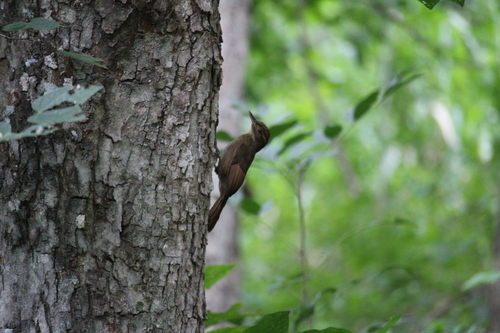 Tawny-winged Woodcreeper
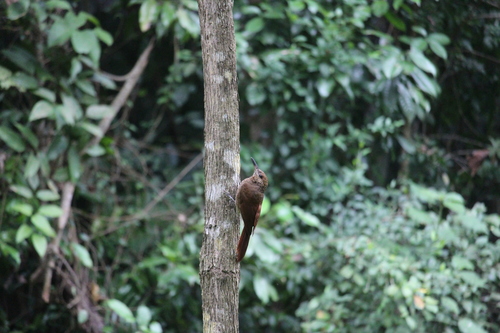 Northern Barred-Woodcreeper
In breve
Il segno di campo più affidabile tra il Tawny-winged Woodcreeper e il Northern Barred-Woodcreeper è la presenza di forti barre nere sulle parti inferiori e superiori del Northern Barred-Woodcreeper (tutte le età), che il Tawny-winged Woodcreeper manca completamente. I giovani di entrambe le specie sono simili agli adulti, ma le barre sul Barred-Woodcreeper rimangono una caratteristica costante e distintiva. Strutturalmente, il Northern Barred-Woodcreeper è molto più grande, con una coda visibilmente più lunga e una corporatura più robusta, mentre il Tawny-winged è di dimensioni medie, con una coda più corta e un aspetto più snello. La forma del becco è simile (dritta), ma quella del Barred-Woodcreeper è più pesante. In volo o posato, cerca le barre prominenti del Barred-Woodcreeper e la sua dimensione maggiore rispetto ai toni semplici, oliva-marrone e ruggine del Tawny-winged. Entrambi seguono i gruppi di formiche soldato, quindi il contesto da solo non è diagnostico.
Consigli di identificazione
- Controlla la presenza di barre nere sulle parti inferiori e superiori: Il Northern Barred-Woodcreeper mostra sempre forti barre nere sulla gola, sul petto, sull'addome, sulla corona e sulla schiena. Il Tawny-winged Woodcreeper è completamente privo di barre e semplice sopra e sotto. Questo è il segno di campo più affidabile a tutte le età e in tutte le condizioni di luce.
- Guarda la dimensione e la struttura complessive: Il Barred-Woodcreeper è molto più grande e massiccio, con una coda più lunga e una corporatura più pesante. Il Tawny-winged è di dimensioni medie, più snello e con una coda più corta. Se vedi entrambi insieme, la differenza di dimensione è notevole.
- Colore della coda e delle ali: Entrambi hanno code e penne alari color ruggine-castagna, ma quelle del Barred-Woodcreeper sono più ricche e più estese, corrispondenti ai toni cannella-buff della faccia e delle parti inferiori. La coda del Tawny-winged è più ruggine-cannella, e le ali sono di un oliva-marrone scuro con penne alari color ruggine.
- Schema del viso: Il Barred-Woodcreeper ha un viso color marrone-cannella con sottili barre, un supercilio ruggine tenue e lore neri. Il Tawny-winged ha una testa marrone con un supercilio buffo e pelle grigia nuda attorno all'occhio, privo di barre o forte contrasto facciale.
- Colore delle parti inferiori: Le parti inferiori del Barred-Woodcreeper sono dorate a cannella-buff con barre nere ovunque. Quelle del Tawny-winged sono semplici di un oliva-marrone chiaro, diventando cannella sull'addome e sulle copritrici della coda, mai barrate.
- Colore e forma del becco: Entrambi hanno becchi dritti, ma quello del Barred-Woodcreeper è più pesante e per lo più nerastro (i giovani sono completamente neri), mentre quello del Tawny-winged è marrone scuro o nero sopra, grigio o bluastro sotto, e più snello.
- Differenze nei giovani: Il giovane Barred-Woodcreeper ha barre più diffuse sotto e un becco completamente nero, ma mostra ancora barre. Il giovane Tawny-winged è simile all'adulto ma con una gola più opaca, un supercilio più ampio e talvolta un occhio bianco—ancora mai barrato.
- Posato vs. in volo: In volo, la dimensione del Barred-Woodcreeper, la lunga coda e le parti inferiori barrate sono evidenti. Il Tawny-winged appare più piccolo, con parti inferiori semplici e una coda più corta.
- Contesto dell'habitat: Il Tawny-winged può verificarsi in habitat più disturbati o di margine e talvolta in mangrovie o foreste semi-decidue, specialmente nello Yucatán e in Costa Rica. Il Barred-Woodcreeper è più ristretto a foreste mature e indisturbate ed è sensibile alla frammentazione.
- Comportamento nei gruppi di formiche: Entrambi seguono le formiche soldato, ma il Tawny-winged è più aggressivo e tende a rimanere più in basso (fino a 3 m sopra il suolo). Il Barred-Woodcreeper può essere trovato più in alto e talvolta in piccoli gruppi.
- Supercilio e colore degli occhi: Il Tawny-winged ha un supercilio buffo più pronunciato e talvolta un occhio bianco nei giovani. Il supercilio del Barred-Woodcreeper è tenue e ruggine, con uno schema facciale più uniforme.
- Colore dell'iride: Il Tawny-winged ha un'iride marrone giallastro a grigia; quella del Barred-Woodcreeper è chiara a scura.
- Colore delle gambe: Entrambi hanno gambe scure, ma quelle del Barred-Woodcreeper possono variare di più (marrone scuro, nero, verde grigiastro, bluastro o corno), mentre quelle del Tawny-winged sono di un blu-grigio scuro a nerastro.
- Abbondanza regionale: Il Tawny-winged è generalmente abbastanza comune tranne che nello Yucatán, dove entrambe le specie sono rare. Il Barred-Woodcreeper è generalmente poco comune a comune, ma meno a elevate altitudini o in habitat marginali.
- Non fare mai affidamento solo sulla voce: Non sono state notate differenze vocali distintive nelle fonti, quindi usa sempre prima il piumaggio e la struttura.
Taglia
Il Northern Barred-Woodcreeper è significativamente più grande: 25–29 cm di lunghezza e 53–83 g, rispetto ai 17–19 cm e 29–42 g del Tawny-winged Woodcreeper. Il Barred-Woodcreeper è tra i più grandi woodcreepers, con una lunga coda e una corporatura più pesante e massiccia. Il Tawny-winged è di dimensioni medie per il suo genere, con una coda più corta e un aspetto più leggero e snello. In stormi misti o nei gruppi di formiche, la differenza di dimensione è solitamente evidente con un confronto diretto, ma può essere più difficile da giudicare da solo.
Piumaggio
I giovani e gli adulti del Northern Barred-Woodcreeper mostrano sempre forti barre nere sulla corona, sulla schiena e soprattutto sulle parti inferiori (dalla gola all'addome), con un colore di fondo cannella-buff. Le barre sono ben definite negli adulti e più diffuse nei giovani, ma sempre presenti. Anche le parti superiori mostrano barre, e il viso è marrone-cannella con sottili barre e un supercilio ruggine tenue. Le penne alari e la coda sono color ruggine-castagna, con punte scure sulle primarie. I giovani hanno copritrici della coda più rosse e un becco completamente nero.
Il Tawny-winged Woodcreeper (tutte le età) non ha barre. È semplicemente di un oliva-marrone scuro sopra, con un supercilio buffo e pelle grigia nuda attorno all'occhio, e una nuca arruffata. La coda e le copritrici della coda sono di un ruggine-cannella a ruggine-castagna, ma le ali sono di un oliva-marrone scuro con penne alari color ruggine e punte scure. Le parti inferiori sono semplici di un oliva-marrone chiaro, diventando cannella sull'addome e sulle copritrici della coda. I giovani sono simili agli adulti ma con una gola più opaca, un supercilio più ampio e talvolta un occhio bianco. Non ci sono mai barre presenti a nessuna età.
Comportamento
Entrambe le specie sono quasi obbligatori seguaci dei gruppi di formiche soldato, tipicamente per cercare cibo aggrappandosi ai tronchi o ai rami e facendo brevi voli a terra per catturare prede disturbate dalle formiche. Il Tawny-winged Woodcreeper tende a rimanere basso (fino a 3 m sopra il suolo), è solitamente solitario o in coppie, ed è altamente aggressivo verso altri uccelli nei gruppi. Anche il Northern Barred-Woodcreeper segue i gruppi di formiche, talvolta in gruppi fino a quattro, ed è sensibile a disturbi e frammentazione, richiedendo generalmente tratti più ampi di foresta. Entrambi possono cercare cibo lontano dalle formiche occasionalmente, ma questo è raro.
Habitat
Entrambe le specie abitano foreste umide di pianura e di piede di montagna, ma il Tawny-winged Woodcreeper è più tollerante verso le foreste secondarie, i margini e persino alcuni paesaggi semi-aperti, specialmente nella penisola dello Yucatán e in Costa Rica (incluso le mangrovie). Il Northern Barred-Woodcreeper è più ristretto a foreste mature ed è meno probabile trovarlo in habitat disturbati o frammentati. Entrambi possono essere trovati dal sud del Messico attraverso l'America Centrale, ma l'areale del Barred-Woodcreeper si estende più a sud in Colombia, Venezuela ed Ecuador. Nella penisola dello Yucatán, entrambi sono rari, ma il Barred-Woodcreeper è generalmente meno comune a elevate altitudini o in habitat marginali.
Tawny-winged Woodcreeper · Northern Barred-Woodcreeper · I miei uccelli difficili