

Swallow-tailed Bee-eater vs Southern Carmine Bee-eater
Merops hirundineus contro Merops nubicoides
Fai un quiz con Swallow-tailed Bee-eater e Southern Carmine Bee-eater
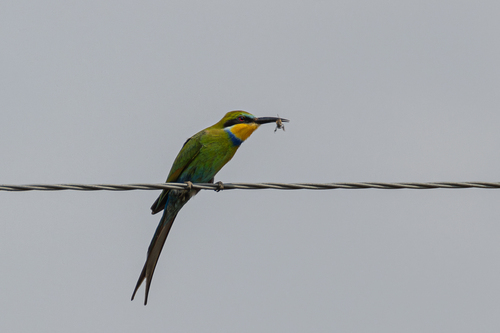 Swallow-tailed Bee-eater
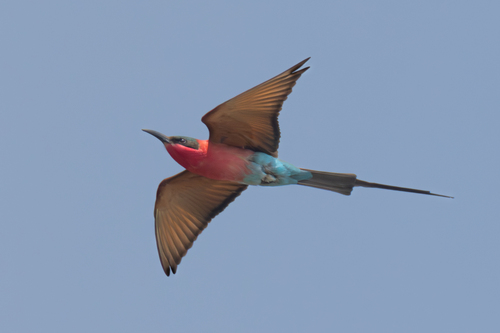 Southern Carmine Bee-eater
In breve
Il modo più affidabile per separare il Swallow-tailed Bee-eater dal Southern Carmine Bee-eater è il colore complessivo: il Swallow-tailed è principalmente verde con una gola gialla e un gorget blu, mentre il Southern Carmine è prevalentemente rosso carminio con una corona blu e un sottocoda blu. La forma della coda è anche fondamentale: il Swallow-tailed ha una coda lunga e profondamente biforcuta, mentre la coda del Southern Carmine è meno drammaticamente biforcuta. Entrambi sono api-eater snelli e colorati, ma le loro palette di colori e la struttura della coda sono sorprendentemente diverse. Se visti in volo, concentrati sul colore del corpo e sulla forma della coda per un'identificazione rapida.
Consigli di identificazione
- Il colore complessivo è il segno distintivo più veloce: il Swallow-tailed è principalmente verde con una gola gialla e un gorget blu; il Southern Carmine è rosso carminio con una corona blu e un sottocoda blu. Questo funziona per tutte le età e i sessi.
- La forma della coda è diagnostica: il Swallow-tailed Bee-eater ha una coda lunga e profondamente biforcuta con piume centrali verdi o blu. La coda del Southern Carmine è meno profondamente biforcuta e le piume centrali sono blu, ma la biforcazione non è così pronunciata.
- Schema del viso: il Swallow-tailed mostra una striscia nera sugli occhi e un becco nero, con una gola gialla bordata sotto da un gorget blu. Il Southern Carmine manca della striscia nera sugli occhi e ha invece una corona blu.
- Parte inferiore: le parti inferiori del Swallow-tailed sono per lo più verdi, mentre quelle del Southern Carmine sono rosso carminio in tutto, con copritrici blu del sottocoda.
- Colore della corona: il Swallow-tailed ha una corona verde; il Southern Carmine ha una corona blu, che si distingue contro il corpo carminio.
- Impressione di dimensione: il Swallow-tailed è molto più piccolo e più delicato. Il Southern Carmine è grande, robusto e con ali lunghe. Se entrambi sono visti insieme, la differenza di dimensione è ovvia.
- Aspetto in perching: il Swallow-tailed si siede più eretto e appare snello con una coda lunga e appuntita. Il Southern Carmine appare più massiccio e con un corpo più lungo.
- Silhouette in volo: la coda profondamente biforcuta del Swallow-tailed è ovvia in volo; la coda del Southern Carmine è meno drammaticamente biforcuta e le ali sono più larghe.
- Dimensione del gruppo: il Swallow-tailed è solitamente in coppie o piccoli gruppi; il Southern Carmine forma spesso grandi stormi rumorosi, specialmente nei siti di nidificazione.
- Contesto dell'habitat: il Swallow-tailed preferisce savane boschive; il Southern Carmine è più spesso in campagna aperta, pianure alluvionali e rive dei fiumi. Usa questo come indizio di supporto, non come segno primario.
- Non sono descritte differenze di pattern delle ali specifiche per età o immaturi: entrambe le specie appaiono simili in tutte le età sul campo, quindi fai affidamento su colore e struttura.
- Non ci sono differenze di piumaggio stagionali o basate sul sesso: entrambe le specie sono sessualmente monomorfiche e non hanno forti cambiamenti stagionali nel piumaggio.
- Colore del becco: il Swallow-tailed ha un becco nero; il becco del Southern Carmine è anch'esso scuro, quindi questo non è un forte separatore.
- Le vocalizzazioni non sono descritte come distintive nelle note disponibili.
- Se hai dubbi, concentrati sulla combinazione di colore complessivo (verde vs carminio), forma della coda (biforcuta profonda vs superficiale) e dimensione (piccola vs grande). Questi tre insieme separeranno tutti gli incontri sul campo.
Taglia
Il Swallow-tailed Bee-eater è un piccolo e leggero api-eater (circa 20 g [wikidata]), mentre il Southern Carmine Bee-eater è notevolmente più grande e massiccio (massa esatta non fornita, ma è una specie molto più grande per impressione visiva e tipica per gli api-eater carminio [wikipedia]). Il Swallow-tailed raggiunge i 20–22 cm di lunghezza, compresa la sua lunga coda, ma il Southern Carmine è più lungo nel complesso a causa del suo corpo e della coda più grandi. Sul campo, il Southern Carmine apparirà molto più robusto e con ali più lunghe.
Piumaggio
Non sono descritte differenze specifiche per età nei segni delle ali superiori o nei segni di volo giovanili per nessuna delle due specie nelle note disponibili. Per tutti i piumaggi, il Swallow-tailed Bee-eater è principalmente verde, con una gola gialla, un gorget blu (fascia della gola) e una striscia nera sugli occhi e un becco nero. La sua coda è lunga e profondamente biforcuta, con piume centrali verdi o blu. Il Southern Carmine Bee-eater è prevalentemente rosso carminio, con una corona blu e un sottocoda blu. Il viso e le parti inferiori sono carminio, e la corona blu e il sottocoda contrastano fortemente con il corpo rosso. Entrambi i sessi sono simili in ciascuna specie. Non c'è menzione di differenze stagionali o specifiche per immaturi che influenzerebbero l'identificazione sul campo tra questi due.
Comportamento
Entrambe le specie sono insettivori aerei, catturando insetti (specialmente api) in volo da posatoi aperti. Il Swallow-tailed Bee-eater è spesso visto in coppie o in gruppi molto piccoli, a volte nutrendosi e riposando in modo comunitario. Il Southern Carmine Bee-eater è più probabile che venga visto in stormi più grandi e rumorosi, specialmente nelle colonie di nidificazione. Entrambi sono avvicinabili e appariscenti quando sono in perching, ma la maggiore dimensione del Southern Carmine e la sua tendenza a radunarsi in gruppi più grandi possono essere evidenti sul campo.
Habitat
Il Swallow-tailed Bee-eater preferisce le foreste di savana e un paese leggermente più boschivo rispetto alla maggior parte degli api-eater, spesso trovato nell'Africa sub-sahariana. Il Southern Carmine Bee-eater si trova in tutta l'Africa sub-equatoriale, tipicamente in campagna più aperta, rive dei fiumi e pianure alluvionali. Se l'ambiente è una foresta aperta, il Swallow-tailed è più probabile; in una pianura alluvionale aperta o vicino a grandi rive dei fiumi, il Southern Carmine è più atteso. Entrambi possono sovrapporsi in alcune regioni, quindi l'habitat è di supporto ma non definitivo.
Swallow-tailed Bee-eater · Southern Carmine Bee-eater · I miei uccelli difficili