

Superb Sunbird vs Bates's Sunbird
Cinnyris superbus contro Cinnyris batesi
Fai un quiz con Superb Sunbird e Bates's Sunbird
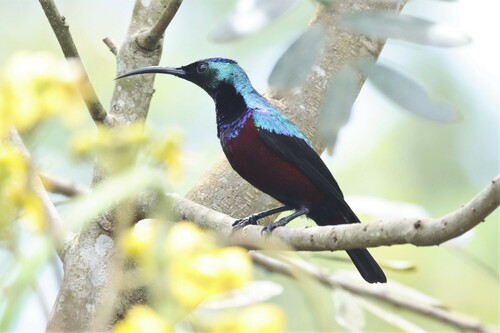 Superb Sunbird
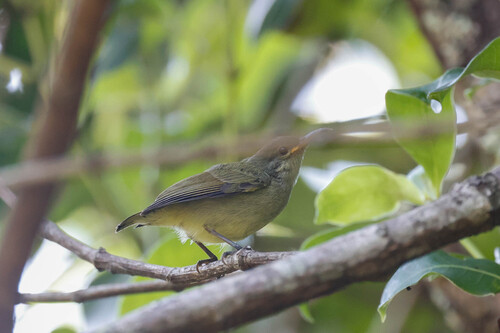 Bates's Sunbird
In breve
Il segno di campo più affidabile per separare Bates's Sunbird da Superb Sunbird è la colorazione generale: Bates's è un uccello sole molto piccolo, di colore verde opaco, con una coda corta e un ventre giallastro o color sabbia, mentre Superb Sunbird è più grande e più vivacemente colorato. Bates's Sunbird appare di un olivastro opaco sopra con parti inferiori chiare e piume del petto gialle o bianche sottili, rendendolo facile da trascurare. Superb Sunbird, al contrario, è più appariscente e meno uniformemente opaco. Entrambi abitano le foreste pluviali africane, ma Bates's è particolarmente poco appariscente a causa dei suoi toni attenuati e del comportamento furtivo. Anche la dimensione e la lunghezza della coda aiutano: Bates's è nettamente più piccolo e con una coda più corta.
Consigli di identificazione
- La dimensione è un indizio importante: Bates's Sunbird è molto più piccolo (9–10 cm, 5.7–7g) rispetto a Superb Sunbird. Se l'uccello appare minuscolo e delicato, favorisci Bates's.
- Lunghezza e forma della coda: Bates's ha una coda corta con bordi/tips neri e olivastri; Superb Sunbird ha una coda più lunga e appare più allungato nel complesso.
- Colorazione generale: Bates's è opaco, di un verde oliva scuro sopra con parti inferiori grigie chiare e un ventre chiaro o giallastro. Superb Sunbird è più vivacemente colorato e mai così uniformemente opaco.
- Ciuffi di piume del petto: Cerca piume lunghe e sottili gialle (maschio) o bianche (femmina) sui lati del petto in Bates's Sunbird. Queste sono assenti o molto meno prominenti in Superb Sunbird.
- Supercilium: Bates's ha un vago supercilium chiaro (sopracciglio), che può essere un segno sottile ma utile.
- Schema delle ali: Le ali di Bates's sono marroni scure con bordi chiari. Non sono notati pannelli distintivi delle ali superiori o segni di volo per nessuna delle due specie, quindi questo non è un forte separatore in volo.
- Forma del becco: Bates's ha un becco corto e ricurvo. Il becco di Superb Sunbird può essere più lungo e più curvo, ma questo non è dettagliato nelle note.
- Colore delle parti inferiori: Bates's ha parti inferiori più chiare e grigie con un ventre color sabbia o giallastro, mentre Superb Sunbird è più colorato sotto.
- Differenze sessuali: In Bates's, le piume del petto della femmina sono più corte e più bianche rispetto a quelle gialle del maschio, ma entrambi i sessi sono opachi. Superb Sunbird mostra più dimorfismo sessuale nel colore (non dettagliato qui).
- Comportamento: Bates's è furtivo e facilmente trascurabile; se l'uccello si muove furtivamente e è difficile da individuare, considera Bates's. Superb Sunbird è probabilmente più appariscente.
- Sovrapposizione dell'habitat: Entrambi possono verificarsi negli stessi habitat di foresta pluviale, quindi non fare affidamento solo sull'habitat a meno che tu non sia al di fuori dell'areale più localizzato di Bates's in Africa Centrale/Ovest.
- Nessun forte segno di volo: Nessuna delle due specie è descritta come avente segni diagnostici delle ali superiori o schemi di volo per immaturi o adulti, quindi concentrati sugli uccelli posati.
- Confusione giovanile/immatura: Non sono notati segni giovanili/immaturi speciali per nessuna delle due specie, quindi l'età non è un forte separatore.
- Voce: Non sono fornite differenze vocali, quindi non fare affidamento sul canto o sul richiamo per la separazione.
- Trappola: L'aspetto opaco, verdastro e piccolo di Bates's Sunbird è la principale trappola: non scambiare una femmina opaca o un immaturo Superb Sunbird per Bates's a meno che la dimensione e i ciuffi di piume del petto non corrispondano.
Taglia
Bates's Sunbird è significativamente più piccolo, misurando solo 9–10 cm di lunghezza e pesando 5.7–7g [wikipedia]. Superb Sunbird è notevolmente più grande, anche se le misure precise non sono fornite nelle note, e apparirà più robusto e con una coda più lunga sul campo. Questa differenza di dimensione è spesso ovvia quando entrambe le specie sono viste nella stessa area, ma può essere sottile se solo una è presente.
Piumaggio
- Piumaggio giovanile/immaturo/primo inverno: Non sono descritti segni specifici per l'età per nessuna delle due specie nelle note.
- Maschi adulti: Bates's Sunbird è di un olivastro scuro sopra con un vago supercilium chiaro, ali marroni scure con bordi chiari e una coda nera bordata e punta di olivastro. Le parti inferiori sono di un grigio più chiaro con un centro chiaro color sabbia sul ventre. Lunghe piume gialle e sottili sui lati del petto sono una caratteristica chiave. Superb Sunbird non è descritto in dettaglio qui, ma è noto per essere più colorato e meno opaco nel complesso.
- Femmine adulte: La femmina di Bates's è simile al maschio ma con piume del petto più bianche e più corte. Entrambi i sessi di Bates's sono molto più opachi e più verdastri rispetto a Superb Sunbird.
- Generale: Bates's Sunbird appare sempre opaco, verdastro e piccolo, mentre Superb Sunbird è più vivido e più grande. Bates's può essere facilmente trascurato a causa dei suoi colori attenuati.
Comportamento
Bates's Sunbird è descritto come furtivo e facilmente trascurabile, probabilmente trascorrendo più tempo nascosto nel fogliame e meno tempo in esposizione appariscente rispetto a Superb Sunbird. Superb Sunbird, essendo più grande e più colorato, può essere più ovvio e attivo, ma i contrasti comportamentali specifici non sono dettagliati nelle note.
Habitat
Entrambe le specie si trovano nelle foreste pluviali tropicali africane. Bates's Sunbird si trova nelle foreste dell'Africa Centrale e Occidentale e localmente in altri tipi di foresta all'interno dell'Africa Centrale. Superb Sunbird è ampiamente diffuso nelle foreste pluviali tropicali africane. La sovrapposizione dell'habitat è sostanziale, quindi il contesto non è un forte separatore a meno che tu non sia al di fuori dell'areale noto di una specie.