

Stripe-backed Bittern vs Least Bittern
Botaurus involucris contro Botaurus exilis
Fai un quiz con Stripe-backed Bittern e Least Bittern
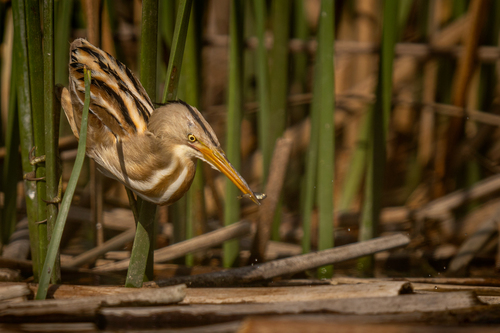 Stripe-backed Bittern
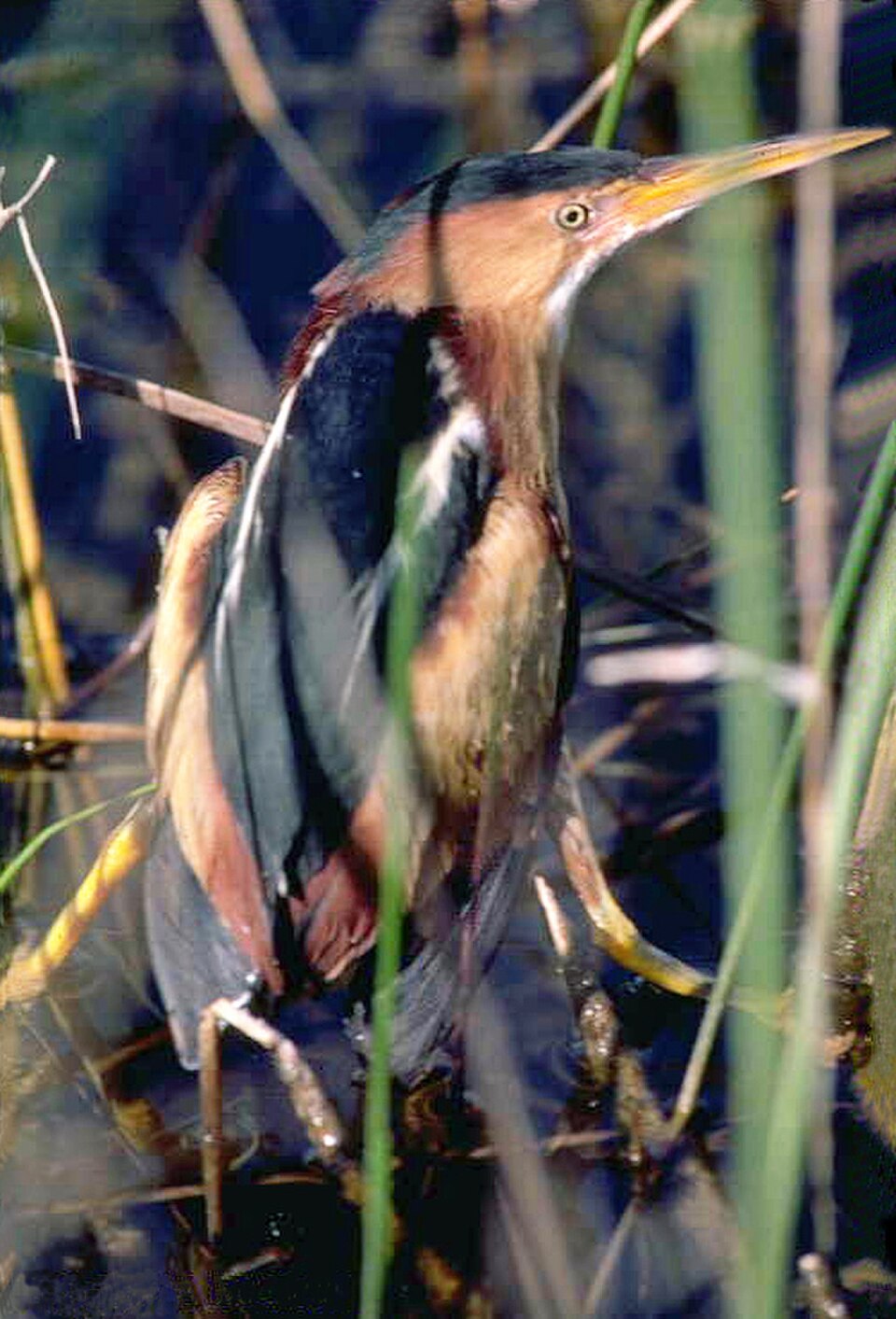 Least Bittern
In breve
Il modo più affidabile per separare il Stripe-backed Bittern dal Least Bittern è il modello delle parti superiori: il Stripe-backed Bittern ha un dorso e ali di colore marrone chiaro pesantemente striati di nero e beige-giallastro, mentre il Least Bittern mostra un dorso scuro, lucido e uniforme (nerastro nei maschi, marrone nelle femmine) con poche o nessuna striatura e macchie alari chiare in contrasto. Il Least Bittern ha anche toni rugginosi sui lati della testa e del collo, specialmente nelle femmine, che sono assenti nel Stripe-backed. Entrambe le specie sono molto piccole, segrete e abitano le paludi, con una massa corporea simile, ma i loro modelli delle parti superiori e le sottili differenze di colorazione della testa sono i segni distintivi chiave. Le piume giovanili e immature non sono ben descritte per il Stripe-backed Bittern, quindi è necessaria cautela con gli uccelli giovani.
Consigli di identificazione
- Back and wing pattern: Il Stripe-backed Bittern mostra sempre un dorso e ali di colore marrone chiaro con pesanti striature nere e beige-giallastro, mescolando il modello del dorso e delle ali; il Least Bittern ha un dorso scuro, lucido e uniforme (nerastro nei maschi, marrone nelle femmine) senza striature e copritrici alari marrone chiaro in contrasto in volo. Questo è il segno distintivo più affidabile per tutte le età e sessi.
- Rufous on head/neck: Il Least Bittern (specialmente le femmine) mostra toni rugginosi o marrone chiaro sui lati della testa e del collo; il Stripe-backed Bittern manca di questo, avendo una colorazione della testa più uniforme con strisce nere su una corona marrone più scura.
- Shoulder lines: Gli adulti di Least Bittern hanno linee bianche sulle spalle, che mancano o non sono descritte nel Stripe-backed Bittern.
- Underparts: Entrambi hanno parti inferiori striate, ma quelle del Least Bittern sono bianche con striature marrone chiaro, mentre quelle del Stripe-backed sono marrone più chiaro con strisce bianche. Questo è sottile e non sempre affidabile in scarsa illuminazione.
- Bill color: Il becco del Stripe-backed Bittern può essere verde chiaro fino all'arancione; quello del Least Bittern è giallo. Questo è un segno minore e può essere variabile.
- Sexual dimorphism: Il Stripe-backed Bittern non mostra dimorfismo sessuale; i maschi di Least Bittern sono lucidi e nerastri sopra, le femmine sono marroni lucide. Se vedi un uccello con un dorso fortemente nero, è un maschio di Least Bittern.
- Flight view: In volo, il Least Bittern mostra copritrici alari marrone chiaro in contrasto con un dorso scuro; il modello striato del Stripe-backed Bittern continua attraverso il dorso e le ali, quindi c'è meno contrasto.
- Juvenile/immature: Il giovanile di Stripe-backed Bittern non è descritto, quindi sii cauto con gli uccelli giovani; gli immaturi di Least Bittern somigliano alle femmine ma mancano ancora di pesanti striature dorsali.
- Posture: Entrambe le specie si congelano con il becco in alto quando allarmate e possono essere estremamente difficili da individuare; la postura non è un separatore.
- Habitat and range: Se sei in Nord America, stai quasi certamente vedendo il Least Bittern; il Stripe-backed Bittern si trova solo in Sud America. In Sud America, controlla il modello del dorso per conferma.
- Group size: Il Stripe-backed Bittern è solitamente solitario o in coppie; il Least Bittern può essere più spesso sentito che visto ma può essere trovato in habitat adatti in piccoli numeri.
- Egg color (not field mark): Le uova del Stripe-backed Bittern hanno un blu chiaro unico con uno strato verde traslucido, ma questo non è un segno di separazione sul campo.
- Size and structure: Entrambi sono estremamente simili in dimensioni e forma; non fare affidamento su questo per la separazione.
- Voice: Non sono descritte differenze vocali diagnostiche nelle fonti fornite.
- Behavior: Entrambe le specie usano comportamenti simili di evitamento dei predatori e sono ugualmente elusive; il comportamento non è un separatore affidabile.
Taglia
Entrambe le specie sono tra i più piccoli aironi, con una massa corporea media quasi identica (80 g) e lunghezze simili (28–36 cm per il Least Bittern, 28–35 cm per il Stripe-backed Bittern) [wikidata, wikipedia]. Sul campo, la dimensione non è un separatore affidabile. La loro struttura complessiva è simile e entrambe possono apparire snelle e compresse quando adottano la loro postura eretta caratteristica.
Piumaggio
La differenza più diagnostica è nelle parti superiori e nel modello delle ali. Il Stripe-backed Bittern (tutte le età e sessi, per quanto noto) mostra un dorso e ali di colore marrone chiaro con ampie striature nere e beige-giallastro, creando un aspetto striato e mescolato attraverso il dorso e le ali. Al contrario, gli adulti di Least Bittern hanno un dorso scuro, lucido e uniforme (nerastro nei maschi, marrone nelle femmine) che è privo di segni, nettamente distinto dai lati più chiari e rugginosi del collo e del viso. I Least Bittern mostrano anche copritrici alari marrone chiaro (rugginoso) in volo, in contrasto con il dorso scuro. Le femmine e gli immaturi di Least Bittern sono più marroni sopra ma mancano ancora delle pesanti striature del Stripe-backed. Il Stripe-backed Bittern manca dei toni rugginosi sui lati della testa e del collo che sono presenti nel Least Bittern, specialmente nelle femmine. Le parti inferiori di entrambi sono striate, ma quelle del Least Bittern sono bianche con striature marrone chiaro, mentre quelle del Stripe-backed sono marrone più chiaro con strisce bianche. La piuma giovanile per il Stripe-backed Bittern non è descritta, quindi è necessaria cautela con gli uccelli giovani.
Comportamento
Entrambe le specie sono estremamente segrete e spesso si congelano con il collo e il becco puntati verso l'alto quando allarmate, mimetizzandosi nella vegetazione delle paludi. Entrambe tendono a posarsi o a divaricare le canne piuttosto che guadare in acque aperte. Il Stripe-backed Bittern è tipicamente solitario o in coppie, mentre il Least Bittern può essere più spesso sentito che visto ed è anche elusive. Entrambe le specie usano posture simili di evitamento dei predatori, rendendo difficile la separazione comportamentale.
Habitat
Il Stripe-backed Bittern è ristretto al Sud America, trovato vicino a paludi d'acqua dolce, zone umide, rive di laghi e corsi d'acqua, spesso in popolazioni disgiunte su entrambi i lati delle Ande. Il Least Bittern ha un'area molto più ampia, nidificando dal Canada meridionale all'Argentina settentrionale, e migra in Nord America. Entrambi preferiscono vegetazione palustre densa, ma il Least Bittern è più diffuso e probabile nelle paludi nordamericane, mentre il Stripe-backed si trova solo in Sud America.
Stripe-backed Bittern · Least Bittern · I miei uccelli difficili