

Streak-throated Woodpecker vs Streak-breasted Woodpecker
Picus xanthopygaeus contro Picus viridanus
Fai un quiz con Streak-throated Woodpecker e Streak-breasted Woodpecker
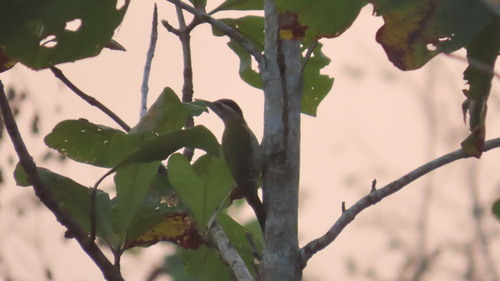 Streak-throated Woodpecker
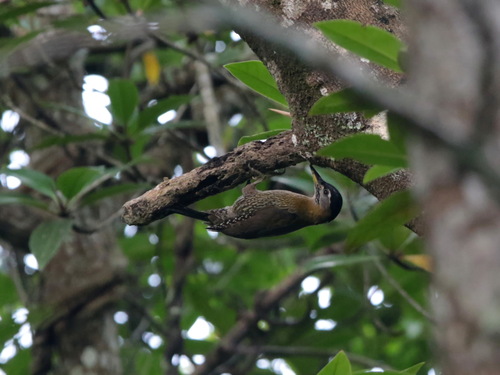 Streak-breasted Woodpecker
In breve
Il segno distintivo più affidabile per separare il Picus xanthopygaeus dal Picus viridanus è il motivo e la densità delle striature sulle parti inferiori: il Picus viridanus ha striature più dense e più estese sotto, insieme a una striscia di baffo più sottile e occhi notevolmente chiari. Al contrario, il Picus xanthopygaeus mostra una gola striata ma parti inferiori bianche squamose (non striate), un baffo più ampio e occhi scuri. Entrambi sono picchi verdi di dimensioni medie, ma prestare attenzione al motivo della testa e delle parti inferiori è fondamentale. L'habitat può anche aiutare: il Picus xanthopygaeus predilige boschi più secchi nel subcontinente indiano, mentre il Picus viridanus è legato a foreste e mangrovie più umide dal sud-est del Bangladesh fino alla penisola malese.
Consigli di identificazione
- Underpart streaking: Il Picus viridanus ha sempre striature più dense e più estese su tutte le parti inferiori, mentre il Picus xanthopygaeus ha una gola striata ma il resto delle parti inferiori è bianco e appare squamoso, non striato. Questo è il segno distintivo più coerente per tutte le età e i sessi.
- Facial pattern – moustache stripe: Il Picus xanthopygaeus mostra una striscia di baffo più ampia e chiara; il baffo del Picus viridanus è più sottile e meno evidente. Questo è meglio visibile da vicino o in buona luce.
- Eye color: Il Picus viridanus ha occhi notevolmente chiari, che possono risaltare sul campo, specialmente negli adulti. Il Picus xanthopygaeus ha occhi scuri. Il colore degli occhi è spesso visibile in buona luce o nelle fotografie.
- Throat pattern: Entrambe le specie hanno gole striate, ma solo il Picus xanthopygaeus ha le striature nettamente confinate alla gola, con il resto delle parti inferiori squamose. Le striature del Picus viridanus continuano ben al di sotto della gola.
- Crown color (sex differences): I maschi di entrambe le specie hanno una corona rossa, le femmine una corona nerastra. Questo non aiuta a separare le due specie, ma aiuta con il sesso.
- Upperparts and rump: Entrambi sono verdi sopra con un posteriore giallastro; questo non è utile per la separazione.
- Tail and bill: Entrambi hanno una coda scura e semplice e un becco piccolo e scuro. Queste caratteristiche sono simili e non diagnostiche.
- Habitat context: Se visti in boschi secchi o nelle colline in India, ci si aspetta il Picus xanthopygaeus. Se in foreste umide di pianura o mangrovie dal sud-est del Bangladesh fino alla penisola malese, il Picus viridanus è più probabile. Usare con cautela nelle zone di sovrapposizione.
- Geographic range: Il Picus xanthopygaeus si trova in tutto il subcontinente indiano, mentre il Picus viridanus è limitato dal sud-est del Bangladesh fino alla penisola malese. Considerare sempre la posizione quando si identifica.
- No diagnostic flight/wing pattern: Non ci sono differenze documentate nel motivo delle ali superiori o nel volo per immaturi o adulti tra queste due specie, quindi non fare affidamento sulle viste in volo per la separazione.
- Plumage pitfalls: Fare attenzione all'illuminazione variabile e all'usura, che possono offuscare la densità delle striature delle parti inferiori o la larghezza della striscia di baffo. Cercare sempre di confermare con più segni sul campo.
- Age/sex confusion: Non sono notati segni specifici per giovanili o immaturi per entrambe le specie, quindi i segni principali si applicano a tutte le età e i sessi.
- Voice: Non sono documentate differenze vocali nelle fonti, quindi non usare la voce per la separazione.
- Community tip: Se non sei sicuro, dai priorità a una vista chiara delle parti inferiori e del colore degli occhi, poiché questi sono i segni più affidabili e meno variabili.
- Photographic review: Quando possibile, usa foto per controllare la densità delle striature delle parti inferiori e il colore degli occhi, specialmente in aree di potenziale sovrapposizione di gamma o per individui difficili.
Taglia
Il Picus viridanus è leggermente più pesante in media (105 g contro 97 g per il Picus xanthopygaeus), ma questa differenza è sottile e poco probabile che sia evidente sul campo. Entrambi sono picchi di dimensioni medie del genere Picus con struttura e proporzioni simili, quindi non fare affidamento sulla dimensione per la separazione.
Piumaggio
Per tutte le età, concentrati sul motivo delle parti inferiori e del viso. Il Picus xanthopygaeus ha una gola striata ma il resto delle parti inferiori è bianco e appare squamoso piuttosto che striato. La sua striscia di baffo è più ampia e chiara, e gli occhi sono scuri. Al contrario, il Picus viridanus mostra striature più dense su tutte le parti inferiori (non solo sulla gola), una striscia di baffo molto più sottile e occhi chiari. Entrambe le specie sono verdi sopra con un posteriore giallastro, e i maschi hanno una corona rossa (le femmine nerastre). La coda è scura e semplice in entrambe. Non sono documentate differenze specifiche nel motivo delle ali superiori o nel volo nelle fonti, quindi questi segni sono meglio utilizzati su uccelli posati o in cerca di cibo.
Comportamento
Entrambe le specie si comportano come tipici picchi del genere Picus, cercando cibo su tronchi e rami in habitat boschivi. Non ci sono differenze comportamentali notate nelle fonti che separino affidabilmente queste due specie sul campo.
Habitat
Il Picus xanthopygaeus si trova in habitat boschivi più secchi, dalle pianure fino alle colline, attraverso il subcontinente indiano. Il Picus viridanus, d'altra parte, è limitato a foreste e mangrovie umide di pianura subtropicali o tropicali, che vanno dal sud-est del Bangladesh fino alla penisola malese centrale. Se ti trovi in un bosco secco in India, ci si aspetta il Picus xanthopygaeus; nelle mangrovie o nelle foreste umide della penisola malese, il Picus viridanus è la specie probabile. Tuttavia, nelle aree sovrapposte (ad es., sud-est del Bangladesh), è necessaria un'attenzione particolare al piumaggio.
Streak-throated Woodpecker · Streak-breasted Woodpecker · I miei uccelli difficili