
Square-tailed Drongo-Cuckoo vs Common Hawk-Cuckoo
Surniculus lugubris contro Hierococcyx varius
Fai un quiz con Square-tailed Drongo-Cuckoo e Common Hawk-Cuckoo
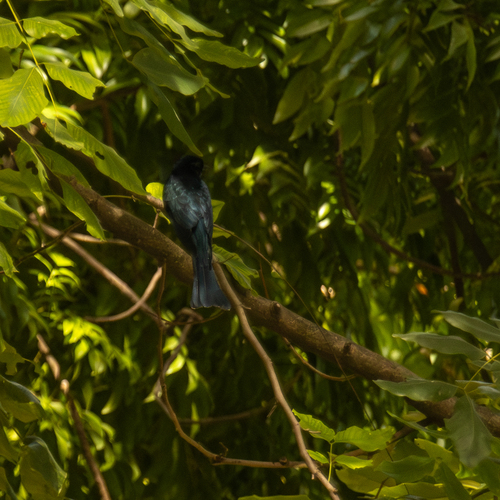 Square-tailed Drongo-Cuckoo
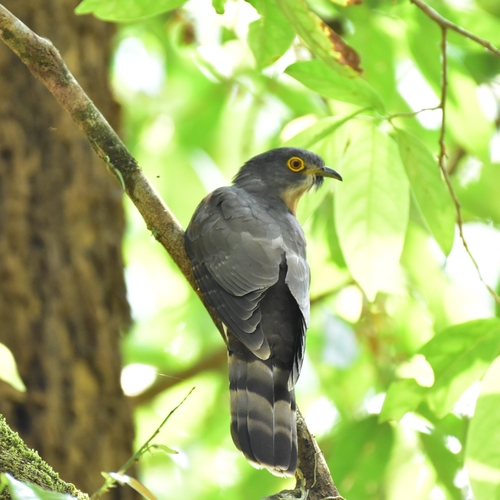 Common Hawk-Cuckoo
In breve
Il segno distintivo più affidabile è il colore generale e le barre: il Square-tailed Drongo-Cuckoo è nero lucido con una coda a punta quadrata e un ventriglio barrato di bianco, mentre il Common Hawk-Cuckoo è grigio cenere sopra, biancastro sotto con forti barre marroni, e ha una coda ampiamente barrata. In volo, il Square-tailed Drongo-Cuckoo mostra una striscia bianca sulle ali dal basso e una coda distintamente intagliata, non forked; il Common Hawk-Cuckoo manca della striscia sulle ali ma ha una silhouette e uno stile di volo simile a un falco. I giovani del Common Hawk-Cuckoo sono fortemente striati e marcati a chevron sotto, a differenza del drongo-cuckoo. La forma del becco e la struttura della coda sono anche chiave: il drongo-cuckoo ha un becco ricurvo verso il basso e solo un leggero intaglio all'estremità della coda, mentre il hawk-cuckoo ha un becco dritto e una coda ampia e arrotondata. La voce è distintiva se udita: il drongo-cuckoo emette fischi acuti e spezzati, mentre il hawk-cuckoo emette un forte richiamo ripetuto di tre note 'brain-fever'.
Consigli di identificazione
- Juvenile/immature underparts: Se l'uccello ha un petto striato e grandi chevron marroni sull'addome, è un giovane Common Hawk-Cuckoo. Il Square-tailed Drongo-Cuckoo non mostra questo schema a nessuna età.
- Adult underparts: Il Square-tailed Drongo-Cuckoo è nero lucido con un ventriglio barrato di bianco e una parte inferiore della coda; il Common Hawk-Cuckoo è grigio cenere sopra, biancastro sotto con forti barre marroni.
- Tail shape: Il drongo-cuckoo ha una coda intagliata (ma non forked) con punte leggermente svasate; il hawk-cuckoo ha una coda ampiamente barrata e arrotondata. La coda del drongo-cuckoo non è mai profondamente forked o ampiamente arrotondata.
- White wing-stripe in flight: Solo il Square-tailed Drongo-Cuckoo mostra una striscia bianca sulle ali dal basso in volo. Il hawk-cuckoo manca di questo segno.
- Bill shape: Il drongo-cuckoo ha un becco visibilmente ricurvo verso il basso, mentre il becco del hawk-cuckoo è dritto e simile a quello di un rapace.
- Yellow eye-ring: Il Common Hawk-Cuckoo ha un distintivo anello oculare giallo; il drongo-cuckoo manca di questa caratteristica.
- Overall color: Il drongo-cuckoo è uniformemente scuro e lucido; il hawk-cuckoo è più chiaro, con un chiaro contrasto tra la parte superiore grigia e la parte inferiore chiara e barrata.
- Flight style: Il hawk-cuckoo utilizza un volo a battito e planata, somigliante a un piccolo falco o shikra, e spesso scuote la coda dopo l'atterraggio. Il volo del drongo-cuckoo è più diretto e simile a quello del drongo, con meno planata.
- Perched jizz: Il drongo-cuckoo si posiziona eretto, spesso somigliando a un Black Drongo; il hawk-cuckoo si posiziona più come un piccolo falco, a volte con una postura curva.
- Alarm response: Il hawk-cuckoo spesso provoca richiami di allerta e mobbing da parte di piccoli uccelli e scoiattoli, a causa del suo aspetto simile a un falco. Il drongo-cuckoo non lo fa.
- Voice: Il drongo-cuckoo emette fischi acuti e spezzati; il hawk-cuckoo emette un forte richiamo ripetuto di tre note 'brain-fever'. Se senti il richiamo classico, l'identificazione è certa.
- Size: Il hawk-cuckoo è molto più grande e massiccio (dimensione di un piccione), mentre il drongo-cuckoo è più piccolo e più snello (dimensione di un drongo).
- Habitat/range: Se si trova nell'India peninsulare, il hawk-cuckoo è molto più probabile; nelle Himalaya orientali e nel Sud-est asiatico, il drongo-cuckoo è più probabile. Tuttavia, si verifica una sovrapposizione, quindi controlla sempre il piumaggio e la struttura.
- Sex/season: Entrambe le specie sono sessualmente monomorfiche, quindi il sesso non è un segno distintivo. La stagione non influisce fortemente sul piumaggio in nessuna delle due specie.
- Host context: Entrambi sono parassiti da nido di babblers, ma questo non è un segno distintivo. Non fare affidamento sulla presenza dell'ospite per l'identificazione.
Taglia
Il Common Hawk-Cuckoo è notevolmente più grande, circa della dimensione di un piccione (ca. 34 cm), ed è complessivamente più massiccio. Il Square-tailed Drongo-Cuckoo è più piccolo e più snello, somigliando da vicino a un Black Drongo in dimensione e forma. I maschi e le femmine sono simili in entrambe le specie, ma i maschi di hawk-cuckoo tendono ad essere leggermente più grandi delle femmine. Questa differenza di dimensione è spesso evidente in un confronto diretto o quando visti posati in aperto.
Piumaggio
- Juveniles/Immatures: I giovani del Common Hawk-Cuckoo hanno un petto striato e grandi chevron marroni sull'addome, somigliando a giovani shikras. I giovani Square-tailed Drongo-Cuckoo non sono descritti in dettaglio, ma non sono notate striature o chevron simili, quindi qualsiasi parte inferiore fortemente striata o marcata a chevron indica hawk-cuckoo.
- Adults: Il Square-tailed Drongo-Cuckoo è nero lucido nel complesso con un ventriglio barrato di bianco e una parte inferiore della coda, e una striscia bianca sulle ali visibile dal basso in volo. La coda è solo intagliata, non forked, con punte leggermente svasate. Il Common Hawk-Cuckoo è grigio cenere sopra, biancastro sotto con forti barre marroni, e una coda ampiamente barrata. Entrambi i sessi sono simili in entrambe le specie.
- Key contrasts: Il drongo-cuckoo non mostra mai le parti inferiori chiare del hawk-cuckoo con barre marroni, né l'anello oculare giallo. Il hawk-cuckoo non mostra mai il piumaggio nero lucido del drongo-cuckoo, le barre bianche del ventriglio, o la striscia bianca sulle ali.
Comportamento
Il Square-tailed Drongo-Cuckoo si posiziona eretto e può somigliare a un Black Drongo nella postura. In volo, mostra una striscia bianca sulle ali dal basso e una coda intagliata. Il Common Hawk-Cuckoo imita lo stile di volo e di posizionamento di un piccolo falco (specialmente shikra), utilizzando un volo a battito e planata e spesso scuotendo la coda da un lato all'altro dopo l'atterraggio. Piccoli uccelli e scoiattoli spesso mobbano i hawk-cuckoo, scambiandoli per rapaci. Il drongo-cuckoo non provoca tipicamente questa risposta. Entrambi sono parassiti da nido di babblers, ma questo non è un segno distintivo.
Habitat
Entrambe le specie si trovano in aree boschive e ai margini delle foreste, spesso in compagnia dei loro ospiti babblers. Il Square-tailed Drongo-Cuckoo si estende dalle Himalaya verso est nel Sud-est asiatico, mentre il Common Hawk-Cuckoo è residente in tutto il subcontinente indiano. È possibile una sovrapposizione nel nord dell'India, ma il hawk-cuckoo è più diffuso nell'India peninsulare. L'habitat da solo non è diagnostico, ma il contesto può aiutare con la distribuzione.
Voce
Il Square-tailed Drongo-Cuckoo emette una serie di fischi acuti e penetranti che aumentano di tonalità, consegnati in modo stridente e spezzato. Il Common Hawk-Cuckoo è famoso per il suo forte richiamo ripetuto di tre note 'brain-fever', che aumenta in crescendo e termina bruscamente, spesso udito durante il giorno e di notte. Le femmine di hawk-cuckoo emettono una serie di note graffianti. I due sono molto diversi: il richiamo del drongo-cuckoo è fischiato e spezzato, quello del hawk-cuckoo è forte, ripetitivo e facilmente riconoscibile per il suo ritmo.
Square-tailed Drongo-Cuckoo · Common Hawk-Cuckoo · I miei uccelli difficili