

Spotted Wood-Owl vs Brown Wood-Owl
Strix seloputo contro Strix leptogrammica
Fai un quiz con Spotted Wood-Owl e Brown Wood-Owl
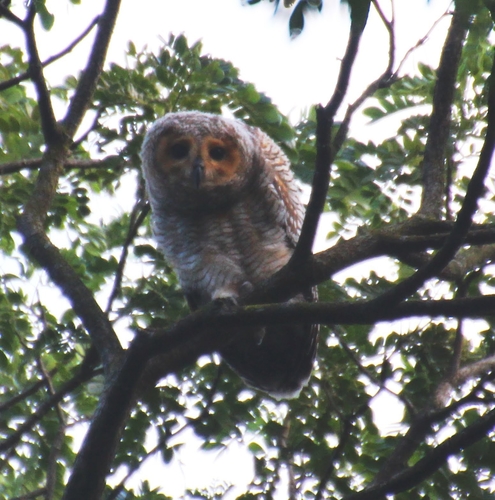 Spotted Wood-Owl
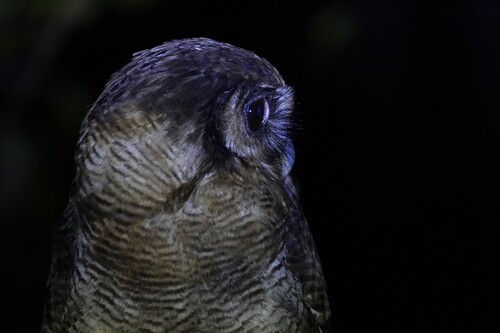 Brown Wood-Owl
In breve
Il segno distintivo più affidabile tra Spotted Wood-Owl e Brown Wood-Owl è il motivo della parte superiore: Spotted Wood-Owl mostra barre e macchie bianche prominenti su un dorso marrone caffè, mentre Brown Wood-Owl è molto più uniformemente marrone scuro sopra, con solo deboli macchie bianche sulle spalle. Spotted Wood-Owl ha anche un disco facciale di un arancione-buff sorprendente e una banda giallastra sulla gola (nella forma nominativa), mentre il disco facciale di Brown Wood-Owl è marrone o ruggine, bordato di bianco, e manca di barre concentriche. Entrambe le specie mancano di ciuffi auricolari e hanno occhi scuri, ma i loro motivi di parti inferiori e faccia sono distinti. Queste differenze sono visibili negli uccelli posati e, in misura minore, in volo se l'ala superiore è ben visibile. I motivi specifici dell'ala superiore per i giovani e gli immaturi non sono descritti nelle fonti, quindi il piumaggio adulto è la principale base per la separazione.
Consigli di identificazione
- Il motivo della parte superiore è fondamentale: Spotted Wood-Owl mostra barre e macchie bianche audaci sulla schiena e sulle ali, mentre Brown Wood-Owl è quasi uniformemente marrone scuro sopra con solo deboli macchie bianche sulle spalle. Questo è il modo più veloce per separarli in posato o in volo ben illuminato.
- Colore e motivo del disco facciale: Spotted Wood-Owl ha un disco facciale arancione-buff con una banda giallastra sulla gola (nella forma nominativa), mentre il disco facciale di Brown Wood-Owl è marrone o ruggine, bordato di bianco, e manca di barre concentriche. Cerca il calore generale e la banda sulla gola per Spotted.
- Marcature delle parti inferiori: Spotted Wood-Owl ha parti inferiori gialle opache con barre bianche larghe e barre nere strette; Brown Wood-Owl è buff sotto con striature marroni, non barre. Parti inferiori barrate indicano Spotted.
- Banda del collo: Brown Wood-Owl mostra una banda bianca sul collo, che è assente o molto meno evidente in Spotted Wood-Owl.
- Colore degli occhi: Entrambi hanno occhi marroni scuri, quindi questo non è utile per la separazione.
- Ciuffi auricolari: Entrambe le specie mancano di ciuffi auricolari (sono 'senza orecchie'), quindi non utilizzare questa caratteristica.
- Becco e piedi: Spotted Wood-Owl ha un becco nero-verde e dita piumate di oliva; il becco e i piedi di Brown Wood-Owl non sono descritti come distintivi nelle fonti.
- Dimensione: Brown Wood-Owl è leggermente più grande, ma la differenza è sottile e non affidabile a meno che entrambi non siano visti insieme.
- Viste in volo: Non sono descritti motivi unici per ali di giovani o immaturi per nessuna delle due specie, quindi fare affidamento sul motivo generale della parte superiore e sulle barre delle parti inferiori in volo.
- Voce: Il richiamo di Spotted Wood-Owl è un 'huhuhu' rotolante e un lungo 'whoo'; la voce di Brown Wood-Owl non è descritta qui, quindi non utilizzare la vocalizzazione per la separazione a meno che non si abbia conoscenza locale.
- Distribuzione e contesto: In Borneo, si trova solo Brown Wood-Owl; Spotted Wood-Owl è assente. In Asia meridionale, Brown Wood-Owl è diffuso, mentre Spotted Wood-Owl è assente. In Asia sudorientale, controlla lo stato locale, ma non fare affidamento solo sulla distribuzione nelle zone di sovrapposizione.
- Sesso e età: Non è descritto dimorfismo sessuale; entrambi i sessi sembrano simili. Le marcature specifiche per giovani e immaturi non sono dettagliate, quindi utilizzare i segni di campo adulti per tutte le età.
- Trappole comuni: Fai attenzione alla scarsa illuminazione o a viste distanti che fanno apparire Brown Wood-Owl più patternato di quanto non sia, o Spotted Wood-Owl meno. Concentrati sull'audacia e sull'estensione del bianco nelle parti superiori e sul colore del viso/gola.
- Posato vs. volo: Entrambe le specie sono solitamente viste posate, ma in volo, le parti inferiori barrate di Spotted Wood-Owl e l'ala superiore più patternata possono essere visibili, mentre Brown Wood-Owl apparirà più semplice sopra e striato sotto.
- Macchie sulle spalle: Se vedi solo deboli macchie bianche sulla spalla e altrimenti parti superiori marroni uniformi, sospetta Brown Wood-Owl; barre e macchie bianche audaci sulla schiena e sulle ali indicano Spotted Wood-Owl.
Taglia
Entrambe le specie sono grandi gufi Strix senza orecchie, ma Brown Wood-Owl è leggermente più grande nel complesso. Spotted Wood-Owl misura circa 44–48 cm di lunghezza con una lunghezza dell'ala di 30–36 cm, mentre Brown Wood-Owl è lungo 45–57 cm (lunghezza dell'ala non specificata per Brown). Sul campo, questa differenza di dimensione è sottile e non è un punto di separazione affidabile a meno che entrambi non siano visti fianco a fianco.
Piumaggio
Per gli adulti, Spotted Wood-Owl è istantaneamente più patternato sopra, con barre e macchie bianche audaci su parti superiori marrone caffè, e un disco facciale arancione-buff contrastante. Le sue parti inferiori sono gialle opache con barre bianche larghe e barre nere strette. Al contrario, Brown Wood-Owl è molto più semplice sopra, con parti superiori marrone scuro uniformi e solo deboli macchie bianche sulle spalle. Le sue parti inferiori sono buff con striature marroni, non barrate. Il disco facciale è marrone o ruggine, bordato di bianco, e c'è una banda bianca sul collo, ma manca della banda giallastra sulla gola di Spotted Wood-Owl. Entrambi hanno occhi scuri e nessun ciuffo auricolare. I segni specifici per le ali superiori o il volo per giovani o immaturi non sono descritti per nessuna delle due specie nelle fonti, quindi questi contrasti si applicano a tutte le età a meno che non sia diversamente indicato.
Comportamento
Entrambe le specie sono gufi Strix tipici, solitamente visti posati tranquillamente in boschi densi o foreste. Non ci sono differenze comportamentali descritte nelle fonti che siano diagnostiche per la separazione sul campo.
Habitat
Spotted Wood-Owl ha una distribuzione disgiunta attorno a Borneo ma non sull'isola stessa, mentre Brown Wood-Owl si trova in India, Bangladesh, Sri Lanka, Indonesia, Taiwan e sud della Cina. Nelle aree di sovrapposizione (ad es., parti del sud-est asiatico), l'habitat da solo non è diagnostico, ma Spotted Wood-Owl tende ad essere più localizzato e distribuito in modo irregolare. Brown Wood-Owl è un riproduttore residente in Asia meridionale ed è generalmente più diffuso.
Voce
Spotted Wood-Owl emette un 'huhuhu' rotolante seguito da un lungo 'whoo.' Nessuna descrizione vocale è fornita per Brown Wood-Owl nelle fonti, quindi la voce non è una separazione affidabile sul campo basata su questo materiale.
Spotted Wood-Owl · Brown Wood-Owl · I miei uccelli difficili