

Piro piro macchiato vs Solitary Sandpiper
Actitis macularius contro Tringa solitaria
Fai un quiz con Piro piro macchiato e Solitary Sandpiper
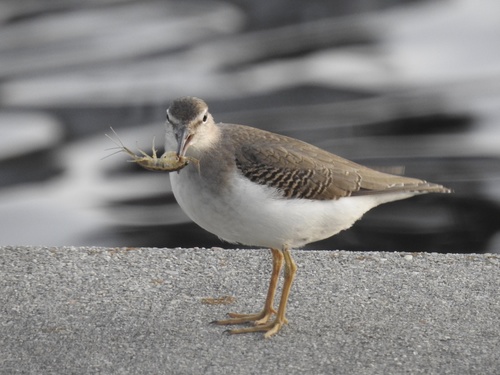 Piro piro macchiato
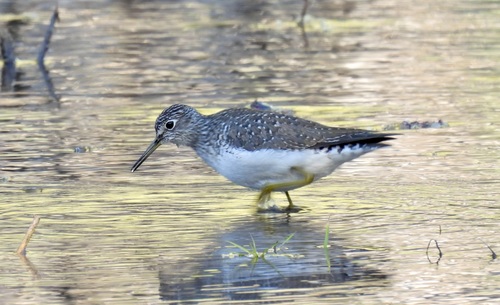 Solitary Sandpiper
In breve
Il segno di campo più affidabile per separare il Piro piro macchiato dal Solitary Sandpiper—specialmente in volo o su uccelli immaturi/non in riproduzione—è il motivo della coda e del posteriore: il Piro piro macchiato mostra un dorso marrone uniforme senza posteriore contrastante, mentre il Solitary Sandpiper ha un posteriore e un centro della coda distintamente scuri, che si distinguono in volo. A terra, il Piro piro macchiato in abito nuziale è inconfondibile con le sue audaci macchie nere sotto, ma in abito non nuziale o immaturo, può sembrare molto simile al Solitary Sandpiper, quindi concentrati sul colore delle gambe (giallastro nel Piro piro, verdastro o grigiastro nel Solitary) e sul colore del becco. Il Solitary Sandpiper è leggermente più grande e tozzo, con un dorso più scuro e uniforme e un motivo del collo e del petto più contrastante. Entrambe le specie muovono le loro code, ma il Piro piro macchiato lo fa in modo più persistente e con un passo più rigido. Usa le viste in volo e il colore delle gambe come strumenti principali quando il piumaggio è ambiguo.
Consigli di identificazione
- Motivo della coda e del posteriore in volo (tutte le età): Il Piro piro macchiato mostra un dorso e un posteriore marrone uniforme, mentre il Solitary Sandpiper ha un posteriore e un centro della coda scuri che contrastano con il resto del corpo. Questo è il segno più affidabile in volo, specialmente per gli immaturi e gli uccelli non in riproduzione.
- Motivo delle ali in volo (tutte le età): Il Piro piro macchiato ha un motivo delle ali più sbiadito, privo di forte contrasto, mentre le ali del Solitary Sandpiper sono scure sopra e sotto, abbinandosi al posteriore scuro.
- Macchie sotto (breeding adult Piro piro macchiato only): Il Piro piro macchiato in riproduzione ha audaci macchie nere su parti inferiori bianche. Nessun'altra età o Solitary Sandpiper mostra mai questo.
- Colore delle gambe (tutte le età): Il Piro piro macchiato ha gambe e piedi giallastri, mentre il Solitary Sandpiper ha gambe verdastre o grigiastre. Questo è visibile in buona luce e a distanza ravvicinata.
- Colore del becco (tutte le età): Il becco del Piro piro macchiato è arancione con una punta scura; il becco del Solitary Sandpiper è meno vivace, fondendosi di più con la testa.
- Supercilium (tutte le età): Il Piro piro macchiato ha un supercilium bianco (sopracciglio), che può essere un segno sottile ma utile.
- Dorso e parti superiori (tutte le età): Il Solitary Sandpiper ha un dorso verdastro più scuro e uniforme, mentre il Piro piro macchiato è più marrone e chiaro sopra.
- Motivo del collo e del petto (tutte le età): Il Solitary Sandpiper mostra un motivo del collo e del petto più definito e contrastante, mentre il Piro piro macchiato è più semplice quando non è in abito nuziale.
- Forma del corpo e impressione generale (tutte le età): Il Solitary Sandpiper appare più tozzo e massiccio, con un'apertura alare leggermente più lunga; il Piro piro macchiato è più snello e compatto.
- Comportamento di movimento della coda (tutte le età): Entrambe le specie muovono le loro code, ma il Piro piro macchiato lo fa in modo più persistente e con un movimento più rigido e meccanico.
- Stile di volo (tutte le età): Il Piro piro macchiato vola basso sull'acqua con battiti d'ali rigidi e superficiali; il volo del Solitary Sandpiper è meno rigido.
- Preferenza dell'habitat (tutte le età): Il Piro piro macchiato preferisce coste aperte, fangose o sabbiose; il Solitary Sandpiper è più spesso trovato in stagni boschivi e paludi.
- Vocalizzazione (tutte le età): Se senti un fischio a tre note in volo, è il Solitary Sandpiper. Il richiamo del Piro piro macchiato non è dettagliato qui.
- Contesto stagionale: Se vedi un uccello audacemente macchiato in primavera o estate, è un Piro piro macchiato in riproduzione. In autunno e inverno, fai affidamento su segni di volo e strutturali.
- Trappola: I Piro piro macchiati non in riproduzione e immaturi possono sembrare molto simili al Solitary Sandpiper a terra—non fare affidamento sulle macchie delle parti inferiori al di fuori della stagione di riproduzione; usa invece il motivo del posteriore, il colore delle gambe e i segni di volo.
Taglia
Il Piro piro macchiato è leggermente più piccolo e leggero del Solitary Sandpiper. Il Piro piro macchiato misura 18–20 cm di lunghezza, con un'apertura alare di 37–40 cm e una massa di 34–50 g. Il Solitary Sandpiper è più lungo (18–23 cm), con un'apertura alare fino a 50 cm e un intervallo di massa di 31–65 g (media 48.6 g). Sul campo, il Solitary Sandpiper appare spesso un po' più massiccio e con ali più lunghe, ma la differenza è sottile e non sempre affidabile a distanza.
Piumaggio
Per gli uccelli immaturi e non in riproduzione—le età più confuse—concentrati prima sull'ala superiore e sul posteriore in volo. Il Piro piro macchiato ha un motivo delle ali più sbiadito senza forte contrasto, e un dorso e un posteriore marrone uniforme. Il Solitary Sandpiper, al contrario, mostra un posteriore e un centro della coda scuri che sono evidenti in volo, con ali scure sopra e sotto. A terra, il Piro piro macchiato in riproduzione è facile da identificare con le sue audaci macchie nere sotto, ma in piumaggio non nuziale e immaturo, manca di macchie e appare molto simile al Solitary Sandpiper. Il Piro piro macchiato ha un supercilium bianco e gambe giallastre, mentre il Solitary Sandpiper ha un dorso più scuro e uniforme, una testa e un petto grigiasti, e gambe verdastre o grigiastre. Entrambi hanno ali marroni con punti chiari, ma il motivo del collo e del petto del Solitary è più definito. La dimensione e la forma delle macchie sul Piro piro macchiato diventano più piccole e irregolari con l'età, ma questo è utile solo in piumaggio nuziale.
Comportamento
Entrambe le specie mostrano un cammino con movimento della coda, ma il Piro piro macchiato lo fa in modo più persistente e con un passo distintivo e rigido. In volo, entrambe le specie volano basse sull'acqua, ma il volo del Piro piro macchiato è più rigido. Il Solitary Sandpiper è spesso visto da solo, come suggerisce il suo nome, e tende ad essere più riservato e meno avvicinabile. Il Piro piro macchiato è più probabile che venga visto mentre cerca attivamente cibo lungo le coste aperte.
Habitat
Entrambe le specie si trovano vicino all'acqua, ma il Piro piro macchiato è più probabile che venga visto lungo coste aperte, fangose o sabbiose, sponde di fiumi e bordi di laghi. Il Solitary Sandpiper preferisce stagni boschivi, paludi e acque tranquille, ed è meno probabile che venga trovato su fanghi aperti. Entrambi nidificano in luoghi insoliti per gli uccelli costieri: il Solitary Sandpiper nidifica spesso sugli alberi, mentre il Piro piro macchiato nidifica a terra.
Voce
Il Solitary Sandpiper ha un fischio distintivo a tre note in volo, che può essere un segno utile se sentito. Il richiamo del Piro piro macchiato non è descritto nelle note fornite, quindi la voce è diagnostica solo se senti il fischio del Solitary.
Piro piro macchiato · Solitary Sandpiper · I miei uccelli difficili