

Northern/Southern Nutcracker vs Daurian Jackdaw
Nucifraga caryocatactes contro Coloeus dauuricus
Fai un quiz con Northern/Southern Nutcracker e Daurian Jackdaw
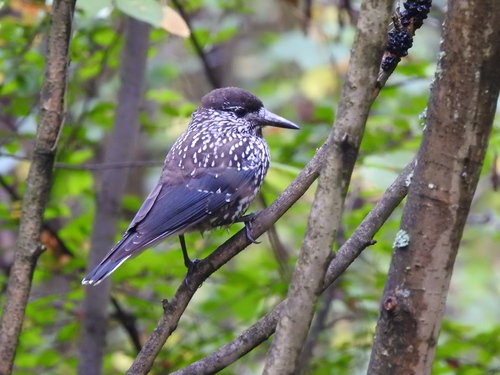 Northern/Southern Nutcracker
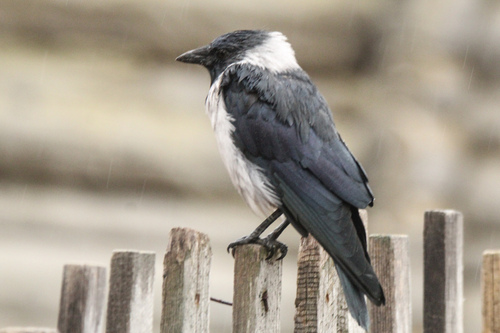 Daurian Jackdaw
In breve
Il segno distintivo più affidabile per separare il Northern/Southern Nutcracker dal Daurian Jackdaw è la densa maculatura bianca del nutcracker su un corpo marrone cioccolato, particolarmente evidente sul viso, sul collo e sulle parti inferiori, rispetto al motivo nettamente maculato del Daurian Jackdaw con un collare e parti inferiori di un bianco crema pallido che contrastano con una testa, ali e coda nere e lucide. In volo, il nutcracker mostra ali larghe e scure e una coda corta con angoli bianchi e un ventriglio bianco, mentre il volo del jackdaw è più compatto e privo di bianco nelle ali o nella coda. Il becco del nutcracker è lungo, pesante e acuto, mentre quello del jackdaw è più corto e più tipico di un piccolo corvo. Entrambi sono corvidi di dimensioni simili, ma la loro struttura, forma della testa e piumaggio sono sorprendentemente diversi in tutte le età.
Consigli di identificazione
- White spotting vs. pied pattern: Il Northern/Southern Nutcracker di tutte le età mostra dense macchie bianche su un corpo marrone cioccolato, specialmente sul viso e sulle parti inferiori; il Daurian Jackdaw non mostra mai maculature bianche, ma gli adulti hanno un collare e parti inferiori di un bianco crema nettamente definiti che contrastano con una testa e ali nere.
- Flight pattern and tail: In volo, il nutcracker mostra ali larghe e scure, una coda corta con angoli bianchi e un ventriglio bianco; le ali e la coda del Daurian Jackdaw sono tutte nere, senza bianco, e la coda è più squadrata e leggermente più lunga in proporzione.
- Bill shape: Il becco del nutcracker è lungo, spesso e acuto—notevolmente più grande di quello di qualsiasi jackdaw. Il becco del Daurian Jackdaw è corto, dritto e simile a quello di un corvo, mai così pesante o appuntito.
- Head shape and crest: Il nutcracker ha una testa snella e priva di cresta; la testa del Daurian Jackdaw è più rotonda e proporzionata come un piccolo corvo.
- Iris color: Il Daurian Jackdaw ha iridi nere (a differenza del jackdaw occidentale dagli occhi chiari); gli occhi del nutcracker sono anch'essi scuri, quindi questo non è diagnostico tra i due, ma esclude la confusione con il jackdaw occidentale.
- Underparts: Le parti inferiori del nutcracker sono marroni con macchie bianche; quelle del Daurian Jackdaw sono di un bianco crema (adulti) o scure (immaturi), ma mai maculate.
- Facial pattern: Il nutcracker ha una macchia lorale bianca e un anello oculare bianco; il Daurian Jackdaw non ha questi, ma ha un collare pallido.
- Wing gloss: Entrambe le specie hanno ali lucide, ma quelle del nutcracker sono nere con una lucentezza verde-blu; quelle del Daurian Jackdaw sono nere lucide, in abbinamento con la testa e la coda.
- Social behavior: I nutcracker sono solitamente solitari o in coppie; i Daurian Jackdaw sono spesso in stormi.
- Habitat: Il nutcracker si trova quasi sempre in o vicino a foreste di conifere; il Daurian Jackdaw preferisce campi aperti, terreni agricoli e aree urbane.
- Feeding behavior: Il nutcracker è spesso visto battere semi o noci, a volte tenendo il cibo con i piedi; il jackdaw cerca cibo a terra, spesso in gruppi.
- Tail pattern: Solo il nutcracker mostra angoli bianchi e una banda terminale bianca sulla parte inferiore della coda; la coda del Daurian Jackdaw è uniformemente nera.
- Juvenile confusion: I giovani Daurian Jackdaw sono più scuri e possono assomigliare ai jackdaw occidentali, ma non mostrano mai la maculatura bianca del nutcracker o il ventriglio bianco.
- Vocalizations: Non descritte nelle fonti, ma entrambi sono corvidi con richiami aspri; la voce è improbabile che sia diagnostica sul campo.
- Seasonal variation: Entrambe le specie sono residenti nella maggior parte del loro areale; i nutcracker irruenti possono apparire in luoghi insoliti, ma le differenze nel piumaggio rimangono chiare tutto l'anno.
Taglia
Entrambe le specie sono simili in lunghezza complessiva, con il Northern/Southern Nutcracker che varia da 32 a 38 cm e il Daurian Jackdaw circa 32 cm [wikipedia]. Il nutcracker è un po' più robusto e ha un becco notevolmente più grande e robusto. L'apertura alare è leggermente maggiore nel nutcracker (49–53 cm) rispetto al jackdaw, che è proporzionato in modo più compatto. Sul campo, il nutcracker appare spesso più pesante e con ali più larghe, mentre il jackdaw è più ordinato e compatto.
Piumaggio
I giovani e gli immaturi Northern/Southern Nutcracker mostrano già il marchio distintivo della specie: un corpo marrone cioccolato spessamente macchiato di bianco, specialmente sul viso, sul collo e sulle parti inferiori. In volo, tutte le età mostrano ali larghe e scure con una lucentezza verde-blu, una coda corta con angoli bianchi e un ventriglio e una banda sottocoda bianchi e conspicui. I Daurian Jackdaw, al contrario, hanno un aspetto nettamente maculato da adulti, con un collare e parti inferiori di un bianco crema, testa nera, gola, ali e coda, e copritrici auricolari grigie screziate. I giovani e gli adulti più scuri possono assomigliare ai jackdaw occidentali, ma mancano sempre della maculatura bianca del nutcracker e hanno iridi nere. Il Daurian Jackdaw non mostra mai bianco nelle ali o nella coda, e le parti inferiori sono di un colore pallido (adulti) o scure (immaturi), mai maculate. Il piumaggio del nutcracker non è mai maculato o con collare, e mostra sempre alcune macchie bianche e un ventriglio bianco.
Comportamento
I Northern/Southern Nutcracker sono spesso visti singolarmente o in coppie, muovendosi deliberatamente attraverso le foreste di conifere o volando con battiti d'ala lenti e ondulati. Possono essere visti battere semi o noci, a volte tenendo il cibo con i piedi. I Daurian Jackdaw sono più sociali, spesso in stormi, e mostrano un comportamento tipico del jackdaw: volo agile e diretto, frequenti appostamenti su fili o edifici, e una tendenza a cercare cibo in aree aperte. I nutcracker sono più arboricoli e meno probabili da vedere in terreni agricoli aperti o ambienti urbani rispetto ai jackdaw.
Habitat
Il Northern/Southern Nutcracker è un uccello delle foreste di conifere e miste, specialmente dove sono presenti pini o abeti con semi grandi. Si trova raramente lontano dagli alberi e evita i campi aperti. Il Daurian Jackdaw preferisce habitat aperti, inclusi terreni agricoli, steppe e aree urbane, ed è spesso visto intorno agli insediamenti umani, nidificando in cavità o edifici. L'overlap è minimo, eccetto forse ai margini delle foreste, ma il contesto può aiutare: un corvido marrone maculato in profondità nei boschi di pino è quasi certamente un nutcracker.
Northern/Southern Nutcracker · Daurian Jackdaw · I miei uccelli difficili