

Spot-crowned Woodcreeper vs Buffy Tuftedcheek
Lepidocolaptes affinis contro Pseudocolaptes lawrencii
Fai un quiz con Spot-crowned Woodcreeper e Buffy Tuftedcheek
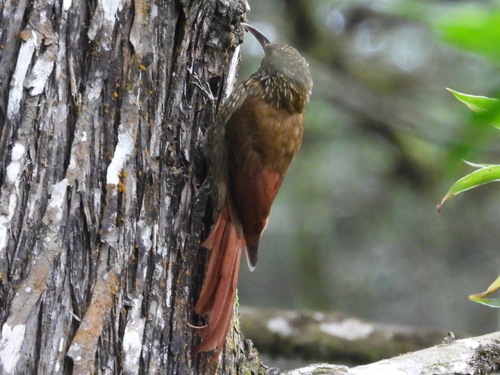 Spot-crowned Woodcreeper
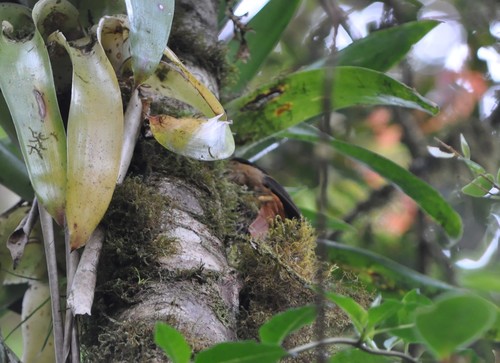 Buffy Tuftedcheek
In breve
The most reliable field mark to separate Spot-crowned Woodcreeper from Buffy Tuftedcheek is the presence of a pale, bushy tuft on the side of the neck in Buffy Tuftedcheek, which Spot-crowned Woodcreeper completely lacks. In addition, Spot-crowned Woodcreeper shows a crown with bold buffy spots or diamonds, while Buffy Tuftedcheek has a streaked crown and a striking buffy supercilium. Juvenile plumages differ: young Spot-crowned Woodcreeper are darker and less spotted above, while juvenile Buffy Tuftedcheek lack crown streaks and show a scalloped throat and breast. Structurally, Buffy Tuftedcheek is heavier and bulkier, with a stouter, longer bill (especially in females), compared to the slimmer, more delicate Spot-crowned Woodcreeper. Both species overlap in Costa Rica and Panama, but are usually found in different microhabitats.
Consigli di identificazione
-
Look for the neck tuft: Buffy Tuftedcheek always shows a pale golden-tawny tuft of feathers flaring from the side of the neck; Spot-crowned Woodcreeper never has this feature. This is the single most reliable mark at all ages and distances if the head is visible.
-
Crown pattern: Spot-crowned Woodcreeper has bold buffy spots or diamonds on a dark brown crown and nape (not streaks). Buffy Tuftedcheek has a blackish brown crown with thin buff streaks (adults) or no streaks (juveniles).
-
Supercilium and face: Buffy Tuftedcheek has a prominent buff-whitish supercilium and blackish brown lores and ear coverts, giving a strong facial contrast. Spot-crowned Woodcreeper's face is dusky with a black malar stripe but lacks a strong supercilium.
-
Bill structure: Buffy Tuftedcheek has a stouter, longer bill, especially in females, and the bill is blackish with a paler mandible. Spot-crowned Woodcreeper's bill is slimmer, moderately decurved, and variable in color (bluish pink, gray, yellowish, or dark brown, often paler at the tip). Juveniles of both species have shorter bills, but the difference in thickness remains.
-
Body shape and size: Buffy Tuftedcheek is bulkier and heavier (about 51 g), with a thicker neck and larger head, while Spot-crowned Woodcreeper is slim and light (28–38 g). This is most apparent when both are seen together or with experience.
-
Wing and tail color: In flight or perched, Buffy Tuftedcheek shows bright chestnut rufous tail and wings with pale rufous and ochraceous buff tips on the coverts, forming visible bars when the wing is closed. Spot-crowned Woodcreeper's wings and tail are rufous-chestnut but plainer, with brown edges and dusky tips, lacking obvious wing bars.
-
Underparts: Spot-crowned Woodcreeper has olive-brown underparts with broad buffy streaks edged black, especially on the throat and breast, fading on the flanks. Buffy Tuftedcheek's breast is blurry-streaked (wide dull brown and pale buff), belly is dull tawny-buff with faint mottling, and undertail coverts are ochraceous to cinnamon.
-
Juvenile differences: Juvenile Spot-crowned Woodcreeper is darker, with less obvious crown spots and less distinct streaking below, and a shorter, darker bill. Juvenile Buffy Tuftedcheek lacks crown streaks, shows a blackish brown scallop pattern on the throat and breast, and has more rufescent flanks and belly.
-
Behavior: Buffy Tuftedcheek moves more heavily and methodically, often pausing to fan its neck tufts, and prefers thick, mossy trunks. Spot-crowned Woodcreeper is more agile, often seen on thinner trunks and branches, and moves with quicker, more slender motions.
-
Habitat: Buffy Tuftedcheek is almost always in humid, mossy, high-elevation forest interiors; Spot-crowned Woodcreeper is more likely at forest edges, in drier woods, or at lower elevations within their shared range.
-
Sex differences: Only Buffy Tuftedcheek shows significant sexual dimorphism in bill length (females longer), but this is subtle in the field and not a primary separation from Spot-crowned Woodcreeper.
-
Plumage pitfalls: Do not rely on underpart streaking alone: both species are streaked below, but the pattern and boldness differ. The presence or absence of the neck tuft and the crown pattern are more reliable.
-
When in doubt: If the bird lacks a neck tuft and shows bold crown spots, it is a Spot-crowned Woodcreeper. If the bird is bulky, with a pale neck tuft and streaked crown, it is a Buffy Tuftedcheek. If the crown is plain and the throat/breast are scalloped (juvenile), check for other marks and context.
-
Range overlap: Both species occur in Costa Rica and Panama, but Spot-crowned Woodcreeper ranges farther north and into drier forests; Buffy Tuftedcheek is more restricted to humid, mossy highlands.
-
Vocalizations: Not diagnostic with current sources; use visual marks for separation.
Taglia
Buffy Tuftedcheek is distinctly heavier and bulkier than Spot-crowned Woodcreeper. Buffy Tuftedcheek weighs about 51 g (adult), compared to Spot-crowned Woodcreeper's 28–38 g. Both are similar in length (about 20–22 cm), but Buffy Tuftedcheek appears more robust, with a proportionally larger head and thicker neck. Spot-crowned Woodcreeper is slim and light-bodied, with a more delicate build.
Piumaggio
-
Juveniles: Juvenile Spot-crowned Woodcreeper are overall darker than adults, with less obvious crown spots and less distinct streaking below; their bill is shorter and darker. Juvenile Buffy Tuftedcheek lack crown streaks entirely, instead showing a scalloped blackish throat and breast and more rufescent flanks and belly. These differences are most obvious in perched birds but can be glimpsed in flight if close.
-
Adults: Spot-crowned Woodcreeper has a dark brown crown and nape with bold buffy spots or diamonds (not streaks), a dusky face with a black malar stripe, plain brown back, rufous-cinnamon rump, and rufous-chestnut wings and tail. Underparts are olive-brown with broad buffy streaks edged black, fading on the flanks. Buffy Tuftedcheek has a blackish brown crown with thin buff streaks (not spots), a conspicuous pale golden-tawny tuft on the neck, a buffy supercilium, rufescent-brown back with faint scalloping, bright chestnut tail, and wings with pale rufous and ochraceous buff tips forming bars. Its underparts are streaked and mottled, with a golden-tawny throat and ochraceous undertail coverts.
-
In flight: Buffy Tuftedcheek shows more contrast in the wing coverts (pale-tipped, forming bars), while Spot-crowned Woodcreeper's wings are plainer rufous-chestnut with brown edges and dusky tips.
Comportamento
Buffy Tuftedcheek is often seen climbing thick mossy trunks and branches, frequently pausing to fan its neck tufts. It moves more heavily and methodically than Spot-crowned Woodcreeper, which is more agile, often hitching up thinner trunks and branches and probing bark crevices. Spot-crowned Woodcreeper tends to be more active and slender in its movements, while Buffy Tuftedcheek appears bulkier and slower.
Habitat
Both species occur in montane forests of Costa Rica and Panama, but Buffy Tuftedcheek is more restricted to humid, mossy, higher-elevation forests, often in cloud forest zones. Spot-crowned Woodcreeper has a broader elevational range (from Mexico to Panama) and is more likely in drier or more open forest edges within its range. Where they overlap, Buffy Tuftedcheek is more likely in dense, epiphyte-laden forest interiors, while Spot-crowned Woodcreeper may be seen at forest edges or in slightly drier woodlands.
Spot-crowned Woodcreeper · Buffy Tuftedcheek · I miei uccelli difficili