

Passera sarda vs Cape Verde Sparrow
Passer hispaniolensis contro Passer iagoensis
Fai un quiz con Passera sarda e Cape Verde Sparrow
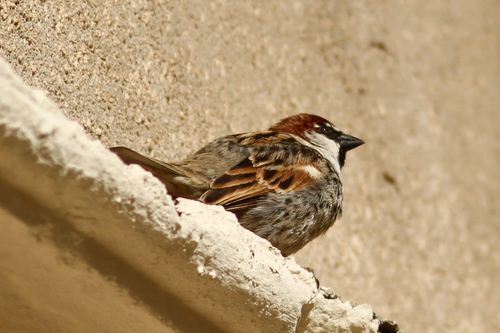 Passera sarda
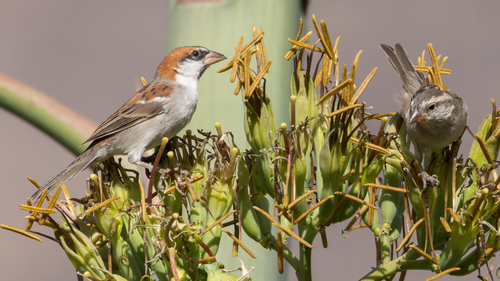 Cape Verde Sparrow
In breve
Il segno di campo più affidabile tra la Passera sarda e la Cape Verde Sparrow è la dimensione: la Passera sarda è notevolmente più grande e robusta, con un becco più pesante, mentre la Cape Verde Sparrow è decisamente più piccola e più delicata. Per i maschi adulti, la Passera sarda mostra una corona castagna e parti inferiori fortemente striate, mentre i maschi della Cape Verde Sparrow hanno una corona nerognola, strisce di testa castagne e nere ben definite e una parte inferiore molto più chiara e non striata. Le femmine e gli immaturi sono più difficili da distinguere, ma le femmine e i giovani della Cape Verde Sparrow hanno un forte supercilium pallido che è più pronunciato rispetto alla Passera sarda, e una parte inferiore generalmente più grigia e meno striata. In volo o a distanza, la dimensione e il motivo della testa sono i tuoi migliori indizi, poiché entrambe le specie condividono una struttura e un comportamento simili a quelli dei passeri.
Consigli di identificazione
- Dimensione: La Passera sarda è notevolmente più grande e pesante della Cape Verde Sparrow. Usa questo soprattutto quando i passeri sono visti insieme o con specie di riferimento conosciute.
- Struttura del Becco: La Passera sarda ha un becco più lungo e robusto, che può essere evidente a distanza ravvicinata. Il becco della Cape Verde Sparrow è proporzionalmente più piccolo e più delicato.
- Colore della Corona del Maschio Adulto: I maschi della Passera sarda hanno una corona castagna ricca; i maschi della Cape Verde Sparrow hanno una corona nera o grigio-nera e una striscia sopra l'occhio di un contrastante cannella.
- Guance e Parti Inferiori del Maschio Adulto: I maschi della Passera sarda mostrano guance bianche e parti inferiori fortemente striate di nero. I maschi della Cape Verde Sparrow hanno guance e parti inferiori grigie chiare, con solo un piccolo bavaglino nero sulla gola e nessuna pesante striatura sotto.
- Motivo della Testa del Maschio Adulto: I maschi della Cape Verde Sparrow hanno un motivo della testa audace e contrastante con corona nerognola, supercilium di cannella e nuca grigia; i maschi della Passera sarda non hanno la corona nerognola e hanno un berretto castano più uniforme.
- Supercilium delle Femmine e dei Giovanili: Le femmine e i giovanili della Cape Verde Sparrow hanno un forte supercilium pallido (sopracciglio), molto più evidente rispetto al supercilium sottile o assente delle femmine della Passera sarda.
- Parti Inferiori delle Femmine e dei Giovanili: Le femmine della Passera sarda sono più fortemente striate sui lati e sulla schiena, mentre le femmine della Cape Verde Sparrow sono più grigie sotto e meno striate.
- Motivo delle Ali/Schemi di Volo: Non sono descritti segni distintivi per nessuna delle due specie, quindi fai affidamento sulla dimensione e sul motivo della testa in volo.
- Stagionalità del Piumaggio: I maschi della Passera sarda possono apparire con corone più chiare in inverno, ma la distinzione tra corona castagna e nerognola rimane. I maschi della Cape Verde Sparrow possono apparire più luminosi sotto dopo una muta fresca.
- Vocalizzazioni: I richiami sono ampiamente simili; il richiamo di esibizione della Passera sarda è più forte e di tono più alto, mentre il richiamo del maschio della Cape Verde Sparrow è "twangy" o "chew-weep." Usa con cautela a meno che non sia molto familiare.
- Contesto Ambientale: La Passera sarda si trova nel Mediterraneo e nelle regioni adiacenti, spesso in terreni agricoli e boschi aperti. La Cape Verde Sparrow è limitata alle isole di Capo Verde, di solito in habitat aperti, rocciosi o semi-aridi.
- Urbano vs. Rurale: La Passera sarda può verificarsi in aree urbane dove la Passera oltremontana è assente; la Cape Verde Sparrow evita insediamenti densi ed è più comune in aree selvagge o semi-selvagge.
- Ibridazione: La Passera sarda può ibridarsi con la Passera oltremontana in alcune regioni, ma non con la Cape Verde Sparrow, che è isolata sulle isole.
- Abbondanza Locale: A Fogo (Capo Verde), la Cape Verde Sparrow è l'unico passero e comune ovunque; la Passera sarda è rara o assente nella maggior parte delle isole di Capo Verde.
- Trappole: Le femmine e i giovanili sono i più difficili; cerca sempre la forza del supercilium e la dimensione complessiva. In caso di dubbio, usa la posizione e l'habitat come indizi di supporto.
Taglia
La Passera sarda è la più grande delle due, misurando 15–16 cm di lunghezza e pesando 22–36 g. La Cape Verde Sparrow è più piccola, con una lunghezza di 12.5–13 cm e una lunghezza dell'ala di 5.5–6.9 cm. Questa differenza di dimensione è solitamente evidente in un confronto diretto o quando si è familiari con le specie di passeri locali. La Passera sarda ha anche un becco leggermente più lungo e robusto, che può essere un segno sottile ma utile se visto bene.
Piumaggio
- Giovanili e Femmine: Le femmine e gli immaturi di entrambe le specie sono marroni e striati sopra, ma le femmine e i giovani della Cape Verde Sparrow si distinguono meglio per il loro grande supercilium pallido, che è più distinto rispetto al supercilium sottile della Passera sarda. Le femmine della Passera sarda sono più marcate nel complesso ma mancano del forte supercilium.
- Maschi Adulto: I maschi della Passera sarda hanno una corona castagna, guance bianche e parti inferiori fortemente striate di nero. I maschi della Cape Verde Sparrow hanno una corona nera o grigio-nera e una striscia sopra l'occhio di un ricco cannella (castagna), nuca grigia e un piccolo bavaglino nero su una parte inferiore grigia chiara, per lo più non striata. La combinazione di una corona nerognola e parti inferiori chiare è unica per la Cape Verde Sparrow tra queste due.
- Motivo delle Ali Superiori: Non sono descritti segni distintivi specifici per età per nessuna delle due specie, quindi la separazione in volo si basa sulla dimensione e sul motivo della testa.
- Variazione Stagionale: I maschi della Passera sarda possono mostrare corone più chiare in inverno (soprattutto la sottospecie orientale), ma la distinzione tra corona castagna e nerognola rimane. I maschi della Cape Verde Sparrow possono apparire più luminosi sotto e più castagni sulla testa in piumaggio fresco.
Comportamento
Entrambe le specie sono passeri tipici nel comportamento, foraggiando a terra e posandosi in modo evidente. La Passera sarda è leggermente più robusta e può apparire più robusta nella postura. Entrambe le specie possono essere viste in stormi, ma la Cape Verde Sparrow è più probabile che venga trovata in habitat aperti, rocciosi o semi-aridi, mentre la Passera sarda preferisce terreni agricoli più umidi e boschi aperti. Nelle aree in cui si sovrappongono (raramente), la Passera sarda può dominare in aree coltivate o più umide.
Habitat
La Passera sarda si trova in tutto il Mediterraneo, nel sud-ovest e nell'Asia centrale, ed è associata a terreni agricoli, boschi aperti e talvolta aree urbane (soprattutto dove la Passera oltremontana è assente). La Cape Verde Sparrow è endemica delle isole di Capo Verde e si verifica in una vasta gamma di habitat aperti, come pianure di lava, colline rocciose e gole, ma evita insediamenti densi e aree coltivate più ricche dove possono essere presenti la Passera sarda o la Passera oltremontana. A Fogo, la Cape Verde Sparrow è l'unico passero e comune in tutti gli habitat.
Voce
Entrambe le specie hanno richiami simili ad altri passeri. Il richiamo di esibizione della Passera sarda è un forte e acuto cinguettio disillabico ("chweeng-chweeng"), mentre il richiamo del maschio della Cape Verde Sparrow è descritto come "twangy" o "chew-weep" e quello della femmina come un più sibilante "chisk." Entrambi hanno richiami di allerta simili ("chur-chur-chur"). Le differenze sono sottili e di solito non sono diagnostiche sul campo a meno che tu non sia molto familiare con i repertori di entrambe le specie.
Passera sarda · Cape Verde Sparrow · I miei uccelli difficili