

Southern Tchagra vs Crimson-breasted Gonolek
Tchagra tchagra contro Laniarius atrococcineus
Fai un quiz con Southern Tchagra e Crimson-breasted Gonolek
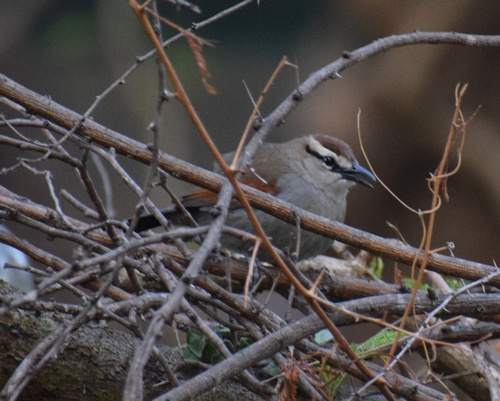 Southern Tchagra
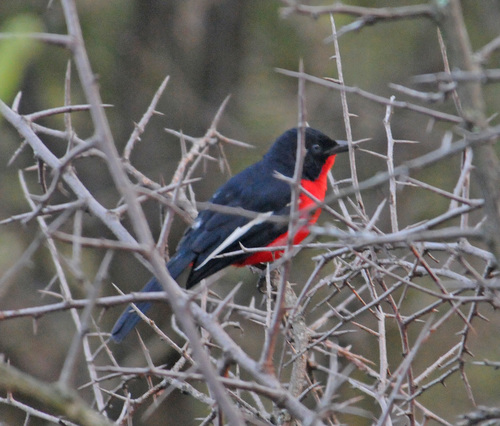 Crimson-breasted Gonolek
In breve
Il segno di campo più affidabile tra Southern Tchagra e Crimson-breasted Gonolek è il colore delle parti inferiori negli adulti: Southern Tchagra mostra parti inferiori grigie chiare, mentre Crimson-breasted Gonolek ha parti inferiori di un vivido scarlatto. Gli uccelli juvenili sono più difficili da distinguere, ma il giovane Gonolek è maculato e barrato di marrone chiaro con un becco pallido, mentre i giovani Tchagra sono versioni più opache degli adulti, con una striscia sopra l'occhio di color crema. In tutte le livree, il Gonolek ha una larga striscia bianca sulle ali e parti superiori nere, mentre il Tchagra ha ali castagne, una corona marrone e un sorprendente sopracciglio bianco. Entrambi sono simili in dimensioni e possono sovrapporsi nel sud dell'Africa, ma la loro colorazione e i modelli della testa sono distinti con un'attenta osservazione.
Consigli di identificazione
- Colore delle parti inferiori negli adulti: Southern Tchagra mostra sempre parti inferiori grigie chiare; Crimson-breasted Gonolek è vivido scarlatto sotto. Questo è il controllo più veloce e affidabile per gli adulti.
- Colore delle parti superiori: Gli adulti Gonolek sono completamente neri sopra, comprese le ali e la coda, con una larga striscia bianca sulle ali. Il Tchagra ha parti superiori marroni chiare, ali castagne e una coda nera con una punta bianca.
- Modello della testa: Il Tchagra ha una corona marrone, un ampio sopracciglio bianco e una striscia nera sopra l'occhio; il Gonolek ha una testa completamente nera senza sopracciglio o corona contrastante.
- Modello delle ali (adulti): Il Gonolek mostra una larga striscia bianca sulle ali altrimenti nere. Le ali del Tchagra sono castagne senza striscia bianca.
- Modello della coda: La coda del Tchagra è nera con una punta bianca; la coda del Gonolek è nera senza punta bianca.
- Colore e forma del becco: Entrambi hanno becchi scuri da adulti, ma quello del Tchagra è descritto come lungo e nero; i giovani Gonolek hanno un becco pallido.
- Livrea giovanile: I giovani Gonolek sono maculati e barrati di marrone chiaro con un becco pallido, privi del contrasto degli adulti. I giovani Tchagra sono più opachi degli adulti ma mostrano ancora una striscia sopra l'occhio di color crema e una corona marrone.
- Segni facciali nei juvenili: I giovani Tchagra mantengono il sopracciglio e la striscia sopra l'occhio; i giovani Gonolek mancano di questi contrasti facciali.
- Colore delle parti inferiori nei juvenili: I giovani Gonolek sono marrone chiaro sotto, non grigio chiaro o scarlatto; i giovani Tchagra sono grigio chiaro, come gli adulti ma più opachi.
- Differenze sessuali: Entrambe le specie sono simili tra i sessi; non fare affidamento sul sesso per l'identificazione.
- Variazione delle sottospecie: Le sottospecie di Tchagra variano nell'oscurità delle parti inferiori e nel colore della corona ma non si avvicinano mai allo scarlatto o al nero del Gonolek.
- Canto e richiami: Il fischio discendente del Tchagra e il trill femminile sono distintivi se uditi; il richiamo del Gonolek non è descritto in dettaglio qui.
- Sovrapposizione dell'habitat: Entrambi possono verificarsi in habitat cespugliosi nel sud dell'Africa; non usare l'habitat da solo per la separazione.
- Dimensioni: Entrambi sono simili in dimensioni e massa; non usare le dimensioni come separatore principale.
- Possibili insidie: Fai attenzione con i giovani Gonolek, che possono sembrare opachi e marroni, ma mancano del modello facciale e delle ali castagne del Tchagra. I giovani Tchagra non mostrano mai una striscia bianca sulle ali o parti inferiori scarlatte.
Taglia
Entrambe le specie sono simili in dimensioni e massa, con Southern Tchagra che pesa in media 46.8g e Crimson-breasted Gonolek 48.3g [wikidata]. Sul campo, le dimensioni non sono un separatore affidabile. Il Tchagra è descritto come lungo 17–21 cm, ma questo non differisce drammaticamente dal Gonolek. Differenze strutturali come la lunghezza del becco possono essere più utili delle dimensioni complessive.
Piumaggio
- Juveniles/immatures: I giovani Crimson-breasted Gonolek sono maculati e barrati di marrone chiaro con un becco pallido, privi delle parti superiori nere e delle parti inferiori scarlatte degli adulti. I giovani Southern Tchagra sono più opachi degli adulti, con una striscia di color crema attraverso l'occhio, ma mantengono la corona marrone e le ali castagne. La livrea giovanile del Gonolek è molto meno contrastante e manca del modello facciale del Tchagra.
- Adults: Gli adulti Southern Tchagra hanno una corona marrone, un ampio sopracciglio bianco, una striscia nera sopra l'occhio, parti inferiori grigie chiare, parti superiori marroni chiare, ali castagne ripiegate e una coda nera con punta bianca. Gli adulti Crimson-breasted Gonolek sono sorprendentemente neri sopra (comprese le ali e la coda), con una larga striscia bianca sulle ali e parti inferiori di un vivido scarlatto. Il modello della testa è completamente nero senza sopracciglio. Le parti inferiori del Gonolek non sono mai grigie chiare, e quelle del Tchagra non sono mai scarlatte.
- Sexes: Entrambe le specie sono sessualmente monomorfiche nella livrea.
- Subspecies: Esiste una variazione nel colore delle parti inferiori e nel tono della corona del Tchagra, ma non si avvicina mai allo scarlatto del Gonolek.
Comportamento
Non sono state notate forti differenze comportamentali nelle fonti. Entrambe le specie vivono nei cespugli e possono essere viste posate o muoversi attraverso una vegetazione densa. Il Tchagra potrebbe essere più propenso a esibirsi con un volo di canto, ma questo non è un segno di campo affidabile per la separazione.
Habitat
Southern Tchagra si trova in cespugli densi e vegetazione costiera nel sud e sud-est del Sudafrica e in Eswatini [wikipedia]. Crimson-breasted Gonolek è anche un uccello del sud Africa, ma le note non specificano il suo habitat preferito per il contrasto. Entrambi possono verificarsi in ambienti cespugliosi, quindi l'habitat da solo non è diagnostico.
Voce
I maschi di Southern Tchagra emettono un canto fischiante discendente ("ttttrtr te te te teuuu") da un posatoio o in volo di esibizione; le femmine rispondono con un trill "tzerrrrrrrr" [wikipedia]. Si dice che il nome del Gonolek sia imitatore del suo richiamo, ma non viene fornita alcuna descrizione specifica nelle note. Le vocalizzazioni non sono un separatore affidabile basato sulle informazioni fornite.
Southern Tchagra · Crimson-breasted Gonolek · I miei uccelli difficili