

Southern Royal Albatross vs Atlantic Yellow-nosed Albatross
Diomedea epomophora contro Thalassarche chlororhynchos
Fai un quiz con Southern Royal Albatross e Atlantic Yellow-nosed Albatross
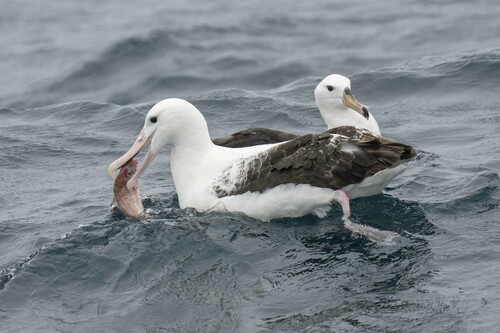 Southern Royal Albatross
 Atlantic Yellow-nosed Albatross
In breve
Il modo più affidabile per separare il Southern Royal Albatross dall'Atlantic Yellow-nosed Albatross è attraverso le dimensioni e la struttura: il Southern Royal è un vero gigante, di dimensioni enormemente superiori rispetto all'Atlantic Yellow-nosed in ogni dimensione, con una corporatura più massiccia e ali molto più ampie. In volo, i giovani Southern Royals mostrano ali superiori completamente scure, ma gli adulti di entrambe le specie differiscono nettamente: il Southern Royal è per lo più bianco con ali superiori nere e una testa bianca pulita, mentre l'Atlantic Yellow-nosed è un mollymawk più piccolo e con ali più strette, con una testa grigia e un becco distintivo nero e giallo. Anche a distanza, l'immensa apertura alare e la massa del Southern Royal sono inconfondibili accanto all'Atlantic Yellow-nosed, che è più delicato e con marcature più nette. Il colore del becco e il motivo della testa sono anche indizi forti, specialmente a distanza ravvicinata.
Consigli di identificazione
- Size is overwhelming: Il Southern Royal è quasi quattro volte più pesante e notevolmente più grande dell'Atlantic Yellow-nosed. Se l'uccello appare veramente massiccio, con un'apertura alare superiore ai 3 metri, è un Southern Royal. L'Atlantic Yellow-nosed è molto più piccolo e leggero.
- Wing shape and breadth: Il Southern Royal ha ali molto larghe e lunghe, dando un volo pesante e ponderato. L'Atlantic Yellow-nosed ha ali notevolmente più strette, risultando in uno stile di volo più agile e veloce.
- Juvenile upperwing pattern: I giovani Southern Royals hanno ali superiori completamente scure con macchie bianche, mentre il giovane Atlantic Yellow-nosed mostra un modello simile ma con una testa bianca e un becco nero. Tuttavia, la differenza di dimensioni si applica ancora.
- Adult head color: L'adulto Southern Royal ha una testa e un collo bianchi puliti, mentre l'adulto Atlantic Yellow-nosed ha una testa grigia con una prominente macchia scura attorno all'occhio e una nuca/collo posteriore bianchi.
- Bill color and pattern: Il becco del Southern Royal è rosa con un bordo di taglio nero (in tutte le età). L'Atlantic Yellow-nosed ha un becco nero con una cresta gialla (culminicorn) e una punta rosa (adulto); i giovani hanno un becco nero.
- Underwing pattern: L'Atlantic Yellow-nosed mostra un margine nero stretto sull'ala inferiore, mentre l'ala inferiore del Southern Royal è per lo più bianca con solo nero alla punta nei giovani e ali superiori nere negli adulti.
- Tail pattern: Il giovane Southern Royal ha una coda bianca con una punta nera, che si perde con l'età. L'Atlantic Yellow-nosed ha una coda grigio scura.
- Body structure: Il Southern Royal appare con un corpo pesante e un collo spesso, mentre l'Atlantic Yellow-nosed è snello e più delicato nel complesso.
- Crown and mantle: Il Southern Royal non ha alcuna corona scura o lavaggio pesca, mentre l'Atlantic Yellow-nosed ha una corona grigia e una sella scura.
- Context and range: Se visto negli oceani meridionali lontani, specialmente vicino alla Nuova Zelanda, è più probabile che sia un Southern Royal. L'Atlantic Yellow-nosed è più probabile nel Sud Atlantico.
- Perched posture: Se visto a terra, il Southern Royal è molto più massiccio e si erge più alto dell'Atlantic Yellow-nosed.
- Sexual dimorphism: I maschi del Southern Royal sono ancora più pesanti delle femmine, ma entrambi i sessi sono molto più grandi dell'Atlantic Yellow-nosed.
- Pitfalls: I giovani Southern Royal con ali superiori completamente scure possono superficialmente assomigliare a un mollymawk, ma le enormi dimensioni e la testa bianca rimangono distintive.
- Bill details at close range: La cresta gialla e la punta rosa dell'Atlantic Yellow-nosed sono uniche tra questi due, mai mostrate dal Southern Royal.
- Flight style: Il volo del Southern Royal è più lento e più maestoso, mentre l'Atlantic Yellow-nosed è più veloce e più leggero.
Taglia
Il Southern Royal Albatross è tra i più grandi uccelli volatori, con un peso medio di 9000 g (con i maschi anche più pesanti), e un'apertura alare ben oltre i 3 metri. L'Atlantic Yellow-nosed Albatross è molto più piccolo, con un peso medio di soli 2060 g e circa 81 cm di lunghezza. La differenza è così estrema che, anche con visioni scarse, il Southern Royal appare enorme e massiccio, con ali lunghe e larghe, mentre l'Atlantic Yellow-nosed appare snello, leggero e con ali strette in confronto. Solo le dimensioni sono diagnostiche se entrambi sono visti insieme o con altri uccelli marini per scala.
Piumaggio
I giovani Southern Royal Albatross hanno ali superiori completamente scure con macchie bianche sulle copritrici, una testa bianca, collo e parti inferiori, e una coda bianca con una punta nera. Con l'età, l'ala superiore diventa sempre più bianca, iniziando come macchie dal bordo anteriore. Gli adulti sono straordinariamente bianchi nel complesso con ali superiori nere e una testa bianca pulita, priva di qualsiasi lavaggio pesca o buffo. Al contrario, gli adulti dell'Atlantic Yellow-nosed Albatross hanno una testa grigia con una grande macchia scura attorno all'occhio, una nuca e un collo posteriore bianchi, e una sella, coda e ali superiori grigio scuro. La loro ala inferiore mostra un margine nero stretto. I giovani assomigliano agli adulti ma hanno una testa bianca e un becco nero. Il becco dell'Atlantic Yellow-nosed è nero con una cresta gialla e una punta rosa, mentre il becco del Southern Royal è rosa con un bordo di taglio nero. Il Southern Royal manca delle marcature della testa grigia e del becco giallo dell'Atlantic Yellow-nosed in tutte le età.
Comportamento
I Southern Royal Albatross mostrano comportamenti di corteggiamento elaborati come schiocchi del becco, applausi, inghiottimenti e chiamate nel cielo con le ali distese. Sebbene entrambe le specie siano pelagiche e volino sopra l'oceano, il volo del Southern Royal è più lento e più ponderato a causa delle sue dimensioni, con battiti d'ali profondi e potenti e lunghi planate. L'Atlantic Yellow-nosed Albatross, essendo molto più leggero, mostra un volo più veloce e agile con ali più strette. Entrambe le specie sono raramente viste posate, tranne che nelle colonie di riproduzione.
Habitat
Entrambe le specie sono oceaniche e trascorrono la maggior parte della loro vita in mare, ma il Southern Royal Albatross nidifica su isole subantartiche come l'isola Campbell, preferendo praterie di tussock e creste. L'Atlantic Yellow-nosed Albatross nidifica su isole nel Sud Atlantico. Sul campo, l'habitat è raramente un separatore utile a meno che non sia visto in una colonia nota, ma il Southern Royal è più probabile da incontrare negli oceani meridionali lontani, mentre l'Atlantic Yellow-nosed è più ristretto al Sud Atlantico e alle acque adiacenti.
Southern Royal Albatross · Atlantic Yellow-nosed Albatross · I miei uccelli difficili