

Southern Red-billed Hornbill vs Trumpeter Hornbill
Tockus rufirostris contro Bycanistes bucinator
Fai un quiz con Southern Red-billed Hornbill e Trumpeter Hornbill
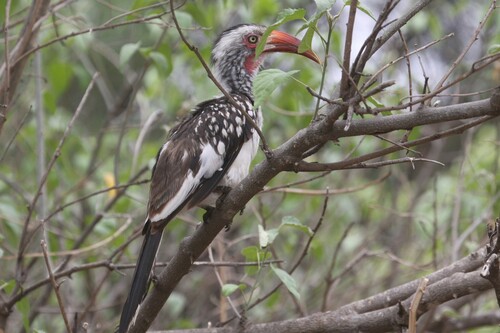 Southern Red-billed Hornbill
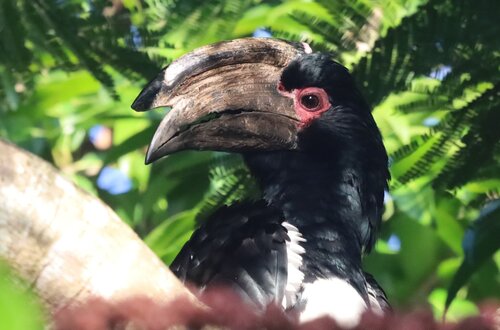 Trumpeter Hornbill
In breve
Il segno di campo più affidabile per separare il Southern Red-billed Hornbill dal Trumpeter Hornbill è la presenza di un grande casco grigio sul becco del Trumpeter, che è completamente assente nel Southern Red-billed. In volo, il Trumpeter Hornbill mostra copritrici bianche sotto le ali e ali con punte bianche, mentre il Southern Red-billed Hornbill ha copritrici delle ali chiaramente macchiate ma manca del coraggioso bianco sotto le ali. Il Southern Red-billed è molto più piccolo, con un becco rosso snello e un'iride gialla, rispetto alla corporatura più robusta del Trumpeter, con pelle facciale rossa/rosa e occhi marroni o rossi. L'habitat e il comportamento differiscono anche: il Southern Red-billed preferisce savane secche e bushveld, mentre il Trumpeter è una specie forestale spesso vista in gruppi rumorosi.
Consigli di identificazione
- Casco del becco: Il Trumpeter Hornbill mostra sempre un grande casco grigio sulla parte superiore del becco (più piccolo nelle femmine ma mai assente), mentre il Southern Red-billed Hornbill non ha affatto un casco. Questo è il segno di campo più decisivo a qualsiasi età o angolo.
- Schema sotto le ali in volo: Il Trumpeter Hornbill di tutte le età mostra copritrici bianche sotto le ali e ali con punte bianche, creando un forte lampo in volo. Il Southern Red-billed Hornbill manca di questo e ha invece copritrici delle ali macchiate; il suo sottoala non è sorprendentemente bianco.
- Colore e forma del becco: Il Southern Red-billed Hornbill ha un becco snello, completamente rosso (i maschi possono avere un po' di nero sulla mandibola inferiore). Il becco del Trumpeter è più spesso, più scuro e coronato dal casco.
- Iride e pelle facciale: Il Southern Red-billed Hornbill ha un'iride gialla e pelle orbitale pallida (rosa a grigia). Il Trumpeter Hornbill ha occhi marroni o rossi e pelle facciale rossa o rosa, che può essere piuttosto prominente.
- Dimensioni e robustezza del corpo: Il Trumpeter Hornbill è molto più grande e pesante, con una testa e un corpo visibilmente più robusti. Il Southern Red-billed è snello e piccolo in confronto.
- Piumaggio sopra: Il Southern Red-billed Hornbill è pallido sotto con una gola e un ventre bianchi, e striature nerastre dalle copritrici delle orecchie al collo. Il Trumpeter Hornbill è nero lucido sopra con un ventre e un sottoala bianchi.
- Copritrici delle ali (posato): Il Southern Red-billed Hornbill mostra copritrici delle ali chiaramente macchiate quando è posato; le copritrici delle ali del Trumpeter Hornbill sono nere uniformi.
- Schema della coda: Alcune sottospecie di Southern Red-billed Hornbill (ad es., T. r. ngamiensis) hanno una barra della coda più distintiva, ma questo non è un criterio primario di separazione dal Trumpeter, che ha una coda lunga e semplice.
- Dimensione del gruppo e comportamento: Il Trumpeter Hornbill è spesso in gruppi rumorosi, specialmente nella chioma della foresta. Il Southern Red-billed è solitamente solitario o in coppie, foraggiando a terra o in basso sugli alberi.
- Habitat: Se visto in una foresta profonda o continua, specialmente nella chioma, è probabile che si tratti di un Trumpeter. Nella bushveld secca o nella savana aperta, ci si aspetta di vedere il Southern Red-billed.
- Display: Il Southern Red-billed Hornbill non alza le ali in mostra, a differenza di alcuni altri hornbill con becco rosso, ma questo non è un criterio di separazione dal Trumpeter.
- Vocalizzazioni: Il forte richiamo trombettante del Trumpeter Hornbill è molto diverso dal 'kuk kuk kuk...' accelerato del Southern Red-billed Hornbill.
- Differenze sessuali: Entrambe le specie mostrano un certo dimorfismo sessuale nella dimensione del becco (i maschi sono più grandi), ma questo non è un segno di campo affidabile per la separazione.
- Confusione giovanile: Non ci sono prove che il giovane Trumpeter Hornbill manchi mai del casco o del sottoala bianco, quindi anche gli uccelli giovani possono essere separati da questi segni.
- Trappole: Non confondere il becco rosso del Southern Red-billed Hornbill con la pelle facciale rossa/rosa del Trumpeter; controlla sempre il casco e il modello del sottoala.
Taglia
Il Trumpeter Hornbill è sostanzialmente più grande e pesante, con una massa corporea di circa 644 g [wikidata], e una lunghezza di 58–65 cm [wikipedia]. Il Southern Red-billed Hornbill è notevolmente più piccolo e leggero (massa esatta non fornita, ma molto meno del Trumpeter). Il becco del Trumpeter non è solo più lungo ma anche coronato da un prominente casco, rendendo la testa ancora più robusta. Sul campo, le dimensioni e la struttura del Trumpeter Hornbill sono molto più imponenti, specialmente in volo o quando è posato accanto ad altri hornbill.
Piumaggio
- Visuali di volo giovanili/immaturi: Il Trumpeter Hornbill di tutte le età mostra copritrici bianche sotto le ali e ali con punte bianche in volo, creando un forte contrasto con le ali e la schiena altrimenti nere. Il Southern Red-billed Hornbill, compresi gli immaturi, manca di questo schema; invece, ha copritrici delle ali macchiate e un contrasto più sobrio nella parte superiore delle ali.
- Adulti (posati): Il Southern Red-billed Hornbill è pallido sotto con una gola e un ventre bianchi, copritrici delle ali macchiate e striature nerastre dalle copritrici delle orecchie ai lati del collo. La sua iride è gialla e la pelle orbitale è pallida (rosa a grigia). Il Trumpeter Hornbill è nero lucido sopra con un ventre e un sottoala bianchi, e ha pelle facciale rossa o rosa con occhi marroni o rossi. Il casco è sempre presente sul Trumpeter, più piccolo nelle femmine ma mai assente.
- Colore del becco: Il Southern Red-billed ha un becco rosso (i maschi possono avere un po' di nero sulla mandibola inferiore), mentre il becco del Trumpeter è scuro con un grande casco grigio.
Comportamento
Il Trumpeter Hornbill è tipicamente gregario, spesso visto in gruppi di 2–5 o addirittura fino a 50 uccelli, ed è rumoroso e attivo nella chioma delle foreste sempreverdi. Il Southern Red-billed Hornbill è più spesso visto singolarmente o in coppie, foraggiando nella savana secca o nel bushveld, e non mostra lo stesso comportamento di branco. Nella mostra, il Trumpeter Hornbill può essere piuttosto appariscente, mentre il Southern Red-billed non alza le ali in mostra (a differenza di alcuni altri hornbill con becco rosso).
Habitat
Il Southern Red-billed Hornbill è un uccello delle savane secche e del bushveld, trovato dal Malawi e Zambia a sud fino al nord del Sudafrica, evitando principalmente le foreste dense. Il Trumpeter Hornbill è uno specialista della foresta, localmente comune nelle foreste tropicali sempreverdi dall'est del Sudafrica verso nord, e raramente si sovrappone con il Southern Red-billed, eccetto forse ai margini delle foreste. Se visto in una foresta profonda, è molto più probabile che si tratti di un Trumpeter; in un bush aperto e arido, il Southern Red-billed è la norma.
Voce
Il Southern Red-billed Hornbill emette una serie accelerante di 'kuk kuk kuk...' che termina in un crescendo di note doppie ('kuk-we kuk-we'). Il Trumpeter Hornbill prende il nome dai suoi forti richiami trombettanti, che sono molto più risonanti e distintivi rispetto a quelli del Southern Red-billed. La differenza nelle vocalizzazioni è solitamente ovvia se entrambi vengono ascoltati bene.
Southern Red-billed Hornbill · Trumpeter Hornbill · I miei uccelli difficili