

Sooty Gull vs White-eyed Gull
Ichthyaetus hemprichii contro Ichthyaetus leucophthalmus
Fai un quiz con Sooty Gull e White-eyed Gull
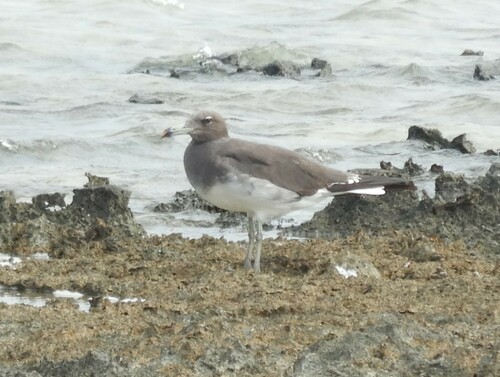 Sooty Gull
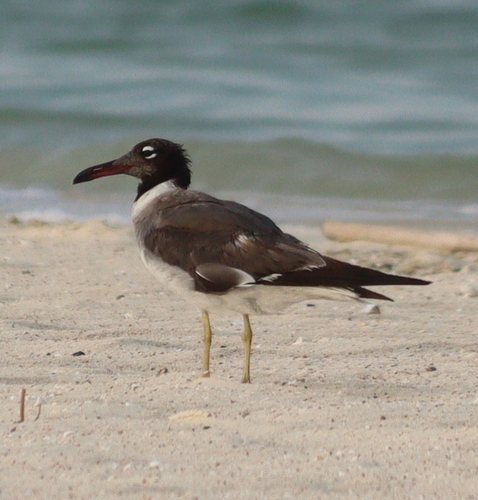 White-eyed Gull
In breve
Il segno distintivo più affidabile tra Sooty Gull e White-eyed Gull è il motivo della testa e il colore del becco negli adulti: White-eyed Gull mostra un sorprendente cappuccio nero (riproduzione) bordato da una barra bianca e un becco rosso profondo con una punta nera, mentre Sooty Gull manca del cappuccio e ha un becco più uniformemente scuro. Le piume giovanili e immature differiscono fortemente: i giovani White-eyed Gulls sono marrone cioccolato con parti superiori con bordi chiari e una coda nera, mentre gli immaturi Sooty Gull sono meno distintamente marcati. White-eyed Gull è più piccolo e più delicato, con un becco più lungo e sottile e gambe gialle (più brillanti negli adulti in riproduzione). Sooty Gull è più diffuso, mentre White-eyed Gull è limitato al Mar Rosso. In volo, controlla il bordo bianco della White-eyed Gull sulle secondarie e il sottocoda nero, rispetto al motivo delle ali più semplice di Sooty Gull.
Consigli di identificazione
- Piumaggio giovanile/immaturo: I giovani White-eyed Gulls sono marrone cioccolato sulla testa, collo e petto, con ampi bordi chiari sulle parti superiori e una coda nera; gli immaturi Sooty Gull sono di un grigio-marrone più opaco senza forti bordi chiari o toni cioccolato. Questo è il segno più affidabile per i giovani uccelli.
- Motivo di volo (tutte le età): White-eyed Gull mostra un bordo bianco sulle secondarie e un sottocoda nero; l'ala di Sooty Gull è più uniformemente scura e manca del bordo bianco netto. Questo è meglio visibile in volo o quando le ali sono spiegate.
- Struttura del becco: White-eyed Gull ha un becco lungo e sottile (nero negli immaturi, rosso profondo con punta nera negli adulti); il becco di Sooty Gull è più pesante e uniformemente scuro, privo del contrasto tra la base rossa e la punta nera.
- Colore delle gambe: Gli adulti White-eyed Gulls hanno gambe gialle brillanti (opache nei giovani, più brillanti negli adulti in riproduzione); il colore delle gambe di Sooty Gull non è descritto come diagnostico, ma non è giallo brillante.
- Motivo della testa negli adulti: La White-eyed Gull in riproduzione ha un cappuccio nero completo bordato sotto da una barra bianca; Sooty Gull ha una testa scura semplice senza cappuccio o bordo bianco. Il cappuccio della White-eyed Gull non in riproduzione è macchiato di bianco, ma contrasta ancora con il resto della testa.
- Colore della coda: L'adulto White-eyed Gull ha una coda bianca; i giovani hanno una coda nera. La coda di Sooty Gull non è così distintamente marcata e non mostra questo forte contrasto.
- Dimensioni e forma: White-eyed Gull è più piccolo, più delicato e con un becco più sottile; Sooty Gull è più grande, più robusto e con un becco più pesante. Questo è più evidente quando entrambe le specie sono viste insieme.
- Mezze lune oculari: White-eyed Gull ha mezze lune oculari bianche evidenti a tutte le età (il 'bianco-occhio' non è l'iride ma queste mezze lune); Sooty Gull manca di questa caratteristica.
- Colore delle parti superiori: L'adulto White-eyed Gull ha parti superiori grigio medio-scuro; le parti superiori di Sooty Gull sono più scure e più uniformi.
- Habitat e distribuzione: Se osservata al di fuori del Mar Rosso, una 'White-eyed Gull' è quasi certamente un errore di identificazione; Sooty Gull è molto più diffuso.
- Colore del becco per età: Gli immaturi White-eyed Gulls hanno un becco nero, mentre gli adulti hanno un becco rosso profondo con una punta nera. Il becco di Sooty Gull è più uniformemente scuro a tutte le età.
- Parti inferiori: L'adulto White-eyed Gull ha un petto grigio medio e parti inferiori bianche; le parti inferiori di Sooty Gull sono meno distintamente marcate.
- Contesto coloniale: White-eyed Gull è strettamente coloniale sulle isole del Mar Rosso; Sooty Gull può nidificare solitariamente o tra altri uccelli marini, specialmente in Africa.
- Cambiamento stagionale: White-eyed Gull acquisisce il piumaggio adulto a 2–3 anni; la progressione dell'età di Sooty Gull è meno ben descritta, quindi fai attenzione agli uccelli intermedi.
- Trappole: La White-eyed Gull non in riproduzione può perdere il cappuccio nero solido, ma macchie bianche e mezze lune oculari bianche rimangono distintive. Gli immaturi Sooty Gulls possono apparire marroni ma mancano del forte contrasto e dei bordi chiari dei giovani White-eyed Gull.
Taglia
White-eyed Gull è più piccolo e leggero di Sooty Gull, con una massa corporea di circa 330g [wikidata]. Sooty Gull è decisamente più grande e robusto nel complesso (non è disponibile una massa precisa, ma la differenza di dimensioni è notata nelle guide sul campo e nei rapporti della comunità). White-eyed Gull appare anche più snello e con un becco fine, particolarmente evidente quando le due specie sono viste insieme.
Piumaggio
Le piume giovanili e immature sono le più diagnostiche: i giovani White-eyed Gulls sono marrone cioccolato sulla testa, collo e petto, con parti superiori marroni e ali superiori ampiamente bordate di chiaro, e una coda nera. Nella prima inverno, i White-eyed Gulls iniziano a mostrare piumaggio più grigio ma mantengono una coda scura e mancano del cappuccio adulto. Gli immaturi Sooty Gull sono meno ben descritti ma non mostrano i forti toni cioccolato o i bordi chiari di White-eyed Gull; le loro parti superiori e ali sono più opache e più uniformi. Gli adulti White-eyed Gulls in piumaggio di riproduzione hanno un cappuccio nero che si estende sulla parte superiore della gola e è bordato sotto da una stretta barra bianca, con parti superiori grigio medio-scuro e un bordo bianco sulle secondarie. Gli adulti non in riproduzione hanno un cappuccio macchiato di bianco. Gli adulti Sooty Gull mancano di cappuccio, mostrando una testa scura più semplice e parti superiori. In volo, White-eyed Gull mostra un sottocoda nero e un bordo bianco sulle secondarie, mentre il motivo dell'ala di Sooty Gull è meno contrastante. La coda di White-eyed Gull è bianca negli adulti e nera nei giovani, mentre la coda di Sooty Gull è meno distintamente marcata.
Comportamento
Entrambe le specie sono gabbiani costieri, spesso visti a cercare cibo o foraggiare lungo le coste e le isole. Sooty Gull può nidificare solitariamente o in colonie sparse, a volte tra altri uccelli marini, mentre White-eyed Gull è più strettamente coloniale sulle isole del Mar Rosso. Entrambe le specie si nutrono di pesce, scarti e piccoli animali marini, ma White-eyed Gull è più limitata al Mar Rosso e alle coste vicine.
Habitat
Sooty Gull è diffuso in tutto l'oceano Indiano nord-occidentale, compresi il Mar Rosso, il Golfo Persico e le coste dell'Africa orientale, Arabia e Sud Asia. White-eyed Gull è endemica del Mar Rosso e delle coste adiacenti. Se vista al di fuori del Mar Rosso, una 'White-eyed Gull' è quasi certamente un errore di identificazione. Sooty Gull può essere trovata in una gamma più ampia di habitat costieri, comprese le isole coralline interne e le barriere esterne, mentre White-eyed Gull è strettamente legata alle isole del Mar Rosso.