

Motmot

Sooty-fronted Spinetail vs Olive-gray Saltator

Synallaxis frontalis contro Saltator olivascens

Fai un quiz con Sooty-fronted Spinetail e Olive-gray Saltator
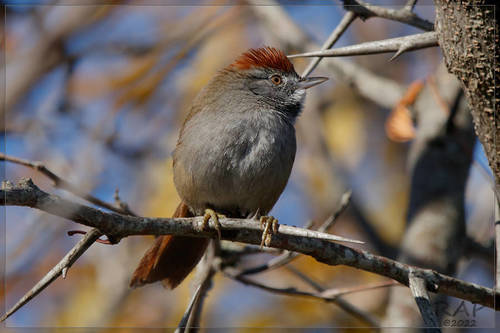
Sooty-fronted Spinetail (Synallaxis frontalis) Sooty-fronted Spinetail
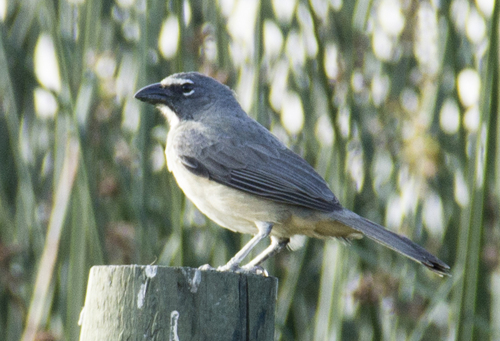
Olive-gray Saltator (Saltator olivascens) Olive-gray Saltator

Media

Caricamento…

In breve

The most reliable field mark is the olive-grey saltator’s bold white eyebrow (supercilium) and thick, hooked black bill, which are never shown by sooty-fronted spinetail. In contrast, the spinetail has a dark sooty forecrown, no white on the face, and a slenderer bill. Juvenile saltators are olive/yellow-washed below, while juvenile spinetails are browner above and ochre-washed below. In flight or perched, the spinetail’s long, graduated, pointed rufous tail is diagnostic and unlike the saltator’s short, square tail. Both species are similar in size, but their structure, face pattern, and tail shape make confusion avoidable with a good look.

Consigli di identificazione

  1. White supercilium and facial pattern: Olive-grey saltator always shows a bold white eyebrow and a thin white crescent under the eye, plus black malar stripes framing a white throat. Sooty-fronted spinetail never shows white on the face; look for a plain brownish gray face with a thin brownish eye-line and a dark sooty forecrown. Works for all ages except juvenile saltator, which may have a duller pattern but still shows some white.
  2. Bill shape: Saltator has a thick, heavy, black, slightly hooked bill, much deeper than the spinetail’s slender, straight, dark bill. This is visible even at a distance.
  3. Tail shape and color: Sooty-fronted spinetail has a long, graduated, pointed rufous tail, often flicked or cocked. Saltator’s tail is short, square-tipped, and greyish, never rufous. This is especially obvious in flight or when the tail is spread.
  4. Juvenile plumage: Young saltators are olive and yellow-washed below, with a duller face pattern; juvenile spinetails are brownish gray above and ochraceous below, lacking any white facial markings. If you see a yellowish wash on the belly and a pale supercilium, it’s a saltator.
  5. Upperparts color: Saltator is mostly dark grey above with only a slight olive tinge; spinetail is brown with a rufous tinge, especially on the wings and tail.
  6. Underparts: Saltator has light grey underparts with buffy flanks and undertail; spinetail is grayish brown on the breast, paler on the belly, and browner on the flanks and undertail.
  7. Wing color in flight: Spinetail shows rufous flight feathers with dusky tips; saltator’s wings are more uniformly grey-olive, lacking strong rufous.
  8. Behavior: Spinetail is active, often flicking its long tail and foraging low in dense cover; saltator is more deliberate, perching in the open or singing from mid-levels.
  9. Habitat: Spinetail prefers dense, low, semi-open habitats; saltator is more often in taller shrubs, trees, or edges, sometimes in gardens.
  10. Voice: Spinetail gives high, nasal, mechanical calls; saltator’s song is richer and more melodious, though it is generally quieter.
  11. Sexes: Both species are sexually monomorphic—males and females look alike.
  12. Size and structure: Both are similar in length, but saltator is bulkier with a thick neck and bill, while spinetail is slimmer with a longer tail.
  13. Face pattern pitfalls: In poor light, the saltator’s white eyebrow may be less obvious, but the thick bill and short tail still separate it from spinetail.
  14. Tail movement: Spinetail often cocks or fans its tail; saltator’s tail is usually held straight.
  15. Range: If in southern Brazil, Argentina, Paraguay, or Uruguay, spinetail is more likely; saltator is limited to northern South America and Trinidad.

Taglia

Both species are similar in overall length: sooty-fronted spinetail measures 14–16 cm and weighs 11–17 g [wikipedia], while olive-grey saltator is in the same general size class (precise measurements not given, but similar to other Saltator species). However, the spinetail is more slender with a proportionally longer, graduated tail, while the saltator is bulkier with a thick neck and a short, square tail. Bill structure is also a key difference: the saltator has a heavy, thick, hooked bill, while the spinetail’s bill is slim and straight.

Piumaggio

Juvenile plumage is a strong separator: young olive-grey saltators are washed olive and yellow below, especially on the underparts, and have a muted version of the adult’s face pattern. Juvenile sooty-fronted spinetails show a brownish gray crown and ochraceous wash below, lacking any white facial markings. In adults, the saltator always shows a bold white supercilium and white crescent under the eye, with black malar stripes framing a white throat—none of which are present on spinetail. The spinetail’s face is plain brownish gray with a thin brownish eye-line, and its forecrown is dark sooty-gray. The spinetail’s upperparts are brown with rufous tones, and the tail is dark rufous, long, and graduated with pointed tips. Saltator upperparts are mostly dark grey with only slight olive tones, and its tail is short and square. Underparts: saltator is light grey with buffy flanks and undertail, while spinetail is grayish brown on the breast, paler on the belly, and browner on the flanks and undertail. In flight, the spinetail’s rufous wings and tail contrast with the saltator’s more uniform grey and olive tones.

Comportamento

Sooty-fronted spinetail is typically active, moving through low, dense vegetation, often flicking its long tail and foraging near the ground or in bushes. It is restless and often seen singly or in pairs. Olive-grey saltator is more deliberate, often perching in the open or singing from mid-levels in trees or dense thickets. Saltators are less likely to flick their tails and are more likely to be seen in pairs or small groups, sometimes joining mixed-species flocks. The spinetail’s tail is often cocked or fanned, while the saltator’s is usually held straight.

Habitat

Sooty-fronted spinetail prefers semi-open landscapes such as gallery forest edges, scrub, thorn-scrub, woodlands, and bushy savanna, often at lower levels and in dense cover [wikipedia]. Olive-grey saltator is found in a variety of wooded and shrubby habitats, including forest edges, second growth, gardens, and plantations, but is more typical of humid or semi-humid lowland areas in Colombia, Venezuela, the Guianas, northern Brazil, and Trinidad. The two species overlap little in range, but where both occur, the spinetail is more tied to dense, low vegetation, while the saltator is more often seen in taller shrubs or trees.

Voce

Sooty-fronted spinetail gives a variety of high, thin, and nasal calls, including 'ka-kwee-éék', 'du-Twee', and slow, deliberate notes, often repeated for long periods. Its calls are high-pitched and somewhat mechanical. Olive-grey saltator is generally quiet but has a richer, more melodious song typical of saltators, with clear, whistled notes. Their calls are less mechanical and more musical than the spinetail’s. In the field, the spinetail’s persistent, high, nasal calls are a good clue.

Invia una descrizione migliore

Usa le stesse sezioni del confronto. Il testo viene pubblicato subito.

The most reliable field mark is the olive-grey saltator’s bold white eyebrow (supercilium) and thick, hooked black bill, which are never shown by sooty-fronted spinetail. In contrast, the spinetail has a dark sooty forecrown, no white on the face, and a slenderer bill. Juvenile saltators are olive/yellow-washed below, while juvenile spinetails are browner above and ochre-washed below. In flight or perched, the spinetail’s long, graduated, pointed rufous tail is diagnostic and unlike the saltator’s short, square tail. Both species are similar in size, but their structure, face pattern, and tail shape make confusion avoidable with a good look.

  1. White supercilium and facial pattern: Olive-grey saltator always shows a bold white eyebrow and a thin white crescent under the eye, plus black malar stripes framing a white throat. Sooty-fronted spinetail never shows white on the face; look for a plain brownish gray face with a thin brownish eye-line and a dark sooty forecrown. Works for all ages except juvenile saltator, which may have a duller pattern but still shows some white.
  2. Bill shape: Saltator has a thick, heavy, black, slightly hooked bill, much deeper than the spinetail’s slender, straight, dark bill. This is visible even at a distance.
  3. Tail shape and color: Sooty-fronted spinetail has a long, graduated, pointed rufous tail, often flicked or cocked. Saltator’s tail is short, square-tipped, and greyish, never rufous. This is especially obvious in flight or when the tail is spread.
  4. Juvenile plumage: Young saltators are olive and yellow-washed below, with a duller face pattern; juvenile spinetails are brownish gray above and ochraceous below, lacking any white facial markings. If you see a yellowish wash on the belly and a pale supercilium, it’s a saltator.
  5. Upperparts color: Saltator is mostly dark grey above with only a slight olive tinge; spinetail is brown with a rufous tinge, especially on the wings and tail.
  6. Underparts: Saltator has light grey underparts with buffy flanks and undertail; spinetail is grayish brown on the breast, paler on the belly, and browner on the flanks and undertail.
  7. Wing color in flight: Spinetail shows rufous flight feathers with dusky tips; saltator’s wings are more uniformly grey-olive, lacking strong rufous.
  8. Behavior: Spinetail is active, often flicking its long tail and foraging low in dense cover; saltator is more deliberate, perching in the open or singing from mid-levels.
  9. Habitat: Spinetail prefers dense, low, semi-open habitats; saltator is more often in taller shrubs, trees, or edges, sometimes in gardens.
  10. Voice: Spinetail gives high, nasal, mechanical calls; saltator’s song is richer and more melodious, though it is generally quieter.
  11. Sexes: Both species are sexually monomorphic—males and females look alike.
  12. Size and structure: Both are similar in length, but saltator is bulkier with a thick neck and bill, while spinetail is slimmer with a longer tail.
  13. Face pattern pitfalls: In poor light, the saltator’s white eyebrow may be less obvious, but the thick bill and short tail still separate it from spinetail.
  14. Tail movement: Spinetail often cocks or fans its tail; saltator’s tail is usually held straight.
  15. Range: If in southern Brazil, Argentina, Paraguay, or Uruguay, spinetail is more likely; saltator is limited to northern South America and Trinidad.

Both species are similar in overall length: sooty-fronted spinetail measures 14–16 cm and weighs 11–17 g [wikipedia], while olive-grey saltator is in the same general size class (precise measurements not given, but similar to other Saltator species). However, the spinetail is more slender with a proportionally longer, graduated tail, while the saltator is bulkier with a thick neck and a short, square tail. Bill structure is also a key difference: the saltator has a heavy, thick, hooked bill, while the spinetail’s bill is slim and straight.

Juvenile plumage is a strong separator: young olive-grey saltators are washed olive and yellow below, especially on the underparts, and have a muted version of the adult’s face pattern. Juvenile sooty-fronted spinetails show a brownish gray crown and ochraceous wash below, lacking any white facial markings. In adults, the saltator always shows a bold white supercilium and white crescent under the eye, with black malar stripes framing a white throat—none of which are present on spinetail. The spinetail’s face is plain brownish gray with a thin brownish eye-line, and its forecrown is dark sooty-gray. The spinetail’s upperparts are brown with rufous tones, and the tail is dark rufous, long, and graduated with pointed tips. Saltator upperparts are mostly dark grey with only slight olive tones, and its tail is short and square. Underparts: saltator is light grey with buffy flanks and undertail, while spinetail is grayish brown on the breast, paler on the belly, and browner on the flanks and undertail. In flight, the spinetail’s rufous wings and tail contrast with the saltator’s more uniform grey and olive tones.

Sooty-fronted spinetail is typically active, moving through low, dense vegetation, often flicking its long tail and foraging near the ground or in bushes. It is restless and often seen singly or in pairs. Olive-grey saltator is more deliberate, often perching in the open or singing from mid-levels in trees or dense thickets. Saltators are less likely to flick their tails and are more likely to be seen in pairs or small groups, sometimes joining mixed-species flocks. The spinetail’s tail is often cocked or fanned, while the saltator’s is usually held straight.

Sooty-fronted spinetail prefers semi-open landscapes such as gallery forest edges, scrub, thorn-scrub, woodlands, and bushy savanna, often at lower levels and in dense cover [wikipedia]. Olive-grey saltator is found in a variety of wooded and shrubby habitats, including forest edges, second growth, gardens, and plantations, but is more typical of humid or semi-humid lowland areas in Colombia, Venezuela, the Guianas, northern Brazil, and Trinidad. The two species overlap little in range, but where both occur, the spinetail is more tied to dense, low vegetation, while the saltator is more often seen in taller shrubs or trees.

Sooty-fronted spinetail gives a variety of high, thin, and nasal calls, including 'ka-kwee-éék', 'du-Twee', and slow, deliberate notes, often repeated for long periods. Its calls are high-pitched and somewhat mechanical. Olive-grey saltator is generally quiet but has a richer, more melodious song typical of saltators, with clear, whistled notes. Their calls are less mechanical and more musical than the spinetail’s. In the field, the spinetail’s persistent, high, nasal calls are a good clue.

Scartare le modifiche?

Hai modifiche non salvate. Se esci ora, andranno perse.

Sooty-fronted Spinetail · Olive-gray Saltator · I miei uccelli difficili