

Tordo bottaccio vs Merlo
Turdus philomelos contro Turdus merula
Fai un quiz con Tordo bottaccio e Merlo
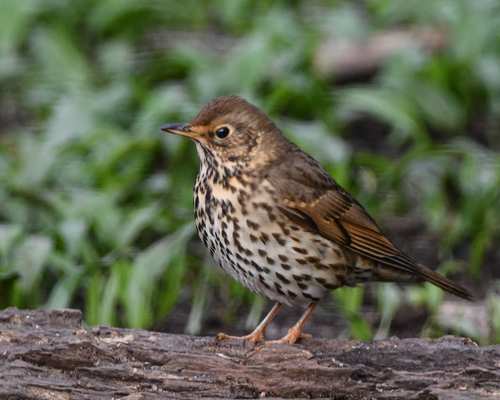 Tordo bottaccio
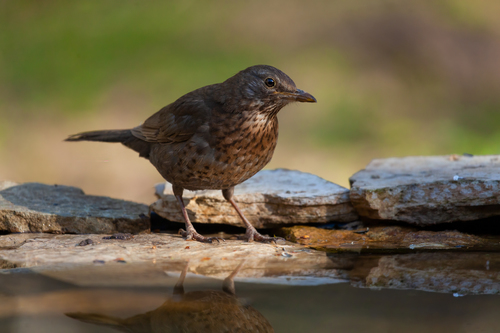 Merlo
In breve
Il segno di campo più affidabile tra il Tordo bottaccio e il Merlo è il piumaggio complessivo: i Tordi bottaccio di tutte le età mostrano parti superiori marroni con macchie nere audaci su parti inferiori chiare, mentre i Merli maschi adulti sono completamente neri lucidi con un becco giallo e un anello oculare, e le femmine sono marroni uniformi senza macchie pesanti. I Tordi bottaccio juvenili hanno strisce color crema o arancioni sulla schiena e sulle copritrici delle ali, mentre i Merli juvenili sono marroni con macchie chiare sopra e un petto maculato. In volo, i Tordi bottaccio mostrano ali inferiori gialle calde, in contrasto con le ali uniformemente scure del Merlo. Anche la struttura e il comportamento differiscono: i Merli sono più grandi, con una coda più lunga, e spesso cercano cibo nei prati, mentre i Tordi bottaccio sono più compatti e eretti. La voce e il canto sono distintivi se ascoltati, ma la confusione è più probabile con uccelli silenziosi e immaturi.
Consigli di identificazione
- Piumaggio (adulti): I Tordi bottaccio mostrano sempre macchie nere audaci su parti inferiori chiare; i Merli non lo fanno mai, indipendentemente dal sesso.
- Piumaggio (Merlo maschio adulto): Il piumaggio completamente nero con becco giallo e anello oculare è unico; il Tordo bottaccio non è mai nero.
- Piumaggio (Merlo femmina adulta): Marrone scuro in generale, con macchie deboli, mai con macchie nette. Il Tordo bottaccio è più marrone sopra e pesantemente macchiato sotto.
- Tordo bottaccio juvenile: Cerca strisce color crema/arancioni sulla schiena e sulle copritrici delle ali, e macchie audaci sulle parti inferiori. Nessuna età del Merlo mostra questa combinazione.
- Merlo juvenile: Marrone sopra con macchie chiare, petto maculato, ma non le macchie nette e audaci del Tordo bottaccio; manca toni caldi e strisce sulla schiena.
- Ala inferiore (volo): Il Tordo bottaccio mostra ali inferiori gialle calde; l'ala inferiore del Merlo è scura e non marcata.
- Struttura: Il Merlo è più lungo, più pesante e ha una coda più lunga; il Tordo bottaccio è più compatto e eretto, con una coda più corta.
- Colore del becco: Il Merlo maschio adulto ha un becco giallo-arancione brillante; il becco del Tordo bottaccio è giallastro ma mai così brillante o arancione. Le femmine e i Merli juvenili hanno becchi più opachi ma mancano comunque delle macchie nette del Tordo bottaccio.
- Anello oculare: Il Merlo maschio ha un anello oculare giallo evidente; il Tordo bottaccio non ce l'ha.
- Volo: Il Tordo bottaccio vola con battiti d'ala rapidi e mostra una forma compatta e arrotondata; il volo del Merlo è più diretto, con scoppi di battiti d'ala e una coda più lunga e dritta.
- Canto: Il Tordo bottaccio ripete frasi musicali; il Merlo canta note continue, dolci e flautate. Usa solo se canta.
- Richiamo di allerta: Il Tordo bottaccio emette un 'tsip' acuto o un 'chook-chook' stridente; l'allerta del Merlo è un 'chook-chook' duro e chiacchieroso.
- Habitat: Il Merlo è più probabile che si trovi in prati aperti e parchi urbani; il Tordo bottaccio preferisce coperture più cespugliose e dense.
- Confusione stagionale: In inverno, entrambi possono apparire più opachi, ma le differenze strutturali e di macchie sulle parti inferiori rimangono affidabili.
- Trappole: Le femmine e i Merli juvenili sono spesso confusi con il Tordo bottaccio, ma mancano sempre delle macchie nette e audaci e delle ali inferiori gialle calde. I Tordi bottaccio juvenili non appaiono mai uniformemente marroni sopra.
Taglia
Il Tordo bottaccio è notevolmente più piccolo e leggero, con una massa tipica di circa 72 g [wikidata], rispetto al più grande Merlo (80–125 g) [wikipedia]. Il Merlo è anche più lungo (23.5–29 cm contro i 20–23.5 cm del Tordo bottaccio), con una coda proporzionalmente più lunga e un aspetto più massiccio e allungato. In confronto diretto, il Merlo appare più pesante e con una coda più lunga, mentre il Tordo bottaccio è più compatto e eretto.
Piumaggio
- Giovanili/Uccelli di primo anno: I Tordi bottaccio juvenili somigliano agli adulti ma hanno strisce color crema o arancioni sulla schiena e sulle copritrici delle ali, e mostrano sempre macchie scure audaci sulle parti inferiori. I Merli juvenili sono marroni sopra con macchie chiare (non strisce) e un petto maculato, mancando delle macchie nette del Tordo bottaccio; le loro parti superiori sono più uniformi e l'ala è marrone, non nera.
- Adulti: I Tordi bottaccio adulti sono marroni caldi sopra con macchie nere ordinate su parti inferiori color crema o color crema, più chiare sul ventre. La loro ala inferiore è gialla calda (visibile in volo). I Merli maschi adulti sono completamente neri lucidi, con un becco giallo-arancione brillante e un anello oculare; le femmine sono marroni scure, con un becco più opaco e maculature deboli sul petto, ma non mostrano mai le macchie audaci del Tordo bottaccio. L'ala inferiore del Merlo non è colorata in modo contrastante.
- Viste in volo: I Tordi bottaccio mostrano un'ala inferiore gialla calda e una forma compatta e arrotondata. I Merli in volo appaiono con una coda più lunga e uniformemente scura, mancando del contrasto dell'ala inferiore del Tordo bottaccio.
Comportamento
I Merli spesso cercano cibo apertamente nei prati e nei giardini, muovendosi con un passo a corsa e pausa, e sono frequentemente visti da soli o in coppie. Possono difendere i territori in modo aggressivo, specialmente i maschi con i loro becchi brillanti. I Tordi bottaccio sono più propensi a essere visti in aree più cespugliose, spesso saltellando con una postura più eretta e fermandosi per cercare invertebrati. Entrambe le specie possono essere riservate quando allarmate, ma i Merli sono generalmente più audaci in ambienti urbani.
Habitat
Entrambe le specie nidificano in tutto il Paleartico Occidentale e sono comuni in giardini, parchi e margini boschivi. Tuttavia, i Merli sono più adattabili agli ambienti urbani e sono spesso il tordo predefinito nei parchi e nei prati cittadini. I Tordi bottaccio preferiscono coperture più dense, siepi e aree cespugliose, e sono meno propensi a essere visti a nutrirsi all'aperto per lunghi periodi.
Voce
I Tordi bottaccio hanno un canto forte e chiaro di frasi musicali ripetute, spesso con mimetismo, e un richiamo acuto 'tsip'. I Merli cantano frasi più fluide, dolci e flautate senza ripetizione, e il loro richiamo di allerta è un 'chook-chook' duro. Se ascoltati, le frasi ripetute del Tordo bottaccio sono distintive, mentre il canto del Merlo è più continuo e meno strutturato.