

Social Flycatcher vs White-ringed Flycatcher
Myiozetetes similis contro Conopias albovittatus
Fai un quiz con Social Flycatcher e White-ringed Flycatcher
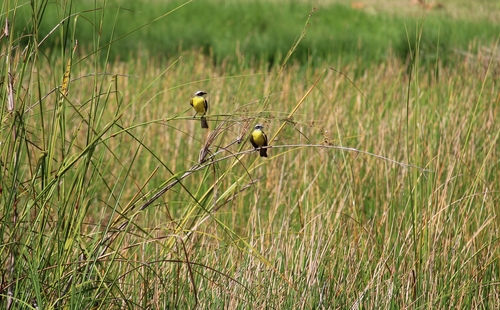 Social Flycatcher
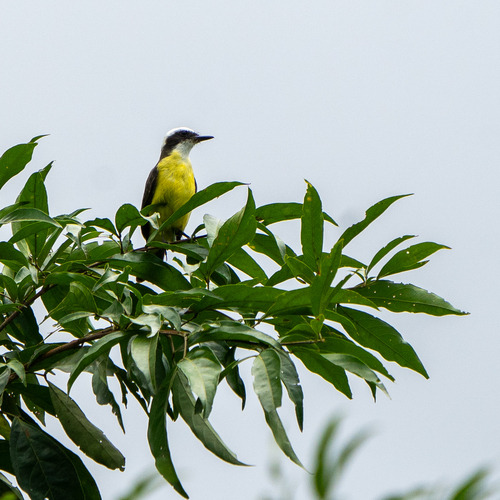 White-ringed Flycatcher
In breve
Il segno di campo più affidabile per separare il Social Flycatcher dal White-ringed Flycatcher è il modello e l'estensione del supercilio bianco: il Social Flycatcher mostra un ampio sopracciglio bianco che si estende bene dietro l'occhio ma non avvolge il collo, mentre il White-ringed Flycatcher ha un supercilio bianco sorprendente che si allarga dietro l'occhio e quasi circonda il collo. Gli uccelli giovani possono essere separati dal colore dei bordi delle piume delle ali e della coda: i giovani Social Flycatcher hanno bordi rugginosi, mentre i giovani White-ringed Flycatcher mostrano toni cannella e giallastri. Strutturalmente, il Social Flycatcher è leggermente più grande e ha un becco più corto e tozzo rispetto al becco più lungo del White-ringed. Entrambe le specie condividono parti inferiori gialle brillanti e parti superiori olivastre, ma sottili differenze nel modello della testa e nei bordi delle ali sono fondamentali. Entrambi sono spesso confusi a causa delle dimensioni simili e del colore generale, ma un'attenta attenzione al supercilio e alla macchia sulla corona (quando visibile) risolverà la maggior parte delle identificazioni sul campo.
Consigli di identificazione
- Supercilium pattern: Il Social Flycatcher mostra un ampio sopracciglio bianco che si estende bene dietro l'occhio ma non avvolge il collo. Il supercilio bianco del White-ringed Flycatcher è più ampio dietro l'occhio e quasi circonda il collo, formando un 'anello' parziale—un segno di campo chiave negli uccelli in perching.
- Head color and crown patch: Il Social Flycatcher ha una testa grigio scuro a grigio bruno con una macchia sulla corona rossa a arancione per lo più nascosta (raramente visibile tranne che da vicino o quando sollevata). Il White-ringed ha una corona e un viso neri a bruno sporco, con una macchia sulla corona di colore giallo limone a giallo canarino (anch'essa raramente visibile). Il colore della macchia sulla corona non è di solito un segno di campo affidabile a meno che l'uccello non sia agitato o in mostra.
- Juvenile wing and tail edges: I giovani Social Flycatcher hanno bordi rugginosi ampi sulle piume delle ali e della coda, mentre i giovani White-ringed Flycatcher hanno bordi cannella sulle copritrici delle ali e sul dorso, e bordi giallastri più ampi sulle terziali. Questo è più affidabile nei giovani freschi.
- Bill structure: Il Social Flycatcher ha un becco nero corto e tozzo. Il White-ringed Flycatcher ha un becco nero più lungo e più snello. La forma del becco è meglio giudicata di profilo e con buone viste.
- Wing bars: Il Social Flycatcher può mostrare due deboli barre alari formate da bordi bianco grigiastro pallido alle copritrici, ma queste sono spesso sottili. Le copritrici alari del White-ringed hanno bordi grigio bruno pallido o olivastro, ma l'effetto è meno di una barra e più di un bordo diffuso.
- Upperparts color: Il Social Flycatcher è verde oliva a bruno oliva sopra, con un collo posteriore leggermente più grigio. Il White-ringed è più grigio oliva a oliva bruno, a volte apparendo più scuro o più uniforme.
- Underparts: Entrambe le specie hanno pance gialle brillanti e gole bianche, ma il giallo del White-ringed è spesso descritto come più 'canarino' o intenso, specialmente nel piumaggio fresco. Questa differenza è sottile e non sempre affidabile.
- Tail color: Entrambi hanno code bruno grigiastro con bordi olivastri o grigio-bruni pallidi. I bordi della coda dei giovani sono rugginosi nel Social Flycatcher, cannella nel White-ringed.
- Iris color: Il Social Flycatcher ha un'iride marrone, mentre quella del White-ringed è nerastro. Questo è visibile solo da vicino.
- Leg color: Entrambe le specie hanno gambe e piedi neri o nerastri—questo non è un utile separatore.
- Perched vs. in flight: La maggior parte dei segni di campo sono visibili quando sono in perching; in volo, cerca l'estensione e il colore dei bordi delle ali nei giovani, e le dimensioni e la forma complessive.
- Habitat and range: Se visti in campagna aperta, ai margini o in aree urbane in America Centrale o Meridionale, il Social Flycatcher è molto più probabile. Ai margini delle foreste umide di pianura, specialmente in Costa Rica, Panama o nel nord-ovest del Sud America, controlla per il White-ringed.
- Group behavior: Il Social Flycatcher è spesso visto in piccoli gruppi o coppie, a volte piuttosto appariscenti. Il White-ringed è più spesso solitario o in coppie.
- Subspecies variation: Le sottospecie di Social Flycatcher possono differire in dimensioni e luminosità delle parti inferiori, ma queste differenze sono sottili e non probabilmente causano confusione con il White-ringed.
- Pitfalls: Entrambe le specie sono facilmente confuse con altri grandi flycatchers a pancia gialla (ad es., Great Kiskadee, Rusty-margined Flycatcher), quindi controlla sempre attentamente la forma del supercilio e il colore della testa.
Taglia
Il Social Flycatcher è marginalmente più grande, misurando 16–18,5 cm di lunghezza e pesando 24–27 g, mentre il White-ringed Flycatcher è 15–16,5 cm e circa 24 g. La differenza è sottile e non sempre apparente sul campo, ma il Social Flycatcher può apparire leggermente più robusto, specialmente in confronto diretto. La struttura del becco differisce: il Social Flycatcher ha un becco più corto e tozzo, mentre quello del White-ringed è più lungo e più snello. Entrambi i sessi sono simili in dimensioni all'interno di ciascuna specie, ma la sottospecie grandis del Social Flycatcher è notevolmente più grande rispetto ad altre forme.
Piumaggio
Il piumaggio giovanile fornisce la separazione più chiara: i giovani Social Flycatcher hanno poco o nessun rosso sulla corona e mostrano bordi rugginosi ampi sulle piume delle ali e della coda, mentre i giovani White-ringed Flycatcher non hanno giallo sulla corona e invece hanno bordi cannella sulle copritrici delle ali e sul dorso, oltre a bordi giallastri più ampi sulle terziali. Negli adulti, il Social Flycatcher ha una testa grigio scuro a grigio bruno con una macchia sulla corona rossa a arancione per lo più nascosta, un ampio supercilio bianco che si estende oltre l'occhio (ma non intorno al collo), parti superiori olivastre a bruno olivastro, e barre alari deboli. Gli adulti del White-ringed Flycatcher hanno una corona e un viso neri a bruno sporco con una macchia sulla corona di colore giallo limone a giallo canarino nascosta, un supercilio bianco che si allarga e avvolge quasi intorno al collo, e parti superiori che sono più grigio oliva a oliva bruno. Le loro ali sono scure e più brune rispetto al dorso, con bordi pallidi che possono apparire giallastri sulle secondarie e terziali. Entrambe le specie hanno parti inferiori gialle brillanti e gole bianche, ma le parti inferiori del White-ringed sono spesso descritte come giallo canarino e possono apparire leggermente più luminose.
Comportamento
Entrambe le specie sono tipici flycatchers tiranni nel comportamento, spesso posandosi in modo appariscente e cacciando insetti. Non ci sono differenze comportamentali fortemente diagnostiche nelle note, ma il Social Flycatcher è spesso descritto come più gregario e probabile da vedere in piccoli gruppi, mentre il White-ringed Flycatcher è meno frequentemente notato come sociale. Entrambi possono essere visti in habitat aperti o ai margini simili, e entrambi sono attivi e vocali quando presenti.
Habitat
Il Social Flycatcher ha un'area di distribuzione molto più ampia, che si estende dal Messico attraverso l'America Centrale e nella maggior parte del Sud America (eccetto Cile, Guyana, Suriname e Uruguay), e può essere trovato in una vasta gamma di habitat semi-aperti, ai margini e anche in aree urbane. Il White-ringed Flycatcher è più ristretto, trovato dall'Honduras all'Ecuador, principalmente in foreste umide di pianura e ai margini. Nelle aree di sovrapposizione (America Centrale, nord-ovest del Sud America), il Social Flycatcher è generalmente molto più comune e diffuso, mentre il White-ringed è più localizzato e legato a habitat forestali.
Social Flycatcher · White-ringed Flycatcher · I miei uccelli difficili