

Smoky Warbler vs Japanese Leaf Warbler
Phylloscopus fuligiventer contro Phylloscopus xanthodryas
Fai un quiz con Smoky Warbler e Japanese Leaf Warbler
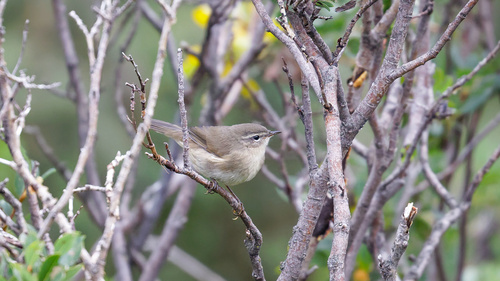 Smoky Warbler
 Japanese Leaf Warbler
In breve
Il modo più affidabile per separare il Smoky Warbler dal Japanese Leaf Warbler è il tono generale della livrea e il motivo facciale: il Smoky Warbler è molto più opaco e scuro, privo del brillante verde oliva e della forte sopracciglia giallo-bianca del Japanese Leaf Warbler. Sul campo, il Japanese Leaf Warbler si distingue per le sue parti superiori di un brillante verde oliva, un chiaro supercilium e una banda alare bianca, mentre il Smoky Warbler appare fuligginoso, semplice e privo di questi segni contrastanti. I giovani del Japanese Leaf Warbler sono più opachi ma mostrano ancora il motivo facciale, mentre il Smoky Warbler rimane uniformemente sporco. La struttura e il comportamento sono simili, quindi concentrati sul colore e sul motivo del viso, specialmente in posizioni perpendicolari o in vista ravvicinata.
Consigli di identificazione
- Sopracciglia (supercilium): Il Japanese Leaf Warbler mostra sempre una chiara sopracciglia giallo-bianca sopra l'occhio, anche nei giovani opachi. Il Smoky Warbler manca di un forte supercilium, apparendo con un viso semplice.
- Colore delle parti superiori: Il Japanese Leaf Warbler è di un brillante verde oliva sopra (adulti), mentre il Smoky Warbler è uniformemente fuligginoso o marrone scuro, privo di toni verdi o oliva.
- Banda alare: Gli adulti del Japanese Leaf Warbler mostrano una distinta banda alare bianca, visibile sia in posizione perpendicolare che in volo. Il Smoky Warbler non ha banda alare a nessuna età.
- Livrea giovanile: Anche i giovani opachi del Japanese Leaf Warbler mantengono un motivo facciale contrastante e alcuni toni oliva; i giovani del Smoky Warbler sono semplici e sporchi in tutto.
- Parti inferiori: Il Japanese Leaf Warbler ha parti inferiori più chiare e più leggere rispetto alle sue parti superiori. Il Smoky Warbler è più uniformemente scuro sia sotto che sopra.
- Becco e zampe: Il Japanese Leaf Warbler ha un becco corto, nerastro con un accenno di giallo e zampe di un giallo pallido a marrone-arancio. Queste caratteristiche non sono descritte per il Smoky Warbler, ma non sono evidenziate come distintive.
- Contrasto facciale: La combinazione di un occhio scuro e una sopracciglia chiara conferisce al Japanese Leaf Warbler un viso sorprendente. Il viso del Smoky Warbler è molto meno contrastante.
- Motivo della coda e delle ali in volo: La coda verdognola del Japanese Leaf Warbler e la banda alare bianca possono essere visibili in volo; il Smoky Warbler manca di queste caratteristiche e appare uniformemente scuro.
- Contesto dell'habitat: Se osservato ad alta quota nell'Himalaya o nel Plateau tibetano, il Smoky Warbler è più probabile. Nelle foreste di pianura o durante la migrazione in Asia orientale, ci si aspetta il Japanese Leaf Warbler.
- Canto e richiamo: Se senti un canto ripetuto, con frasi brevi e a bassa tonalità o un richiamo secco 'brrt', è probabile che sia il Japanese Leaf Warbler. La voce del Smoky Warbler non è descritta qui.
- Stagione: Il Japanese Leaf Warbler è migratorio e può essere presente solo in determinati periodi dell'anno; il Smoky Warbler è più residente nel suo areale.
- Differenze sessuali: Entrambe le specie sono sessualmente monomorfiche (maschi e femmine si somigliano), quindi il sesso non è un segno utile sul campo.
- Dimensioni: Entrambi sono simili in dimensioni; non utilizzare le dimensioni per separarli.
- Comportamento: Entrambi cercano attivamente nel fogliame; il comportamento non è un separatore affidabile.
- Trappole: I giovani opachi del Japanese Leaf Warbler possono apparire meno brillanti ma mostrano ancora la sopracciglia e alcuni contrasti; il Smoky Warbler è sempre più semplice e scuro nel complesso.
Taglia
Entrambe le specie sono simili in dimensioni, tipiche dei warbler Phylloscopus. Il Japanese Leaf Warbler è riportato con una lunghezza di 12–13 cm [wikipedia], ma non sono disponibili dati diretti sulle dimensioni per il Smoky Warbler nelle note. Sul campo, nessuna delle due specie è probabile che appaia visibilmente più grande o più piccola dell'altra, quindi le dimensioni non sono un separatore affidabile.
Piumaggio
- Giovani e immaturi: I giovani del Japanese Leaf Warbler sono più opachi degli adulti (più grigio-marroni), ma mostrano ancora una sopracciglia giallo-bianca e qualche contrasto tra le parti superiori e inferiori. Il Smoky Warbler, al contrario, è uniformemente fuligginoso o scuro, privo di una forte sopracciglia o banda alare a qualsiasi età.
- Adulti: Gli adulti del Japanese Leaf Warbler sono di un brillante verde oliva sopra, con un chiaro supercilium giallo-bianco, banda alare bianca e coda verdognola. Gli adulti del Smoky Warbler sono molto più semplici e scuri, con un aspetto generalmente fuligginoso o scuro e senza forti segni facciali o alari.
- Motivo della parte superiore dell'ala in volo: Il Japanese Leaf Warbler mostra una banda alare bianca (visibile negli adulti e, in misura minore, nei giovani), mentre il Smoky Warbler manca di qualsiasi banda alare o motivo alare contrastante.
- Becco e zampe: Il Japanese Leaf Warbler ha un becco corto, nerastro con un accenno di giallo e zampe di un giallo pallido a marrone-arancio. Il becco e le zampe del Smoky Warbler non sono descritti nelle note, ma non sono evidenziati come distintivi.
Comportamento
Entrambe le specie si comportano come tipici warbler Phylloscopus, cercando attivamente nel fogliame. Non sono descritte differenze comportamentali nelle note che possano separarle in modo affidabile sul campo.
Habitat
Il Smoky Warbler si trova negli Himalaya orientali e nel Plateau tibetano, raggiungendo occasionalmente il Myanmar. Il Japanese Leaf Warbler nidifica in Giappone e migra attraverso la Cina orientale e le isole vicine, svernando a Taiwan, nelle Filippine, a Borneo e a Giava. Anche se i loro areali possono sovrapporsi durante la migrazione o come vagabondi, il Smoky Warbler è uno specialista di alta quota, mentre il Japanese Leaf Warbler si trova più spesso in aree di pianura e boschive durante la migrazione e l'inverno. L'habitat può essere un indizio di supporto, ma non è diagnostico se entrambe le specie sono possibili.
Voce
Il Japanese Leaf Warbler ha un canto distintivo: una serie di frasi brevi ripetute più volte, della durata di 1,5–2 secondi, più basse rispetto ad alcune specie correlate e con un ritmo più lento rispetto all'Luì boreale. Il suo richiamo è un secco e morbido 'brrt.' Nessuna descrizione vocale è fornita per il Smoky Warbler nelle note, quindi la voce non è un separatore affidabile a meno che non si senta il canto del Japanese Leaf Warbler.
Smoky Warbler · Japanese Leaf Warbler · I miei uccelli difficili