

Slaty-bellied Tesia vs Short-tailed Parrotbill
Tesia olivea contro Suthora davidiana
Fai un quiz con Slaty-bellied Tesia e Short-tailed Parrotbill
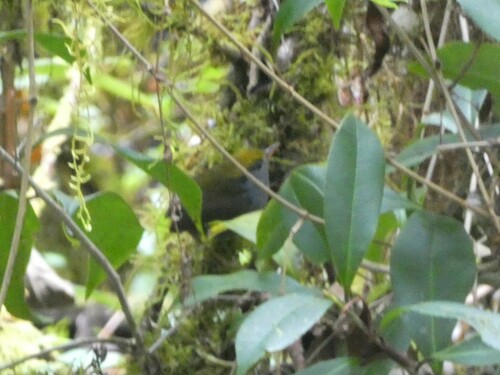 Slaty-bellied Tesia
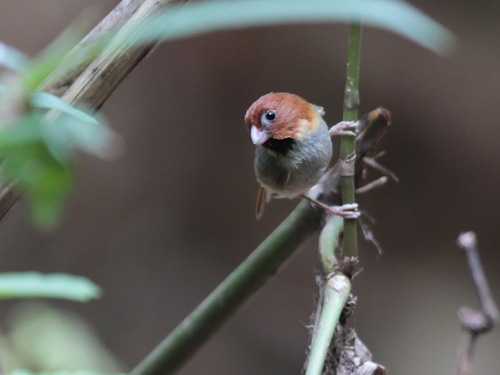 Short-tailed Parrotbill
In breve
Il modo più affidabile per separare il Slaty-bellied Tesia dal Short-tailed Parrotbill è la struttura generale: il Tesia è un piccolo, warbler dalla coda corta con un becco fine, mentre il Short-tailed Parrotbill è più robusto, con un becco notevolmente spesso e profondo e una coda proporzionalmente corta ma larga. Sul campo, la testa di Parrotbill, di un brillante colore cannella-rossiccio, e la gola nera risaltano, mentre il Tesia è più uniformemente oliva con un ventre grigio-ardesia e manca di un forte contrasto facciale. Entrambe le specie possono essere trovate in habitat forestali simili nel Sud-est asiatico, ma la loro forma e il motivo della testa sono gli indizi più rapidi sul campo. I modelli di ali specifici per i giovani o gli immaturi non sono descritti per nessuna delle due specie, quindi concentrati sulla struttura e sul piumaggio degli adulti.
Consigli di identificazione
- Bill shape: Il Short-tailed Parrotbill ha un becco spesso, profondo e largo—molto più grande in proporzione alla testa rispetto al becco fine e appuntito del Tesia. Questo è visibile anche da lontano ed è diagnostico per il Parrotbill.
- Tail length and shape: Entrambe le specie hanno code corte, ma quella del Parrotbill è corta e larga, circa tre quarti della lunghezza dell'ala, mentre quella del Tesia è estremamente corta e spesso tenuta inclinata o scossa, a volte apparendo quasi senza coda.
- Head pattern: Il Parrotbill mostra una corona e lati della testa di un brillante colore cannella-rossiccio, con un mento e una gola neri a forte contrasto. Il Tesia manca di forti marcature sulla testa o sulla gola, essendo più uniformemente oliva sopra e grigio-ardesia sotto.
- Underparts color: Il Tesia ha un ventre grigio-ardesia che contrasta con le parti superiori olive, mentre le parti inferiori del Parrotbill sono bruno-ocra con un petto grigio tendente al buff. Il ventre grigio-ardesia è unico per il Tesia.
- Back and rump: La schiena e il cuscinetto del Parrotbill sono di un grigio-ardesia pallido con un lavaggio oliva, mentre il Tesia è più uniformemente oliva sopra.
- Wing and tail coloration: Le ali e la coda del Parrotbill sono grigio-brune con bordi rossicci sulle penne, mentre le ali del Tesia non sono descritte come contrastanti o con bordi rossicci.
- Size and jizz: Il Parrotbill è più robusto, con una grande testa e un becco, e un aspetto compatto e tozzo. Il Tesia è più piccolo, più delicato, e spesso appare molto corto di coda e agile.
- Behavior: Il Tesia è irrequieto, spesso scuotendo la coda e muovendosi in basso in copertura densa. Il Parrotbill è più probabile da vedere in piccoli gruppi sociali, foraggiando metodicamente in cespugli o alberi bassi.
- Habitat preference: Anche se entrambe possono trovarsi nella foresta di pianura, il Tesia è più probabile in sottobosco denso o nella foresta montana, mentre il Parrotbill si trova in aree cespugliose o aperte all'interno della foresta di pianura.
- No age-specific wing pattern: Non ci sono modelli di ali o segni di volo giovanili o immaturi descritti per separare queste specie; concentrati sulla struttura e sul piumaggio degli adulti.
- No strong sexual dimorphism: Entrambe le specie sono simili tra i sessi; usa i segni strutturali e di piumaggio per tutti gli individui.
- Plumage pitfalls: In scarsa illuminazione, la testa rossiccia del Parrotbill e la gola nera possono essere meno evidenti, ma la dimensione del becco e la forma della testa rimangono distintive. La mancanza di un forte motivo sulla testa del Tesia è un buon indizio.
- Flock association: Il Parrotbill è più probabile che si trovi in un gruppo; il Tesia è spesso solitario o in coppie.
- Bill color: Il becco del Parrotbill è descritto come carnoso-corneo; quello del Tesia non è specificato ma è molto più fine e meno prominente.
- Leg color: Le gambe del Parrotbill sono di un grigio plumbeo; il colore delle gambe del Tesia non è specificato ma non è un segno principale sul campo.
Taglia
Il Short-tailed Parrotbill è leggermente più pesante (8.5g contro 7.5g per il Tesia) e appare più robusto in mano e sul campo. Il corpo del Parrotbill è più tozzo, con un grande becco profondo e una coda corta e larga (lunghezza della coda circa tre quarti dell'ala), conferendogli un aspetto compatto, quasi sferico. Il Slaty-bellied Tesia è piccolo, più snello, con un becco fine e appuntito e una coda molto corta, che spesso appare quasi senza coda. Entrambi sono uccelli piccoli, ma le proporzioni del Parrotbill sono più robuste e la sua testa è notevolmente più grande rispetto al suo corpo.
Piumaggio
- Juvenile/immature wing pattern: Non ci sono modelli di ali o segni di volo distintivi specifici per l'età descritti per nessuna delle due specie; la separazione non si basa su tali caratteristiche.
- Adult plumage: Il Slaty-bellied Tesia è oliva sopra con un ventre grigio-ardesia, privo di forti marcature sulla testa o sulla gola. Il Short-tailed Parrotbill ha una corona e lati della testa di un brillante colore cannella-rossiccio, un mento e una gola neri, una schiena e un cuscinetto grigio-ardesia pallido con lavaggio oliva, e chiare parti inferiori bruno-ocra. Le ali e la coda del Parrotbill sono grigio-brune, con penne bordate di rossiccio. Il motivo della testa del Parrotbill è molto più contrastante, e la gola nera è unica tra i due.
Comportamento
Il Slaty-bellied Tesia è tipicamente attivo in sottobosco denso, muovendosi in modo simile a un topo attraverso la vegetazione bassa e spesso scuotendo la sua coda molto corta. Il Short-tailed Parrotbill è più probabile da vedere in piccoli gruppi rumorosi, spesso più in alto nel strato di cespugli o nel canopeo inferiore, e può apparire più deliberato e meno irrequieto rispetto al Tesia. L'alimentazione del Parrotbill è spesso più metodica, utilizzando il suo forte becco per manipolare steli e foglie.
Habitat
Entrambe le specie si trovano in foreste umide di pianura subtropicali o tropicali in regioni sovrapposte del Sud-est asiatico. Il Slaty-bellied Tesia si trova anche nella foresta montana, mentre il Short-tailed Parrotbill è più rigorosamente una specie di foresta di pianura. In pratica, entrambe possono trovarsi in habitat simili, ma il Tesia può essere più probabile in sottobosco denso e ombreggiato, mentre il Parrotbill può essere trovato in aree leggermente più aperte o cespugliose all'interno della foresta.
Slaty-bellied Tesia · Short-tailed Parrotbill · I miei uccelli difficili