
Allodola golagialla vs Cappellaccia
Eremophila alpestris contro Galerida cristata
Fai un quiz con Allodola golagialla e Cappellaccia
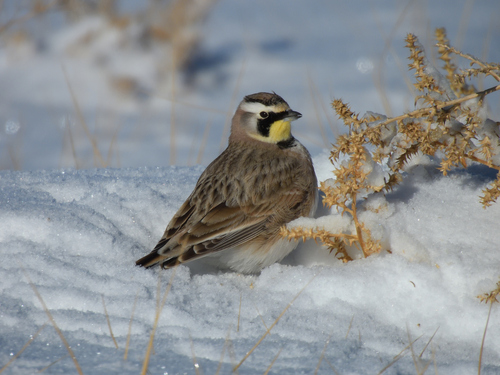 Allodola golagialla
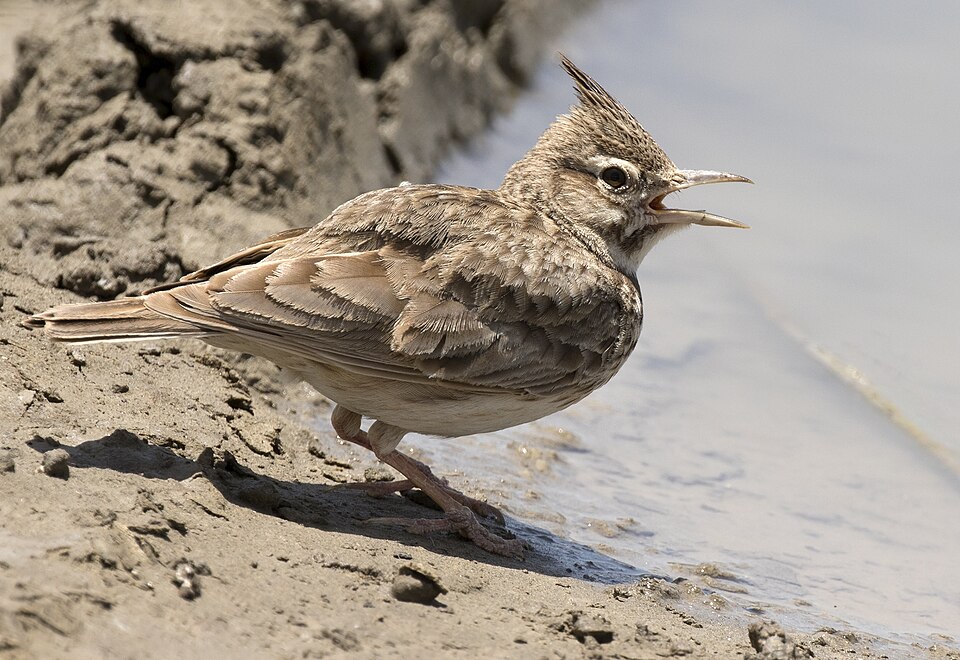 Cappellaccia
In breve
Il segno distintivo più affidabile tra Allodola golagialla e Cappellaccia è il pattern del viso audace in nero e giallo (o nero e bianco in alcune razze) dell'Allodola golagialla, spesso con piccoli "corni" di piume nere nei maschi adulti, rispetto al viso più semplice e striato della Cappellaccia e alla sua cresta appuntita e prominente. In volo, l'Allodola golagialla mostra una coda nera sorprendente con un contrasto di corpo chiaro, mentre la Cappellaccia ha una coda più corta con piume esterne chiare e ali inferiori rossastre. I giovani Cappellacce sono più macchiati sopra, ma non mostrano mai il pattern facciale dell'Allodola golagialla. Anche la struttura differisce: la Cappellaccia è più robusta con un becco più pesante e una cresta più lunga, sempre visibile. Entrambi sono allodole terrestri, ma l'Allodola golagialla preferisce terreni aperti, spesso aridi o costieri, mentre la Cappellaccia predilige terreni incolti e margini urbani.
Consigli di identificazione
- Face pattern (all ages): L'Allodola golagialla mostra sempre un audace pattern del viso in nero e giallo (o nero e bianco), anche nei giovani più spenti; il viso della Cappellaccia è semplice, con solo lievi striature e senza marcature audaci.
- Crest vs. horns (adults): La Cappellaccia ha una lunga cresta appuntita che è sempre visibile e particolarmente evidente quando è sollevata; i maschi dell'Allodola golagialla hanno piccoli "corni" di piume nere (ciuffi) sulla corona, ma questi sono molto più corti e evidenti solo da vicino o in buona luce.
- Tail pattern in flight (all ages): L'Allodola golagialla ha una coda per lo più nera (eccetto le piume centrali), creando un forte contrasto con il corpo chiaro, particolarmente evidente in volo; la coda della Cappellaccia è più corta, con piume esterne chiare e senza forte contrasto.
- Underwing color (flight): La Cappellaccia mostra ali inferiori rossastre in volo, una caratteristica mai mostrata dall'Allodola golagialla.
- Juvenile upperparts: I giovani Cappellacce sono più macchiati sulla schiena, ma non mostrano mai un pattern facciale; i giovani Allodole golagialla hanno una versione più spenta del pattern facciale adulto.
- Bill shape: La Cappellaccia ha un becco più pesante e robusto, spesso leggermente ricurvo; il becco dell'Allodola golagialla è più fine e delicato.
- Body structure: La Cappellaccia è più robusta attorno alla testa e al corpo, con una coda più corta rispetto alla dimensione del corpo; l'Allodola golagialla appare più snella e con una coda più lunga.
- Plumage above/below: L'Allodola golagialla è marrone-grigia sopra e chiara sotto, con un forte contrasto; la Cappellaccia è più uniformemente marrone sopra e sotto, con meno contrasto.
- Breast band: L'Allodola golagialla ha una banda nera sul petto (soprattutto nei maschi in piumaggio nuziale); la Cappellaccia non ha alcuna banda sul petto.
- Song: Il canto dell'Allodola golagialla è acuto, debole e tintinnante; quello della Cappellaccia è più ricco, più liquido e melodioso.
- Display flight: I maschi dell'Allodola golagialla eseguono voli di canto circolari e fluttuanti con un'improvvisa immersione; la dimostrazione della Cappellaccia è più ondulata e spesso avviene dal suolo.
- Habitat: L'Allodola golagialla preferisce terreni aperti, spesso aridi o costieri; la Cappellaccia è più probabile trovarla in terreni incolti, margini urbani e terreni disturbati.
- Seasonal context: In Europa, l'Allodola golagialla è principalmente un visitatore invernale delle coste; la Cappellaccia è residente tutto l'anno.
- Sex differences: I sessi della Cappellaccia sono simili; i maschi dell'Allodola golagialla hanno corni e pattern facciale più pronunciati, ma le femmine e i giovani mostrano comunque il pattern facciale chiave.
- Pitfalls: A distanza, la cresta della Cappellaccia può sembrare "corni" se sollevata, ma la mancanza di un audace pattern facciale e le ali inferiori rossastre in volo sono diagnostiche. I corni dell'Allodola golagialla sono molto più corti e evidenti solo in buone visuali.
Taglia
L'Allodola golagialla è leggermente più piccola e leggera: 16–20 cm di lunghezza, 28–48 g di peso, 30–34 cm di apertura alare [wikipedia][avonet][wikidata]. La Cappellaccia è lunga 17 cm, 37–55 g, e ha un'apertura alare di 29–38 cm [wikipedia][avonet][wikidata]. Sul campo, la Cappellaccia appare più robusta attorno alla testa e al corpo, con una costruzione più pesante e un becco più robusto, mentre l'Allodola golagialla è più snella e più delicata nel complesso.
Piumaggio
-
Juveniles/immatures: I giovani Cappellacce sono più macchiati sulla schiena rispetto agli adulti, ma mancano di un audace pattern facciale; le loro parti superiori sono striate e marroni semplici, con una coda corta e piume esterne chiare. I giovani Allodole golagialla mostrano già un contrasto chiaro/scuri e iniziano a sviluppare il pattern facciale, anche se è più spento rispetto agli adulti.
-
Adults (breeding): I maschi dell'Allodola golagialla hanno un drammatico pattern del viso in nero e giallo (o nero e bianco in alcune razze), con "corni" neri (ciuffi) sulla corona, una banda nera sul petto e una coda per lo più nera (eccetto le piume centrali) che contrasta con il corpo chiaro, soprattutto in volo. Gli adulti della Cappellaccia sono marroni semplici sopra, chiari sotto, con una schiena striata e una cresta appuntita prominente; il loro viso è semplice e privo di qualsiasi pattern audace, e le ali inferiori sono rossastre in volo.
-
Flight: L'Allodola golagialla mostra una coda nera sorprendente con un contrasto di corpo chiaro; la Cappellaccia ha una coda più corta con piume esterne chiare e ali inferiori rossastre, priva di qualsiasi forte contrasto coda/corpo.
Comportamento
Entrambe le specie sono allodole terrestri, spesso viste camminare o correre su terreni aperti. I maschi dell'Allodola golagialla eseguono dimostrazioni di canto aereo con un volo circolare e fluttuante e un'improvvisa immersione, spesso cantando in volo. Anche la Cappellaccia canta in volo, ma la sua dimostrazione è più ondulata e spesso canta dal suolo o da posatoi bassi. La cresta della Cappellaccia è sollevata durante la dimostrazione o l'eccitazione, rendendola più evidente. Entrambi nidificano in depressioni nel terreno, ma il nido dell'Allodola golagialla è costruito con maggiore cura e spesso ha un 'gradino' di ciottoli o detriti.
Habitat
L'Allodola golagialla preferisce terreni aperti, spesso aridi o costieri, come le coste in inverno o habitat simili alla tundra; in Europa, è associata alle coste in inverno. La Cappellaccia è più probabile trovarla in terreni incolti, margini urbani, bordi stradali e terreni disturbati, spesso vicino a città o villaggi. Sebbene entrambe possano essere viste in campagna aperta, la Cappellaccia è più tollerante degli habitat modificati dall'uomo ed è non migratoria, mentre l'Allodola golagialla è migratoria o nomade in molte regioni.
Voce
I richiami dell'Allodola golagialla sono acuti, sibilanti o tintinnanti, e deboli; il suo canto è composto da alcuni chip seguiti da un trill ascendente e gorgogliante, spesso emesso in volo [wikipedia]. Il canto della Cappellaccia è una sequenza liquida e gorgogliante ("whee-whee-wheeoo" o "twee-tee-too"), anch'esso emesso in volo o dal suolo, ed è più ricco e melodioso rispetto a quello dell'Allodola golagialla. Entrambi cantano in volo, ma il canto della Cappellaccia è più complesso e meno acuto.
Allodola golagialla · Cappellaccia · I miei uccelli difficili