

Shiny Cowbird vs Bronzed Cowbird
Molothrus bonariensis contro Molothrus aeneus
Fai un quiz con Shiny Cowbird e Bronzed Cowbird
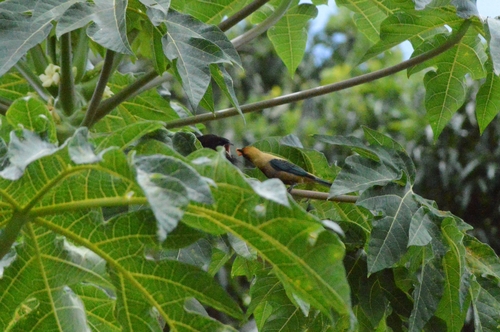 Shiny Cowbird
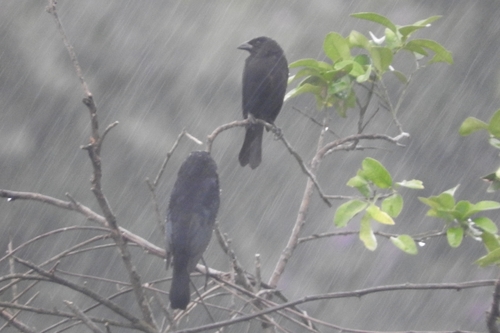 Bronzed Cowbird
In breve
The most reliable field mark between Shiny Cowbird and Bronzed Cowbird is the male's eye color in breeding season: Bronzed Cowbird males show striking red eyes, while Shiny Cowbird males have dark eyes year-round. Structurally, Bronzed Cowbird is bulkier and heavier, with a noticeably thicker neck and larger bill, while Shiny Cowbird is slimmer and more delicate. Female Shiny Cowbirds are paler and more finely billed than the darker, heavier Bronzed Cowbird females. Both species can appear similar in overall shape and behavior, but careful attention to bill shape, body mass, and subtle plumage differences—especially in females and immatures—will help avoid confusion.
Consigli di identificazione
- Male eye color (breeding season): Bronzed Cowbird males have vivid red eyes; Shiny Cowbird males always have dark eyes. This is the most reliable single mark in spring and summer.
- Bill shape: Shiny Cowbird has a longer, finer bill and a flatter head profile, especially in females. Bronzed Cowbird's bill is heavier and more conical, matching its overall bulkier look.
- Body size and structure: Bronzed Cowbird is much heavier and appears chunkier, with a thicker neck and more robust body. Shiny Cowbird is slimmer and more delicate, especially noticeable when both are seen together.
- Male plumage gloss: Shiny Cowbird males show a purple-blue iridescence, while Bronzed Cowbird males are green-bronze and less glossy overall. In poor light, this can be subtle, but in direct sun the difference is clear.
- Female plumage: Shiny Cowbird females are dusty gray-brown and often paler below, with a sleeker appearance. Bronzed Cowbird females are dull black with a brownish underbelly, looking darker and heavier.
- Immature birds: Juvenile Bronzed Cowbirds have gray feather fringes and are darker overall than young Shiny Cowbirds, which are paler and more uniform brown. No distinctive upperwing pattern is described for either, so focus on overall color and structure.
- Eye color in females and non-breeding males: Bronzed Cowbird females and non-breeding males have brown eyes, while Shiny Cowbird eyes are always dark (not red or bright brown). This is subtle but can help in good light.
- Head and neck shape: Bronzed Cowbird often looks thick-necked and heavy-headed, while Shiny Cowbird is flatter-crowned and more slender.
- Foraging behavior: Both species forage on the ground, but Bronzed Cowbird may seem slower and more deliberate due to its bulk; Shiny Cowbird is more active and agile.
- Habitat and range: In the US, Bronzed Cowbird is expected in the southwest and Mexico, while Shiny Cowbird is a rare breeder in southern Florida and the Caribbean. In South America, Bronzed Cowbird is rare or absent.
- Courtship display: Both species perform bowing and feather-ruffling displays, but these are not reliably separable in the field.
- Association with livestock: Both species may be seen near cattle, but this is not diagnostic.
- Voice: No distinctive vocal differences are described in the notes; do not rely on song for separation.
- Pitfalls: Female and immature Bronzed Cowbirds are often mistaken for Shiny Cowbird females due to similar size and color; always check bill shape, body mass, and (if possible) eye color.
- When marks fail: In poor light or at distance, rely on structure and size rather than subtle color differences. If only a brief view is obtained, Bronzed Cowbird's bulk and thick bill are the best clues.
Taglia
Bronzed Cowbird is significantly heavier (about 63 g vs 37 g for Shiny Cowbird) and slightly longer (up to 20 cm for males) than Shiny Cowbird (typically 18 cm for males). This difference is most noticeable in direct comparison: Bronzed Cowbird looks chunkier, with a stouter neck and a more robust, heavier bill. Females of both species are closer in length, but Bronzed Cowbird females still outweigh Shiny Cowbird females by a substantial margin.
Piumaggio
- Adult males: Shiny Cowbird males are glossy black with a purple-blue iridescence, while Bronzed Cowbird males have a green-bronze gloss and, in breeding season, red eyes (brown otherwise). Bronzed Cowbird males are also duller black overall, lacking the strong blue sheen of Shiny Cowbird.
- Adult females: Shiny Cowbird females are dusty gray-brown, often paler below, with a longer, finer bill and flatter head. Bronzed Cowbird females are dull black with a brown underbelly and brown eyes, appearing bulkier and darker overall.
- Immatures/juveniles: Young Bronzed Cowbirds resemble females but have grey feather fringes; young Shiny Cowbirds are similar to adult females but may be even paler. No strong age-specific upperwing pattern is described for either species, so separation relies on overall color and structure.
- Eyes: Only Bronzed Cowbird males show red eyes in breeding season—a key mark.
Comportamento
Both species are brood parasites and often found in open or disturbed habitats, sometimes associating with livestock. Males of both perform courtship displays with song and posturing, but these are not reliably separable in the field. Bronzed Cowbird's heavier build often gives it a more lumbering, less agile appearance in flight or when foraging, while Shiny Cowbird tends to look more delicate and active.
Habitat
Shiny Cowbird is mostly a South American species, but has expanded north into the Caribbean and southern Florida, favoring open habitats and agricultural areas. Bronzed Cowbird is native to North America and is more likely in the southern US and Mexico. Where ranges overlap (e.g., southern Florida or Caribbean), both may be present in similar open, disturbed habitats. Habitat alone is not diagnostic, but Shiny Cowbird is less likely in dense forests or high mountains.