
Sharp-billed Treehunter vs Buff-browed Foliage-gleaner
Heliobletus contaminatus contro Syndactyla rufosuperciliata
Fai un quiz con Sharp-billed Treehunter e Buff-browed Foliage-gleaner
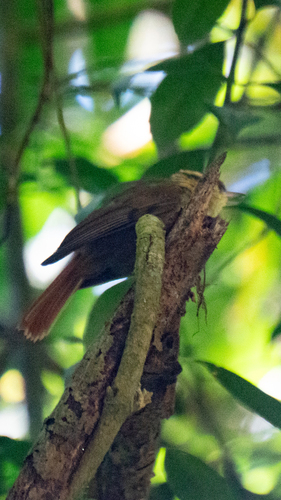 Sharp-billed Treehunter
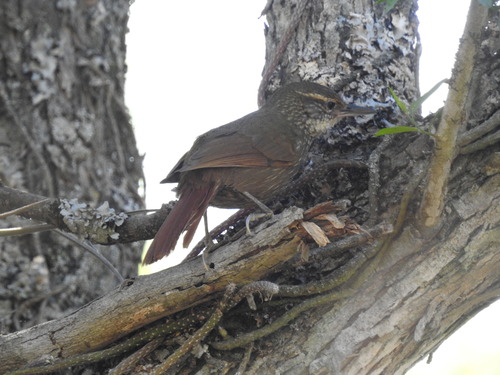 Buff-browed Foliage-gleaner
In breve
Il modo più affidabile per separare il Sharp-billed Treehunter dal Buff-browed Foliage-gleaner è attraverso le dimensioni e la struttura: il Treehunter è notevolmente più piccolo e snello, con un becco corto, appuntito e leggermente ricurvo, mentre il Foliage-gleaner è molto più robusto con un becco spesso e leggermente ricurvo. Entrambi hanno un supercilium color buff, ma quello del Treehunter è più ampio e dorato, e la sua corona è audacemente striata, a differenza della corona più opaca e debolmente striata del Foliage-gleaner. I giovani di entrambi sono simili agli adulti, ma il giovane Foliage-gleaner ha parti inferiori macchiate (non striate). Sul campo, concentrati su dimensioni generali, forma del becco e pattern della testa, poiché entrambe le specie possono sovrapporsi nell'habitat e nella colorazione generale.
Consigli di identificazione
- Dimensioni e robustezza: Il Buff-browed Foliage-gleaner è molto più grande e pesante del Sharp-billed Treehunter. Se l'uccello appare di dimensioni medie e robusto, sospetta il Foliage-gleaner; se è piccolo e snello, è più probabile che sia il Treehunter. Questo è affidabile per tutte le età e stagioni.
- Forma del becco: Il Treehunter ha un becco corto, appuntito e leggermente ricurvo; il becco del Foliage-gleaner è spesso, più lungo e leggermente ricurvo. La forma del becco è visibile sia negli uccelli posati che in quelli in cerca di cibo.
- Supercilium: Il supercilium del Treehunter è ampio, dorato e contrasta fortemente con una banda post-oculare marrone scuro. Quello del Foliage-gleaner è più chiaro, color buff, più stretto e si estende fino alla nuca, con un volto meno contrastante.
- Pattern della corona: Il Treehunter mostra striature dorato-olive audaci su una corona marrone scuro, mentre la corona del Foliage-gleaner è opaca color oliva-marrone con solo vaghe striature bianche sul retro. Cerca striature nette sulla corona del Treehunter, specialmente in buona luce.
- Collare parziale: Il Treehunter mostra spesso un collare parziale color buff, che è assente nel Foliage-gleaner.
- Schiena e groppa: La schiena del Treehunter è opaca color oliva-marrone con punte ruggine sulle copritrici; la schiena del Foliage-gleaner è semplicemente color oliva-marrone, priva di punte ruggine.
- Colore e struttura della coda: Entrambi hanno code ruggine, ma quella del Treehunter è più scura e le punte delle penne non hanno barbette (possono apparire più usurate o appuntite). La coda del Foliage-gleaner è opaca ruggine e più larga.
- Pattern del petto e dell'addome: Il Treehunter ha un petto di un buff chiaro con striature color oliva-marrone e un addome opaco color oliva-marrone. Il Foliage-gleaner ha un petto bianco-buff con bordi di piume color oliva-marrone, dando un aspetto scallopato, e un addome con ampie striature sfocate bianco-buff che svaniscono verso il retro.
- Parti inferiori giovanili: Il giovane Foliage-gleaner ha parti inferiori macchiate, mentre il giovane Treehunter è striato (anche se meno distintamente degli adulti). Questo è un segno chiave per gli immaturi.
- Pattern del volto: Il volto del Treehunter è più contrastante, con lore scure e una banda marrone scuro dietro l'occhio. Il volto del Foliage-gleaner è marrone con piccole macchie color buff e un anello oculare color buff.
- Colore delle gambe e dei piedi: Le gambe del Treehunter sono grigio-verdi fino a giallo-verde opaco; quelle del Foliage-gleaner sono olive fino a grigio-marrone. Questo è sottile e raramente diagnostico sul campo.
- Colore dell'iride: Entrambi hanno iridi marroni scure; non utile per la separazione.
- Habitat e altitudine: Il Treehunter è più probabile che si trovi a altitudini più elevate all'interno del suo areale, ma entrambe le specie si sovrappongono ampiamente nel tipo di habitat.
- Comportamento: Lo stile di foraggiamento è simile e non è affidabilmente separabile sul campo.
- Variazione delle sottospecie: Tieni presente che entrambe le specie hanno sottospecie con variazioni minori nel supercilium e nella striatura delle parti inferiori, ma i principali contrasti sopra descritti si mantengono in tutto il loro areale.
Taglia
Il Sharp-billed Treehunter è significativamente più piccolo e leggero, con una media di 14 g e una lunghezza di 12–13 cm. Il Buff-browed Foliage-gleaner è molto più grande e pesante, con una massa media di 25,6 g e una lunghezza di 17–18 cm. Questa differenza di dimensioni è solitamente ovvia sul campo, specialmente quando visti fianco a fianco o confrontati con specie familiari. Il Foliage-gleaner appare più robusto e dal corpo largo, mentre il Treehunter è compatto e snello.
Piumaggio
Il giovane Buff-browed Foliage-gleaner ha parti inferiori macchiate, mentre il giovane Sharp-billed Treehunter è simile all'adulto ma con un supercilium più ocra e striature meno distinte. L'adulto Treehunter mostra un ampio supercilium dorato, una corona marrone scuro con audaci striature dorato-olive e un collare parziale color buff. La sua schiena è opaca color oliva-marrone con punte ruggine sulle copritrici, e la coda è scura ruggine con punte non barbette. Le parti inferiori sono di un buff chiaro con striature color oliva-marrone sul petto e un addome opaco color oliva-marrone. Al contrario, l'adulto Buff-browed Foliage-gleaner ha un supercilium più chiaro, color buff-tawny che si estende fino alla nuca, una corona opaca color oliva-marrone con vaghe striature bianche solo sul retro, e una schiena opaca color oliva-marrone. La sua coda è opaca ruggine, e le ali sono di un ricco marrone olivaceo. La gola è bianca con punte marroni, il petto è bianco-buff con bordi di piume color oliva-marrone che creano un aspetto scallopato, e l'addome è color oliva-marrone con ampie striature sfocate bianco-buff che svaniscono verso il retro. La variazione delle sottospecie in entrambe le specie può influenzare l'intensità della striatura e il colore del supercilium, ma il Treehunter appare sempre più nettamente marcato sulla testa.
Comportamento
Entrambe le specie foraggiano per artropodi, spesso singolarmente o in coppie, e possono unirsi a stormi di specie miste. Il Treehunter è descritto come foraggiante singolarmente o in coppie, di solito come parte di uno stormo, mentre il comportamento di foraggiamento del Foliage-gleaner non è dettagliato qui ma è generalmente simile tra i foliage-gleaners. Non sono state notate differenze comportamentali significative nelle fonti che sarebbero affidabili per la separazione sul campo.
Habitat
Entrambe le specie si sovrappongono in gran parte del loro areale (Argentina, Brasile, Paraguay, Uruguay) e abitano foreste sempreverdi umide di pianura e montane. Il Treehunter si trova più spesso a altitudini più elevate fino a 1.830 m, mentre l'intervallo di altitudine del Foliage-gleaner non è specificato qui ma è geograficamente più ampio (si trova anche in Bolivia, Ecuador, Perù). L'habitat da solo non è un separatore affidabile dove gli areali si sovrappongono.
Sharp-billed Treehunter · Buff-browed Foliage-gleaner · I miei uccelli difficili