

Rusty-margined Flycatcher vs Social Flycatcher
Myiozetetes cayanensis contro Myiozetetes similis
Fai un quiz con Rusty-margined Flycatcher e Social Flycatcher
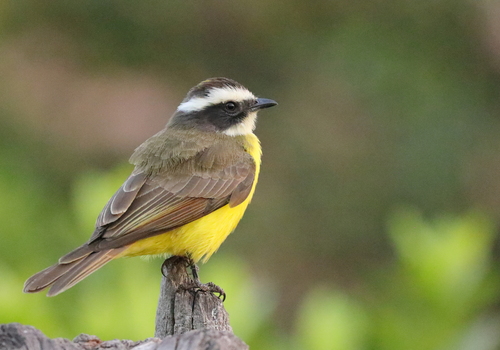 Rusty-margined Flycatcher
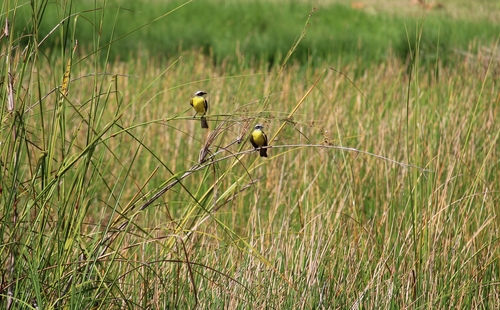 Social Flycatcher
In breve
I giovani Rusty-margined Flycatcher mostrano bordature più estese di ruggine-cannella sulle ali e sulla coda rispetto ai giovani Social Flycatcher, che hanno bordature rufous più ampie ma meno saturazione complessiva. Sugli adulti posati, cerca i margini rugginosi o cannella-rufous sulle secondarie e primarie esterne del Rusty-margined, rispetto ai margini grigi o olivacei più chiari del Social e a volte barre alari deboli. Entrambe le specie condividono un ampio supercilio bianco e parti inferiori gialle brillanti, ma le parti superiori del Rusty-margined sono di un marrone-oliva più uniforme, mentre il Social è più verde-oliva e può mostrare barre alari sottili. La struttura e la dimensione sono quasi identiche, quindi prestare attenzione ai bordi delle ali e della coda, specialmente nei giovani, è fondamentale. L'overlap degli habitat è esteso, quindi il contesto è raramente utile.
Consigli di identificazione
- Juvenile wing and tail edging: I giovani Rusty-margined Flycatcher hanno bordature di ruggine-cannella più estese e ricche sulle ali e sulla coda rispetto ai giovani Social Flycatcher, che mostrano bordature rufous più ampie ma più chiare. Questo è il segno più affidabile nei giovani freschi e negli uccelli di primo anno.
- Adult wing edging: Sugli adulti posati, cerca margini sottili rugginosi o cannella-rufous sulle secondarie esterne e primarie interne del Rusty-margined. Gli adulti Social Flycatcher hanno bordi bianchi grigi chiari sulle secondarie interne e bordi olivacei chiari altrove, a volte producendo due barre alari deboli dalle copritrici.
- Upperparts color: Il Rusty-margined Flycatcher ha parti superiori marroni a marrone-oliva, mentre il Social Flycatcher è più verde-oliva a marrone-oliva, spesso con un collo posteriore leggermente più grigio. Questo è sottile e meglio giudicato in buona luce.
- Wing bars: Il Social Flycatcher può mostrare due barre alari deboli formate da bordi chiari alle copritrici; il Rusty-margined non ha queste, mostrando invece bordature rugginosi o cannella più uniformi.
- Tail color and edging: Il Rusty-margined ha una coda marrone scura con bordi olivacei chiari; il Social Flycatcher ha una coda marrone grigio scuro con bordi olivacei chiari. Questo è un segno minore e meglio usato in combinazione con altri.
- Crown patch: Entrambe le specie hanno una macchia coronale per lo più nascosta (gialla a arancio dorato nel Rusty-margined, rossa a rosso-arancio nel Social). Questo è raramente visibile sul campo e non è un separatore affidabile.
- Supercilium: Entrambi hanno un ampio supercilio bianco che si estende ben oltre l'occhio; questo non è utile per la separazione.
- Underparts: Entrambi mostrano parti inferiori gialle brillanti e gola/mento bianchi; non diagnostico.
- Bill, legs, and iris: Entrambi hanno un becco nero tozzo, zampe e piedi neri, e iris marroni; nessuna separazione qui.
- Size and structure: Lunghezza e peso si sovrappongono quasi completamente; la struttura è quasi identica e non è un segno sul campo.
- Behavior and posture: Entrambi si posano in modo evidente e si lanciano per gli insetti; il Social Flycatcher può essere più gregario, ma questo non è affidabile.
- Habitat: Entrambi utilizzano una vasta gamma di habitat aperti e semi-aperti, spesso fianco a fianco; l'habitat non è un separatore.
- Vocalizations: Non sono state notate differenze distintive nelle fonti fornite; non fare affidamento sulla voce per la separazione qui.
- Subspecies variation: Alcune sottospecie di Rusty-margined (ad es., rufipennis, erythropterus) mostrano un ruggine ancora più prominente su ali e coda; alcune sottospecie di Social Flycatcher (ad es., grandis) sono più grandi e con bordi più chiari, ma queste differenze sono generalmente sottili e si sovrappongono.
- Pitfalls: L'errore più comune è trascurare i bordi rugginosi o di cannella sulle ali e sulla coda del Rusty-margined, specialmente nei giovani. Controlla sempre la presenza o l'assenza di barre alari deboli (Social) rispetto ai bordi rugginosi uniformi (Rusty-margined) in buona luce.
Taglia
Entrambe le specie sono molto simili in dimensioni, con il Rusty-margined Flycatcher che misura 16.5–18 cm e pesa 22–29.5 g, e il Social Flycatcher a 16–18.5 cm e 24–27 g. I sessi sono simili in entrambe, con le femmine leggermente più piccole in media. Sul campo, la dimensione non è un separatore affidabile tra questi due.
Piumaggio
I giovani sono i meglio separati dai bordi delle ali e della coda: i giovani Rusty-margined Flycatcher hanno bordature di ruggine-cannella più estese e sature su entrambe le ali e la coda, mentre i giovani Social Flycatcher mostrano bordature rufous più ampie ma non così profonde nel colore. Gli adulti Rusty-margined Flycatcher hanno margini sottili rugginosi o cannella-rufous sulle secondarie esterne e primarie interne, con il resto delle primarie anche con bordi rufous stretti; le loro parti superiori sono marroni a marrone-oliva. Gli adulti Social Flycatcher hanno bordi bianchi grigi chiari sulle secondarie interne, bordi olivacei chiari altrove, e a volte due barre alari deboli dalle copritrici. Le loro parti superiori sono di un verde-oliva opaco a marrone-oliva, spesso con un collo posteriore più grigio-oliva. Entrambi hanno una corona scura con una macchia colorata per lo più nascosta (giallo-arancio nel Rusty-margined, rosso-arancio nel Social), un ampio supercilio bianco e parti inferiori gialle brillanti. Le penne della coda sono marrone scuro con bordi olivacei nel Rusty-margined, marrone grigio scuro con bordi olivacei chiari nel Social. In entrambi, la macchia coronale è solitamente nascosta e non è affidabile per l'identificazione sul campo.
Comportamento
Non sono state notate differenze comportamentali significative che possano separare affidabilmente queste specie sul campo. Entrambi sono tipici tyrant flycatchers, spesso posandosi in modo evidente e lanciandosi per gli insetti. Il Social Flycatcher è talvolta notato come più gregario, ma questo non è un segno di campo consistente.
Habitat
L'overlap degli habitat è esteso: entrambe le specie si trovano in una vasta gamma di habitat aperti e semi-aperti da Panama e in gran parte del Sud America (Rusty-margined assente solo in Cile e Uruguay; Social Flycatcher assente in Cile, Guyana, Suriname e Uruguay). Entrambi possono essere trovati in aree di margine, crescita secondaria e disturbate, quindi l'habitat non è un separatore affidabile.
Rusty-margined Flycatcher · Social Flycatcher · I miei uccelli difficili