

Rusty-collared Seedeater vs White-throated Seedeater
Sporophila collaris contro Sporophila albogularis
Fai un quiz con Rusty-collared Seedeater e White-throated Seedeater
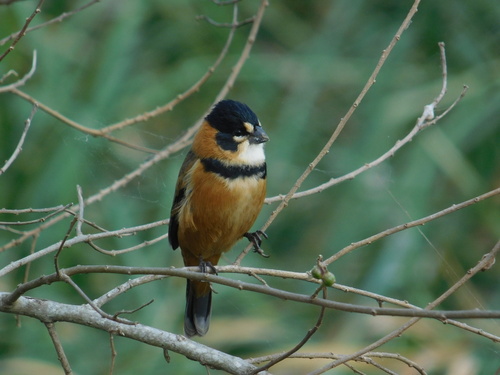 Rusty-collared Seedeater
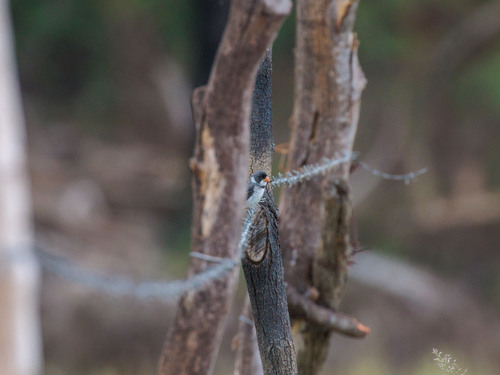 White-throated Seedeater
In breve
Il segno di campo più affidabile tra Rusty-collared Seedeater e White-throated Seedeater è il colore e l'estensione delle parti inferiori e del collare nei maschi adulti: Rusty-collared mostra un collare e parti inferiori color crema o cannella, mentre White-throated è molto più bianco sotto. Entrambe le specie hanno un collare bianco parziale e schemi facciali simili, ma il maschio di Rusty-collared è più caldo e più chiaro sotto, con toni chiari o rugginosi più estesi, specialmente in alcune sottospecie. Le femmine sono più difficili da distinguere, ma Rusty-collared è generalmente più caldo e color crema nel complesso, con barre alari più pronunciate e una macchia bianca più grande alla base delle primarie. Il colore del becco nei maschi (nero vs. arancione) è anche utile a distanza ravvicinata. Gli uccelli immaturi e femminili sono meglio separati da differenze sottili nel pattern alare e nel tono generale, specialmente sul campo.
Consigli di identificazione
- Adult male underparts and collar: I maschi di Rusty-collared hanno un collare e parti inferiori color crema o cannella (specialmente in S. c. melanocephala, che è molto ricco di cannella), mentre i maschi di White-throated sono molto più bianchi sotto, con solo una stretta banda nerognola sotto la gola e lati/flanchi grigi.
- Adult male bill color: I maschi di Rusty-collared hanno un becco nero; i maschi di White-throated hanno un becco giallo-arancione o arancione-rosa. Questo è un segno forte a distanza ravvicinata.
- Female and immature upperparts: Le femmine di Rusty-collared sono marroni calde sopra con barre alari color crema e una macchia bianca relativamente grande alla base delle primarie. Le femmine di White-throated sono anch'esse marroni sopra ma hanno barre alari meno pronunciate e una macchia primaria bianca più piccola.
- Female and immature underparts: Le femmine di Rusty-collared sono color crema sotto in tutto, mentre le femmine di White-throated sono più chiare, con marrone color crema limitato al petto e ai fianchi e il ventre/ano distintamente bianco.
- Wing pattern in all ages: Rusty-collared mostra due barre alari distintive color crema o cannella e una macchia bianca più grande alla base delle primarie (specialmente nei maschi), visibile come un pannello chiaro sull'ala chiusa. White-throated ha barre alari meno pronunciate e una macchia primaria bianca più piccola.
- Facial pattern (both species): Entrambi hanno una corona e un volto nerognoli (maschio), una macchia bianca sopra le lore, un arco bianco sotto l'occhio e una gola bianca che forma un collare parziale. Questo non è diagnostico tra di loro.
- Tail color: I maschi di Rusty-collared hanno una coda nera; i maschi di White-throated hanno una coda grigia più scura. Le femmine di entrambi sono con coda marrone, non è un segno forte.
- Subspecies variation (Rusty-collared): Fai attenzione che S. c. melanocephala è particolarmente ricco di cannella sotto, mentre S. c. ochrascen è più grigio-oliva sopra e rugginoso sotto. Questo può aggiungere confusione se non previsto.
- Leg color: Rusty-collared ha gambe nere; i maschi di White-throated hanno gambe nerognole, le femmine scure. Non è un segno forte sul campo.
- Bill color in females: Le femmine di Rusty-collared hanno un becco nero; le femmine di White-throated hanno un becco scuro. Sottile, ma può aiutare con buone viste.
- Size: Rusty-collared è leggermente più grande e pesante, ma questo non è un segno pratico sul campo.
- Range and habitat: Se sei al di fuori del Brasile nord-orientale, White-throated è improbabile. Rusty-collared è più diffuso nel sud America meridionale.
- Jizz and structure: Entrambi sono seedeater con becco spesso e coda lunga con un culmine arrotondato. La struttura non è un forte separatore.
- Seasonal confusion: I maschi non in riproduzione e gli immaturi possono sembrare molto più opachi e più simili a femmine, quindi fai affidamento sul pattern alare e sul colore delle parti inferiori piuttosto che sulla luminosità generale.
- Pitfalls: Fai attenzione ai maschi opachi o usurati, che possono perdere contrasto e apparire più simili a femmine; controlla sempre più caratteristiche, specialmente il pattern alare e il colore delle parti inferiori.
Taglia
Rusty-collared Seedeater è leggermente più grande e pesante (media 10.8 g) rispetto a White-throated Seedeater (media 9.7 g), ma questa differenza non è probabile che sia evidente sul campo. Entrambi sono seedeater piccoli e con becco spesso di lunghezza simile (Rusty-collared circa 12 cm, White-throated circa 11 cm).
Piumaggio
I seedeater giovanili e femminili Rusty-collared sono marroni caldi sopra con barre alari color crema e una macchia bianca relativamente grande alla base delle primarie, visibile come un pannello chiaro sull'ala chiusa; le parti inferiori sono color crema. Le femmine di White-throated sono anch'esse marroni sopra ma sono generalmente più chiare sotto, con il ventre e l'ano distintamente bianchi e il color crema limitato al petto e ai fianchi; le loro barre alari sono meno pronunciate e la macchia primaria bianca è più piccola. I maschi adulti di entrambe le specie hanno una testa nerognola con una macchia bianca sopra le lore, un arco bianco sotto l'occhio e una gola bianca che forma un collare parziale, ma i maschi di Rusty-collared mostrano un collare e parti inferiori color crema o cannella (variando per sottospecie), mentre i maschi di White-throated sono molto più bianchi sotto con lati e fianchi grigi. Il colore del becco è anche utile: i maschi di Rusty-collared hanno un becco nero, mentre i maschi di White-throated hanno un becco arancione o arancione-rosa. I beccucci delle femmine sono scuri in White-throated e neri in Rusty-collared.
Comportamento
Entrambe le specie sono tipici seedeater, spesso visti posati in aree aperte o vegetazione bassa. Non sono state notate forti differenze comportamentali nelle fonti disponibili.
Habitat
Rusty-collared Seedeater ha un'area di distribuzione più ampia, trovata in Argentina, Bolivia, Brasile, Paraguay e Uruguay, spesso in campi aperti, praterie e aree cespugliose. White-throated Seedeater è endemico del Brasile nord-orientale ed è più ristretto nella sua distribuzione. Se ti trovi al di fuori del Brasile nord-orientale, White-throated è improbabile.
Rusty-collared Seedeater · White-throated Seedeater · I miei uccelli difficili