

Rusty-backed Antwren vs Orange-eyed Thornbird
Formicivora rufa contro Phacellodomus erythrophthalmus
Fai un quiz con Rusty-backed Antwren e Orange-eyed Thornbird
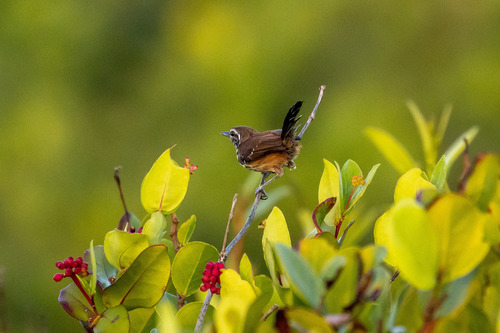 Rusty-backed Antwren
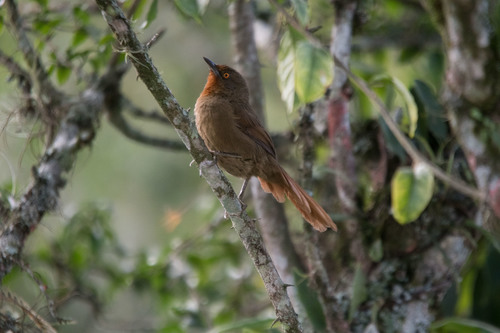 Orange-eyed Thornbird
In breve
Il segno di campo più affidabile per separare il Rusty-backed Antwren dall'Orange-eyed Thornbird è la dimensione e la struttura complessive: l'antwren è un uccello piccolo e attivo con una coda corta e un modello facciale audace, mentre il thornbird è molto più grande, più robusto e ha una lunga coda rugginosa e un volto meno contrastante. In vista da posato o in volo, cerca il supercilium bianco dell'antwren, la gola nera e le macchie bianche sulle ali rispetto al volto più semplice e rugginoso del thornbird e alle parti inferiori uniformemente marroni. L'antwren è molto più leggero (circa la metà della massa) e il suo comportamento è più irrequieto e saltellante tra i cespugli, mentre il thornbird è più lento e spesso visto vicino al suo grande nido di rami. Entrambi possono mostrare toni rugginosi sopra, ma l'antwren ha un modello più netto e compatto.
Consigli di identificazione
- Dimensione e Struttura: Il Rusty-backed Antwren è molto più piccolo e leggero (11 g contro 24 g), con una struttura compatta e una coda corta. L'Orange-eyed Thornbird è più robusto, più lungo (16–18 cm) e ha una lunga coda rugginosa. La dimensione è spesso il primo controllo più facile.
- Modello Facciale: I maschi dell'antwren hanno un audace supercilium bianco e un volto/gola nera; le femmine sono striate di nero e bianco. Il thornbird ha un volto più semplice, rugginoso-marrone con solo un debole supercilium e nessun forte contrasto facciale.
- Modello delle Ali: L'antwren mostra linee chiare di punti bianchi sulle ali piegate (tutte le età/sessi); le ali del thornbird sono di un marrone caldo uniforme senza macchie o linee bianche.
- Coda: La coda dell'antwren è nera con frange castanee e punte bianche; la coda del thornbird è uniformemente rugginosa e più lunga in proporzione al corpo.
- Parti Inferiori: I maschi dell'antwren hanno un petto nero ben definito con un bordo bianco e fianchi cannella; le femmine hanno parti inferiori cannella con striature nere e bianche sopra. Il thornbird ha una gola rugginosa scura e parti inferiori marroni olivacei, più chiare sull'addome, prive di forti contrasti.
- Corona e Parti Superiori: Entrambe le specie mostrano toni rugginosi sulla corona, ma quella dell'antwren è un rugginoso tawny più brillante, mentre quella del thornbird è un rugginoso brillante più miscelato solo sulla fronte/corona anteriore, con il resto della corona e della schiena di un marrone oliva scuro.
- Becco: Non specificamente descritto, ma gli antwrens tipicamente hanno un becco più fine e delicato, mentre i thornbirds hanno un becco più pesante e robusto adatto alla costruzione del nido e alla ricerca di cibo tra i rami.
- Comportamento: L'antwren è irrequieto, spesso saltella e compie brevi voli nella vegetazione bassa. Il thornbird è più lento, spesso visto vicino al suo grande nido di rami a forma di stivale appeso a un ramo.
- Habitat: L'antwren si trova in aree aperte e cespugliose su un'ampia gamma; il thornbird è limitato al Brasile sudorientale di pianura e preferisce habitat boschivi o di margine.
- Voce: Il canto dell'antwren è un lungo ronzio; la voce del thornbird non è dettagliata qui ma non è simile al rapido ronzio dell'antwren.
- Differenze Sessuali: Solo l'antwren mostra un forte dimorfismo sessuale nel piumaggio (maschi con volto/gola nera, femmine con volto/petto striato); i sessi del thornbird sono simili.
- Associazione del Nido: Il thornbird può essere visto vicino al suo grande nido di rami evidente; il nido dell'antwren è una piccola coppa di erba, raramente evidente sul campo.
- Colore dell'Iride: Il thornbird ha un'iride arancione distintiva, ma questo può essere difficile da vedere sul campo; il colore dell'iride dell'antwren non è descritto come distintivo.
- Gamma Geografica: Se in Bolivia, Paraguay, Perù o Suriname, solo l'antwren è possibile; nel Brasile sudorientale, entrambi sono possibili, ma l'habitat e la struttura aiutano a separarli.
- Insidie: Le femmine degli antwrens possono apparire più chiare e meno contrastanti, ma mostrano comunque macchie bianche sulle ali e una forma compatta. I thornbirds non mostrano mai bianco nelle ali o forti contrasti facciali.
Taglia
Il Rusty-backed Antwren è un piccolo uccello, che pesa circa 11 g e misura 12–13 cm di lunghezza. Al contrario, l'Orange-eyed Thornbird è molto più grande e pesante, a 24 g e 16–18 cm di lunghezza—quasi il doppio della massa e sostanzialmente più lungo. Sul campo, il thornbird appare più robusto, con una coda più lunga e una costruzione più pesante e robusta, mentre l'antwren è visibilmente piccolo e delicato. Questa differenza di dimensione è spesso ovvia anche senza un confronto diretto.
Piumaggio
Non sono descritti modelli di ali specifici per età o immaturi per nessuna delle due specie, quindi ci si concentra sul piumaggio adulto. I maschi del Rusty-backed Antwren mostrano una combinazione sorprendente di una corona e parti superiori rugginose tawny, un audace supercilium bianco, un volto e una gola nera, e un petto nero ben definito con un bordo bianco e fianchi cannella. Le ali piegate hanno linee distinte di punti bianchi, e la coda è nera con frange castanee e punte bianche. Le femmine sono più chiare sopra, con volto, gola e petto striati di nero e bianco, e parti inferiori cannella. Gli adulti dell'Orange-eyed Thornbird di entrambi i sessi sono più uniformemente colorati: una fronte e una corona anteriore rugginose, schiena marrone oliva scuro, copritail di un marrone castaneo e una coda rugginosa. Il volto è rugginoso-marrone con solo un indistinto supercilium rugginoso-marrone, e le parti inferiori sono marroni olivacei con una gola rugginosa scura. Il thornbird manca del forte contrasto facciale e delle macchie bianche sulle ali dell'antwren, mostrando invece un aspetto più miscelato e terroso in tutto.
Comportamento
Il Rusty-backed Antwren è altamente attivo, foraggiando saltellando attraverso cespugli e piccoli alberi, spesso compiendo brevi voli per raccogliere insetti e ragni dalla vegetazione. Raramente sta fermo e non segue le colonne di formiche. L'Orange-eyed Thornbird è più lento e più deliberato, spesso visto vicino al suo grande nido di rami evidente, che pende dai rami degli alberi. I movimenti del thornbird sono meno frenetici, ed è meno probabile vederlo compiere voli rapidi e veloci. Il comportamento dell'antwren è decisamente più irrequieto ed energetico.
Habitat
Il Rusty-backed Antwren occupa un'ampia gamma attraverso Bolivia, Brasile, Paraguay, Perù e Suriname, preferendo habitat semi-aperti a aperti come cerrado, campi con alberi sparsi, foreste di sabbia bianca e terreni incolti, dal livello del mare fino a 1.450 m. L'Orange-eyed Thornbird è endemico a una stretta fascia di Brasile sudorientale di pianura ed è considerato raro. Si trova tipicamente in habitat boschivi o di margine dove può costruire i suoi grandi nidi di rami. L'antwren è più probabile trovarlo in aree aperte e cespugliose, mentre il thornbird è legato a ambienti boschivi più densi.
Voce
Il Rusty-backed Antwren emette un lungo ronzio di note dure o acute di tono uniforme, spesso aumentando in intensità, con richiami comuni come 'chip cheep' o 'tit-tweep.' Le vocalizzazioni dell'Orange-eyed Thornbird non sono descritte in dettaglio qui, ma si sa che differiscono da specie simili e non è probabile che vengano confuse con il rapido ronzio dell'antwren. Sul campo, il canto dell'antwren è più probabile che sia una rapida serie meccanica di note.
Rusty-backed Antwren · Orange-eyed Thornbird · I miei uccelli difficili