

Voltapietre vs Piovanello tridattilo
Arenaria interpres contro Calidris alba
Fai un quiz con Voltapietre e Piovanello tridattilo
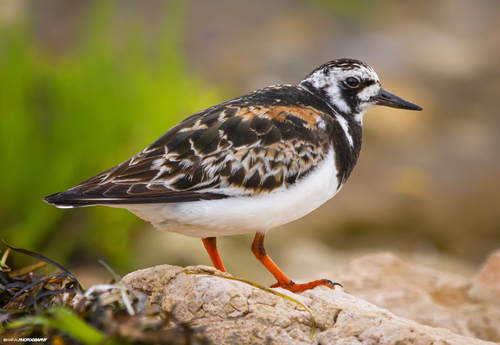 Voltapietre
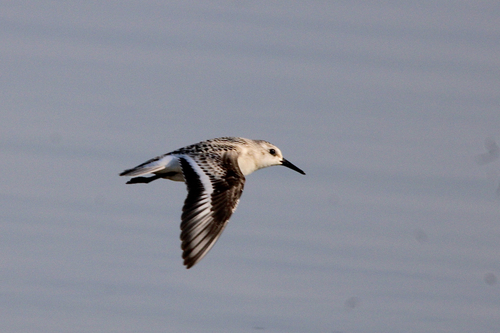 Piovanello tridattilo
In breve
Il segno distintivo più affidabile tra Voltapietre e Piovanello tridattilo è il sorprendente motivo arlecchino del Voltapietre, con toni neri, bianchi e rossastri (soprattutto in abito nuziale), insieme alle sue gambe arancioni brillanti e al becco corto, a forma di cuneo, leggermente ricurvo. I Piovanelli tridattili, al contrario, sono molto più semplici in tutte le livree, con gambe nere e un becco dritto e nero, e mancano dei motivi audaci sul viso e sul petto dei Voltapietre. In volo, entrambi mostrano una forte banda bianca sulle ali, ma il Voltapietre lampeggia anche un bianco sulla parte bassa della schiena e sul croup, mentre il Piovanello tridattilo è più uniformemente pallido sotto. I Voltapietre juvenili hanno un motivo superiore squamoso, mentre i Piovanelli tridattili juvenili sono più puliti e più chiari. I Piovanelli tridattili vengono spesso visti correre lungo il bordo dell'acqua su spiagge sabbiose, mentre i Voltapietre preferiscono coste rocciose o miste e sono più robusti e deliberati nei movimenti.
Consigli di identificazione
- Leg color: Il Voltapietre ha sempre gambe arancioni brillanti, visibili a qualsiasi età o stagione. Le gambe del Piovanello tridattilo sono nere.
- Bill shape: Il becco del Voltapietre è corto, spesso, leggermente ricurvo e a forma di cuneo; quello del Piovanello tridattilo è dritto, sottile e nero.
- Head and breast pattern: I Voltapietre adulti (soprattutto in abito nuziale) mostrano un viso e una gola audaci in bianco e nero con una banda nera sul petto; i Piovanelli tridattili hanno un viso semplice e mancano di qualsiasi banda sul petto in tutte le livree.
- Upperparts: Il Voltapietre ha parti superiori maculate o squamose nei juvenili e un mix arlecchino di rossastro, nero e bianco negli adulti in abito nuziale. Il Piovanello tridattilo è grigio pallido sopra in inverno e maculato ruggine/grigio in abito nuziale, ma non mostra mai il motivo arlecchino del Voltapietre.
- Flight pattern: Entrambi mostrano una banda bianca sulle ali, ma il Voltapietre lampeggia anche un bianco sulla parte bassa della schiena, sul croup e sulla coda con bande scure, mentre il Piovanello tridattilo è più uniformemente pallido sotto e manca del motivo audace sulla coda.
- Juvenile contrast: I Voltapietre juvenili hanno un aspetto squamoso nelle parti superiori; i Piovanelli tridattili juvenili sono più puliti e più chiari, con meno contrasto.
- Size and shape: Il Voltapietre è più robusto, con un collo e gambe più corti e un corpo più compatto. Il Piovanello tridattilo è più piccolo, più snello e con gambe più lunghe nell'aspetto.
- Foraging behavior: I Voltapietre girano pietre, alghe e detriti, spesso visti mentre manipolano oggetti; i Piovanelli tridattili corrono rapidamente lungo il surf, raramente manipolando oggetti.
- Habitat: Il Voltapietre preferisce coste rocciose o miste; il Piovanello tridattilo è quasi sempre su spiagge sabbiose aperte.
- Group size: I Piovanelli tridattili sono altamente gregari in inverno, formando grandi stormi; i Voltapietre sono più spesso solitari o in piccoli gruppi.
- Posture: Il Voltapietre spesso adotta una postura curva e dominante quando cerca cibo; il Piovanello tridattilo sta più eretto e si muove rapidamente.
- Vocalization: Se udito, il Voltapietre emette un richiamo a scossa o chiacchiericcio; i richiami del Piovanello tridattilo non sono descritti qui.
- Seasonal change: La livrea del Voltapietre cambia drasticamente tra le stagioni, ma mantiene sempre alcuni motivi audaci; il Piovanello tridattilo ha sempre un viso semplice e pallido sotto.
- Bill length: Il becco del Voltapietre è più corto e tozzo rispetto a quello del Piovanello tridattilo, che è relativamente più lungo per le sue dimensioni corporee.
- Facial pattern: Solo il Voltapietre mostra una forte maschera o motivo facciale; il viso del Piovanello tridattilo è sempre semplice.
Taglia
Il Voltapietre è leggermente più grande e robusto, misurando 22–24 cm di lunghezza con un'apertura alare di 50–57 cm e pesando 85–150 g [wikipedia]. Il Piovanello tridattilo è più piccolo e leggero, simile per dimensioni a un Piovanello pancianera, con una struttura più delicata. Le gambe e il corpo corti e robusti del Voltapietre gli conferiscono un aspetto compatto, mentre il Piovanello tridattilo appare più delicato e più aerodinamico.
Piumaggio
- Juvenile/first-winter: I juvenili del Voltapietre mostrano teste marroni pallide e piume superiori con bordi chiari, dando un aspetto distintamente squamoso o maculato. I juvenili del Piovanello tridattilo sono molto più chiari nel complesso, privi di forti marcature sulla testa o sul petto, e appaiono più puliti con meno contrasto nelle parti superiori.
- Adult non-breeding: Il Voltapietre è più opaco ma mostra ancora una testa scura con poco bianco e parti superiori grigio scuro-marroni con maculature nere. Il Piovanello tridattilo in livrea non riproduttiva è molto grigio pallido sopra e bianco sotto, senza un forte motivo sulla testa o sul petto.
- Adult breeding: Il Voltapietre è inconfondibile con il suo audace petto nero, viso bianco con maschera nera e parti superiori di un ricco marrone rossastro. Il Piovanello tridattilo in livrea riproduttiva è maculato ruggine e grigio sopra ma non mostra mai il motivo arlecchino o la maschera facciale del Voltapietre.
- In flight: Entrambe le specie mostrano una forte banda bianca sulle ali, ma il Voltapietre ha anche una macchia bianca alla base dell'ala, una parte bassa della schiena e un croup bianchi, e una coda bianca con bande scure. Il volo del Piovanello tridattilo è più uniformemente pallido sotto, mancando del motivo audace sulla coda e sulla schiena del Voltapietre.
Comportamento
Il Voltapietre è metodico e spesso visto mentre gira pietre, alghe o detriti con il suo becco, utilizzando una varietà di tecniche di foraggiamento tra cui il routing, il flicking e il probing. Si muove con un passo deciso e leggermente curvo ed è meno propenso a correre rapidamente. Il Piovanello tridattilo è altamente attivo e gregario, tipicamente visto in stormi che corrono rapidamente lungo la linea del surf con un movimento delle gambe a 'bicicletta', fermandosi frequentemente per raccogliere prede dalla sabbia. Il Piovanello tridattilo raramente manipola oggetti o detriti come fa il Voltapietre.
Habitat
Il Voltapietre preferisce coste rocciose o miste, moli e aree con alghe o detriti dove può girare oggetti per trovare cibo. È meno comune trovarlo su spiagge sabbiose aperte. Il Piovanello tridattilo è fortemente associato a spiagge sabbiose e alla zona di surf aperta, raramente avventurandosi su rocce o in aree vegetate. Durante la migrazione e l'inverno, il Piovanello tridattilo forma grandi stormi sulla sabbia aperta, mentre il Voltapietre è più spesso visto singolarmente o in piccoli gruppi su rocce o substrati misti.
Voce
Il Voltapietre emette un richiamo staccato e a scossa e un richiamo di allerta chiacchiericcio, soprattutto nella stagione riproduttiva. Le vocalizzazioni del Piovanello tridattilo non sono descritte nelle note fornite, quindi non sono diagnostiche qui.
Voltapietre · Piovanello tridattilo · I miei uccelli difficili