

Voltapietre vs Piovanello maggiore
Arenaria interpres contro Calidris canutus
Fai un quiz con Voltapietre e Piovanello maggiore
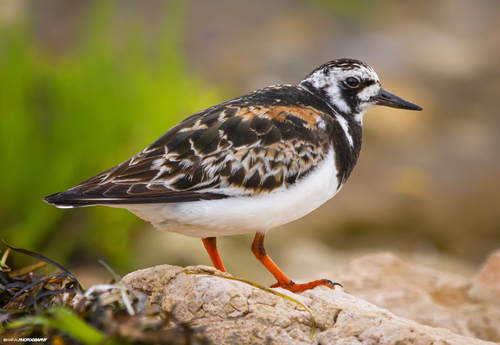 Voltapietre
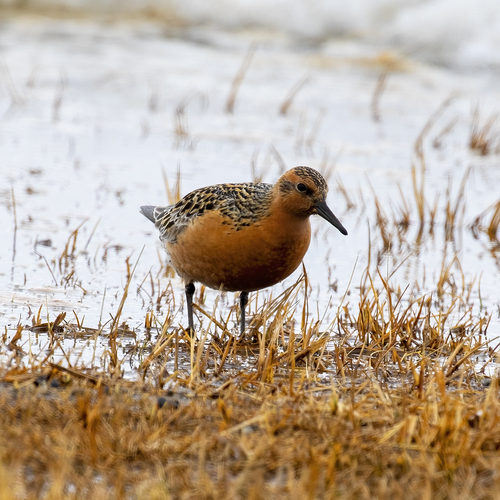 Piovanello maggiore
In breve
Il segno di campo più affidabile per separare il Voltapietre dal Piovanello maggiore è il bold, contrastante schema delle ali superiori e della coda in volo: i Voltapietre adulti e juvenili mostrano una sorprendente banda bianca sulle ali, una macchia bianca alla base dell'ala e una parte bassa della schiena, del croup e della coda bianchi con bande scure, mentre i Piovanelli maggiori di tutte le età mostrano una banda bianca sulle ali ma hanno un croup e una coda grigi senza il drammatico contrasto del Voltapietre. A terra, i Voltapietre sono più robusti con zampe arancioni brillanti e un becco corto, a forma di cuneo, leggermente sollevato, mentre i Piovanelli sono più snelli, con zampe corte scure e un becco dritto, di media lunghezza e sottile. I Piovanelli juvenili hanno un aspetto squamoso nella parte superiore, ma anche i Voltapietre juvenili, quindi la struttura e il modello delle ali sono più affidabili. In abito nuziale, i Voltapietre hanno un motivo arlecchino con toni neri, bianchi e rossastri, mentre i Piovanelli sono per lo più cannella sotto e maculati di grigio sopra. In inverno, i Piovanelli sono grigi pallidi e bianchi, i Voltapietre sono più scuri e più maculati. Entrambe le specie possono verificarsi insieme su fanghi costieri, ma i Voltapietre sono più propensi a essere visti mentre girano sassi e detriti.
Consigli di identificazione
- **In volo (tutte le età), cerca la bold banda bianca sulle ali, la macchia bianca alla base dell'ala e la parte bassa della schiena, del croup e della coda con bande scure sul Voltapietre. Il Piovanello maggiore manca di queste, mostrando una banda bianca sulle ali ma un croup e una coda grigi.
- A terra, controlla il colore delle zampe: Il Voltapietre ha zampe arancioni brillanti (tutte le età), mentre le zampe del Piovanello sono corte e di colore verde scuro o nere.
- Forma del becco: Il becco del Voltapietre è corto, a forma di cuneo, leggermente sollevato e scuro; il becco del Piovanello è dritto, di media lunghezza e sottile, e lungo circa quanto la testa.
- Forma del corpo/jizz: Il Voltapietre è compatto, robusto e eretto; il Piovanello è più lungo, più snello e spesso appare più basso quando si nutre.
- Uccelli juvenili/di primo anno: Entrambi possono sembrare squamosi sopra, ma la struttura e il modello delle ali in volo sono più affidabili rispetto al modello della parte superiore.
- Abito nuziale: Il Voltapietre ha un motivo arlecchino con toni rossastri, neri e bianchi, inclusa una banda nera sul petto e una testa bianca con segni neri; il Piovanello è cannella sotto e maculato di grigio sopra, con un volto meno contrastante.
- Abito non nuziale (inverno): Il Voltapietre è più scuro e più maculato, con una testa scura e meno bianco; il Piovanello è grigio pallido e bianco, con poco contrasto e nessun forte modello facciale.
- Schema della coda in volo: Il Voltapietre mostra una coda bianca con bande scure; la coda del Piovanello è grigia senza un forte schema.
- Comportamento alimentare: Il Voltapietre spesso gira sassi, alghe o detriti; il Piovanello esplora e cammina, raramente girando oggetti.
- Dimensione del gruppo: I Piovanelli spesso si nutrono in gruppi ristretti; i Voltapietre sono più propensi a essere visti singolarmente o in piccoli gruppi.
- Habitat: Il Voltapietre è più probabile che si trovi su coste rocciose o tra detriti; il Piovanello preferisce fanghi aperti e spiagge sabbiose.
- Vocalizzazioni: Il Voltapietre emette richiami ronzanti e chiacchierini, specialmente quando disturbato; il Piovanello è per lo più silenzioso tranne per un morbido 'knutt' o 'knuup-knuup' nei gruppi in volo.
- Differenze sessuali: Entrambe le specie mostrano sottili differenze sessuali in abito nuziale, ma queste non sono affidabili per la separazione sul campo.
- Dimensione: Il Piovanello è leggermente più grande e pesante, ma questa è sottile e meglio utilizzata come segno di supporto.
- **Quando hai dubbi, dai priorità alle viste in volo e al colore delle zampe rispetto al modello della parte superiore, specialmente nei juvenili e negli uccelli non in abito nuziale."
Taglia
Il Piovanello maggiore è leggermente più grande e pesante del Voltapietre, con i Piovanelli che pesano in media circa 137 g [wikidata] e misurano 23–26 cm di lunghezza con un'apertura alare di 47–53 cm. I Voltapietre misurano 22–24 cm di lunghezza con un'apertura alare di 50–57 cm, ma sono più robusti e compatti. La differenza è sottile sul campo, ma i Piovanelli appaiono spesso più lunghi e più aerodinamici, mentre i Voltapietre sembrano più massicci con un collo e una coda più corti. I Piovanelli hanno una testa più piccola e una postura più 'bassa' a causa delle loro zampe corte e di colore verde scuro, mentre i Voltapietre stanno più eretti su zampe arancioni brillanti.
Piumaggio
- Juvenile/Primo anno: Entrambe le specie hanno parti superiori squamose, ma i Voltapietre juvenili mostrano margini pallidi sulle piume della parte superiore e una testa marrone chiaro, mentre i Piovanelli juvenili hanno copritrici marroni con linee submarginali. In volo, i Voltapietre juvenili mostrano già la bold banda bianca sulle ali, la macchia alla base dell'ala e il modello bianco di croup/coda, che è assente nei Piovanelli.
- Abito nuziale adulto: Il Voltapietre ha un motivo arlecchino: parti superiori marrone rossastro con segni neri, testa bianca con strisce nere e motivo facciale, banda nera sul petto e parti inferiori bianche. Il Piovanello è cannella sotto, maculato di grigio sopra, con un volto meno contrastante e una pancia posteriore più chiara; le femmine sono leggermente più chiare.
- Abito non nuziale adulto (inverno): Il Voltapietre è più opaco, con parti superiori grigio scuro-marroni, maculature nere e una testa scura con poco bianco. Il Piovanello è grigio pallido sopra e bianco sotto, con poco contrasto e nessun forte motivo facciale. Entrambi i sessi sembrano simili in inverno per entrambe le specie.
- Volo: Il Voltapietre (tutte le età) ha una banda bianca sulle ali, una macchia bianca alla base dell'ala, una parte bassa della schiena, del croup e della coda bianchi con bande scure. Il Piovanello (tutte le età) ha una banda bianca sulle ali ma un croup e una coda grigi, privi del bold contrasto del Voltapietre.
Comportamento
I Voltapietre sono spesso visti attivamente girare sassi, alghe o detriti con i loro becchi, utilizzando una varietà di tecniche di foraggiamento tra cui flicking, bulldozing, probing e hammering per accedere alle prede. Sono aggressivi e territoriali, specialmente gli adulti, e possono inseguire altri con una postura curvata e la coda abbassata. I Piovanelli si nutrono esplorando e camminando metodicamente, spesso in gruppi, usando i loro becchi per trovare prede nel fango o nella sabbia. I Piovanelli raramente girano oggetti e sono meno aggressivi nel comportamento di foraggiamento. I Voltapietre sono più propensi a essere visti da soli o in piccoli gruppi, mentre i Piovanelli si nutrono spesso in gruppi più grandi e coesi.
Habitat
Entrambe le specie frequentano fanghi costieri, estuari e linee costiere durante la migrazione e l'inverno. Il Voltapietre è più probabile che si trovi su coste rocciose, moli e aree con abbondanti detriti o alghe, dove può girare oggetti per trovare prede. Il Piovanello preferisce fanghi aperti e spiagge sabbiose, specialmente durante la migrazione, ed è meno probabile che si nutra tra rocce o detriti. Entrambi possono sovrapporsi nell'habitat, ma i Voltapietre sono più versatili nella scelta del substrato.
Voce
Il Voltapietre emette un richiamo staccato e ronzante e un allarme chiacchierino, specialmente durante la stagione riproduttiva. Il Piovanello è per lo più silenzioso quando si nutre singolarmente, ma nei gruppi in volo emette un morbido 'knutt' o un disillabico 'knuup-knuup.' Nessuna delle due specie è molto vocale al di fuori della stagione riproduttiva, ma i richiami del Voltapietre sono più probabili da essere uditi a terra.
Voltapietre · Piovanello maggiore · I miei uccelli difficili