

Ruddy-breasted Crake vs Schiribilla grigiata
Zapornia fusca contro Zapornia pusilla
Fai un quiz con Ruddy-breasted Crake e Schiribilla grigiata
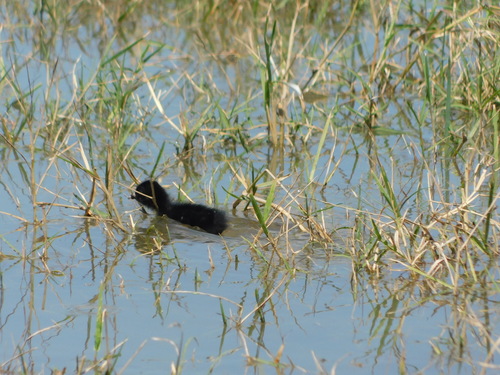 Ruddy-breasted Crake
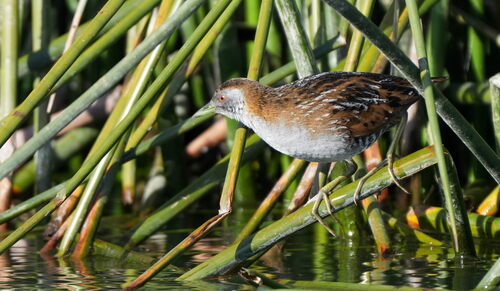 Schiribilla grigiata
In breve
Il segno distintivo più affidabile per separare il Ruddy-breasted Crake dalla Schiribilla grigiata è il colore delle parti inferiori: il Ruddy-breasted mostra un ricco castano sulla testa e sulle parti inferiori, mentre la Schiribilla grigiata è di un blu-grigio chiaro sotto. Entrambe le specie hanno delle barre bianche sui fianchi e sull'undertail, ma la colorazione generale e le dimensioni differiscono. I giovani di entrambe sono più opachi, ma i giovani del Ruddy-breasted sono di un marrone scuro con macchie bianche, mentre quelli della Schiribilla grigiata sono barrati e più opachi rispetto agli adulti. Anche la struttura aiuta: il Ruddy-breasted è notevolmente più grande e pesante, con un occhio e zampe rossi, rispetto alle zampe verde oliva e al becco giallo/verde della Schiribilla grigiata. Entrambi sono uccelli segreti delle paludi, ma le loro differenze di colore e dimensioni sono affidabili sul campo.
Consigli di identificazione
- Colore delle parti inferiori: Il Ruddy-breasted Crake ha un ricco castano sulla testa, sulla gola e sulle parti inferiori; la Schiribilla grigiata è di un blu-grigio chiaro sotto, più chiara sulla gola e sull'addome. Questo è il segno distintivo più consistente in tutte le livree tranne che nei giovani molto piccoli.
- Schiena e parti superiori: Il Ruddy-breasted mostra una schiena marrone chiaro, mentre la Schiribilla grigiata è di un marrone ocra con striature nere e bianche. Cerca l'effetto striato nella Schiribilla grigiata, che è assente nel Ruddy-breasted.
- Barre sui fianchi e sull'undertail: Entrambe le specie hanno barre nere e bianche qui; non fare affidamento su questo solo per la separazione.
- Colore del becco: Il Ruddy-breasted ha un becco giallastro; la Schiribilla grigiata ha un becco corto e dritto che è giallo o verde, privo di rosso alla base. Il colore del becco è sottile ma può aiutare a distanza ravvicinata.
- Colore delle zampe e degli occhi: Il Ruddy-breasted ha occhi, zampe e piedi rossi; la Schiribilla grigiata ha zampe verde oliva e non si menziona il rosso negli occhi. Il colore delle zampe è visibile quando gli uccelli sono all'aperto o in volo.
- Dimensioni e struttura: Il Ruddy-breasted è molto più grande e pesante (22–23 cm, 60 g) rispetto alla Schiribilla grigiata (15–18 cm, 35 g). In confronto diretto o con esperienza, il Ruddy-breasted appare più massiccio e robusto.
- Livrea giovanile: I giovani del Ruddy-breasted sono di un marrone scuro con macchie bianche, privi del castano; i giovani della Schiribilla grigiata sono versioni più opache degli adulti con barre più estese sotto. Se vedi un giovane marrone macchiato, favorisci il Ruddy-breasted; se barrato e grigiastro, favorisci la Schiribilla grigiata.
- Coda e dita: Entrambi hanno dita lunghe e code corte, tipiche dei crake; questo non è un separatore utile tra questi due.
- Viste in volo: Non sono descritte differenze distintive nel pattern delle ali superiori o nel volo per nessuna delle due specie, quindi non fare affidamento sul pattern delle ali in volo.
- Habitat: Entrambi utilizzano habitat umidi simili; non utilizzare l'habitat da solo per separarli in regioni sovrapposte.
- Comportamento: Entrambi sono segreti e si nascondono in copertura densa, ma la Schiribilla grigiata potrebbe essere leggermente più propensa a essere vista all'aperto durante la migrazione o l'inverno.
- Voce: La Schiribilla grigiata ha un richiamo stridulo, simile a quello di una rana; il richiamo del Ruddy-breasted non è descritto qui, quindi usa la voce con cautela.
- Stagione e distribuzione: Il Ruddy-breasted è principalmente residente nel Sud e nell'Est asiatico; la Schiribilla grigiata è più migratoria e diffusa. In Australia, la Schiribilla grigiata è regolare; il Ruddy-breasted è solo un raro vagabondo.
- Differenze sessuali: Entrambe le specie sono simili nell'aspetto tra i sessi; non utilizzare il sesso per separarli.
- Indizi contestuali: Se vedi un crake che sembra insolitamente grande e castano sotto, è quasi certamente un Ruddy-breasted. Se è piccolo, blu-grigio sotto e striato sopra, è una Schiribilla grigiata.
Taglia
Il Ruddy-breasted Crake è significativamente più grande e pesante: circa 22–23 cm di lunghezza e 60 g di massa, rispetto alla Schiribilla grigiata che misura 15–18 cm e 35 g. Sul campo, il Ruddy-breasted appare più massiccio e lungo, mentre la Schiribilla grigiata è distintamente piccola e compatta, a volte chiamata 'tiny crake.' La dimensione da sola può essere un forte indizio se visti fianco a fianco, ma fai attenzione agli uccelli solitari dove la scala è difficile da giudicare.
Piumaggio
- Adulti: Il Ruddy-breasted Crake ha una schiena marrone chiaro, una testa e parti inferiori di un ricco castano, e barre bianche sui fianchi e sull'undertail. La Schiribilla grigiata è di un marrone ocra sopra, con striature nere e bianche, e parti inferiori di un blu-grigio chiaro, anch'esse con barre nere e bianche sui fianchi e sull'undertail.
- Giovani/Immaturi: I giovani del Ruddy-breasted sono di un marrone scuro complessivo con alcune macchie bianche, privi del ricco castano degli adulti. Gli immaturi della Schiribilla grigiata sono simili agli adulti ma con parti inferiori più opache e più estensivamente barrate. Entrambi hanno pulcini neri, ma questo è raramente rilevante sul campo. Non sono descritte differenze distintive nel pattern delle ali superiori o nel volo per nessuna delle due specie a qualsiasi età.
Comportamento
Entrambe le specie sono altamente segrete, preferendo nascondersi nella densa vegetazione delle paludi e raramente avventurandosi all'aperto. Quando vengono spaventati, entrambi possono volare debolmente per brevi distanze, ricadendo rapidamente nella copertura. La ricerca di cibo è simile: setacciando il fango o l'acqua bassa, raccogliendo il cibo a vista. Il Ruddy-breasted può sembrare leggermente più robusto nei movimenti a causa delle sue dimensioni maggiori, ma questo è sottile. Entrambi sono più propensi a essere uditi che visti, specialmente durante la stagione riproduttiva.
Habitat
Entrambi i crake abitano paludi, acquitrini e aree umide con vegetazione densa, sovrapponendosi spesso in habitat adatti. Il Ruddy-breasted Crake è diffuso nel Sud e nell'Est asiatico, mentre la Schiribilla grigiata ha una gamma più ampia che include Africa, Eurasia e Australia. Nelle aree di sovrapposizione, l'habitat da solo non separa affidabilmente le due specie, anche se la Schiribilla grigiata potrebbe essere più probabile in tratti di palude più piccoli o più asciutti.
Voce
La Schiribilla grigiata è descritta come rumorosa durante la stagione riproduttiva, con un richiamo stridulo che ricorda una rana commestibile o un germano reale. La voce del Ruddy-breasted Crake non è dettagliata nelle note, ma entrambi sono più spesso rilevati dal suono che dalla vista durante la riproduzione. La vocalizzazione può aiutare nella Schiribilla grigiata, ma non è diagnostica senza ulteriori dettagli per il Ruddy-breasted.
Ruddy-breasted Crake · Schiribilla grigiata · I miei uccelli difficili