
Royal Tern vs Brown Pelican
Thalasseus maximus contro Pelecanus occidentalis
Fai un quiz con Royal Tern e Brown Pelican
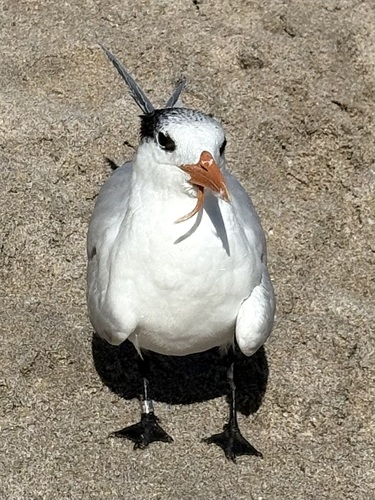 Royal Tern
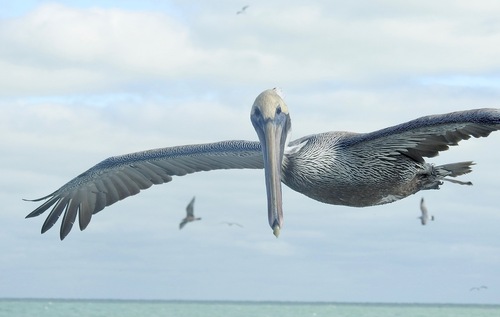 Brown Pelican
In breve
Il segno distintivo più affidabile tra Royal Tern e Brown Pelican è la struttura complessiva: Royal Tern è un grande, snello, gabbiano-simile con un becco arancione appuntito, mentre Brown Pelican è un uccello massiccio e pesante con un enorme becco e una sacca nella gola. I Royal Tern immaturi possono mostrare segni scuri sulle ali e un becco giallastro, ma mai il piumaggio marrone e pesante o l'enorme becco di un pellicano. In volo, i pellicani planano con battiti d'ala lenti e profondi e spesso si librano, mentre i tern sono agili, leggeri e diretti. Anche a distanza, la dimensione e la forma del pellicano sono inconfondibili rispetto a qualsiasi tern.
Consigli di identificazione
- Overall size and structure: Brown Pelican è enorme, con un becco massiccio e un collo lungo; Royal Tern è molto più piccolo, snello e simile a un gabbiano. Questa è la separazione più affidabile a qualsiasi distanza.
- Bill shape and color: Royal Tern ha un becco robusto e appuntito di colore arancione-rossastro (giallastro nei giovani); Brown Pelican ha un enorme becco lungo di colore grigiastro con una grande sacca nella gola. Nessun tern ha un becco lontanamente simile a quello di un pellicano.
- Juvenile/immature plumage: Il giovane Royal Tern è bianco sotto con alcuni segni scuri sulle ali e un becco giallastro; il giovane Brown Pelican è marrone complessivamente con una pancia bianca opaca e una testa e un collo marrone scuro. Il pellicano appare sempre pesante e scuro rispetto al tern.
- Adult plumage: L'adulto Royal Tern è grigio-argenteo sopra, bianco sotto, con una cresta nera sulla nuca in riproduzione e una fronte bianca in non riproduzione. L'adulto Brown Pelican ha una testa bianca o giallastra, un collo marrone scuro in riproduzione e un dorso e una coda grigio-marrone striati.
- Wing pattern in flight: Royal Tern (tutte le età) ha ali superiori grigio-argentee pallide con poco contrasto; Brown Pelican (tutte le età) mostra ali scure e larghe con un'area centrale striata o argentata sulla parte inferiore dell'ala e copritori scuri.
- Flight style: I tern sono agili, leggeri e diretti; i pellicani sono pesanti, con battiti d'ala lenti e profondi e frequenti planate o voli in alto.
- Perched/roosting posture: I pellicani sono spesso visti appollaiati su pontili o galleggianti sull'acqua, curvi con il becco appoggiato sul petto; i tern stanno dritti su banchi di sabbia o pali, raramente galleggiano a lungo.
- Head and crest: Royal Tern ha una cresta nera arruffata sulla nuca in riproduzione; il pellicano ha una breve cresta marrone-rossastra in riproduzione ma mai una cresta appuntita sulla nuca come un tern.
- Leg color: Royal Tern ha zampe nere; Brown Pelican ha zampe e piedi neri, ma questo è raramente diagnostico data la differenza di dimensioni.
- Voice: Royal Tern è frequentemente rumoroso con richiami acuti e striduli; Brown Pelican è per lo più silenzioso, con solo grugniti o gracchi in mostra.
- Habitat use: Entrambe le specie si sovrappongono sulle coste, ma i pellicani sono più propensi a essere visti nuotare o appollaiati su strutture, mentre i tern sono solitamente in volo, in sospensione o in piedi su sabbia aperta.
- Feeding behavior: Entrambi tuffano, ma il pellicano tuffa da un'altezza maggiore ed è più massiccio; il tern tuffa con un movimento più leggero e agile.
- Crown pattern (seasonal): In non riproduzione, la corona di Royal Tern diventa ampiamente bianca, mentre la testa del pellicano rimane bianca o giallastra a seconda della stagione.
- Group behavior: I Royal Tern si radunano spesso in gruppi compatti su banchi di sabbia; i Brown Pelicans possono riposare in gruppi ma sono più sparsi e spesso galleggiano insieme sull'acqua.
- Confusion risk: Solo possibile a grande distanza o in scarsa illuminazione; anche allora, la dimensione e le proporzioni del pellicano sono distintive.
Taglia
Brown Pelican è di gran lunga più grande e pesante di Royal Tern. La massa corporea del pellicano è superiore a 3400 g [wikidata], mentre Royal Tern pesa solo 350–500 g [wikipedia]. Sul campo, i pellicani appaiono massicci, con un collo lungo e un enorme becco, che sovrastano facilmente qualsiasi tern. Royal Tern, sebbene grande per un tern, è comunque molto più piccolo e più snello, con un'apertura alare (125–135 cm) che è meno della metà di quella di un pellicano. Affiancati, la confusione è impossibile; a distanza, il volume e le proporzioni del pellicano sono ancora evidenti.
Piumaggio
I giovani Royal Tern somigliano agli adulti non in riproduzione ma hanno segni grigio scuro o neri sulle ali e un becco più giallo. Non mostrano mai l'aspetto marrone uniforme o striato del giovane Brown Pelican, che è grigio-marrone sopra con parti inferiori più chiare e una pancia bianca opaca. I pellicani immaturi hanno teste e colli marrone scuro, e i loro copritori superiori sono corti e marroni, spesso più scuri sui copritori maggiori, con un'ampia area centrale grigio-argentea sulla parte inferiore dell'ala. Gli adulti Royal Tern hanno parti superiori grigio-argenteo, parti inferiori bianche e una cresta nera sulla nuca durante la stagione di riproduzione, che diventa macchiata e poi bianca sulla corona in piumaggio non riproduttivo. I Brown Pelicans, in piumaggio adulto, hanno una testa bianca con una lavatura giallastra e un collo marrone scuro in riproduzione, e una testa e un collo bianchi in non riproduzione. Il becco del pellicano è sempre enorme e grigiastro, con una grande sacca, mentre quello del tern è snello, appuntito e di un brillante arancione-rossastro.
Comportamento
I Brown Pelicans sono spesso visti planare bassi sull'acqua, librarsi o tuffarsi da un'altezza. Il loro volo è pesante e lento, con battiti d'ala profondi e frequenti planate. A terra, sono camminatori goffi. I Royal Terns sono volatori agili e leggeri, spesso in sospensione o effettuando voli rapidi e diretti sopra le onde, e tuffandosi per pesci ma da un'altezza inferiore e con una struttura molto più leggera. I tern si appollaiano su pali o banchi di sabbia ma sono raramente visti nuotare o galleggiare come i pellicani.
Habitat
Entrambe le specie si trovano lungo coste, spiagge e estuari, ma il Brown Pelican è più spesso visto appollaiato su pali, pontili o galleggianti sull'acqua, ed è comune nei porti e nelle baie. Royal Tern preferisce spiagge sabbiose aperte, isole barriera e banchi di sabbia, ed è raramente visto galleggiare per lunghi periodi. La sovrapposizione è frequente lungo le coste atlantiche e pacifiche delle Americhe, ma il loro comportamento e le preferenze microhabitat differiscono.
Voce
Royal Tern emette strilli brevi e chiari, come 'kree' o 'tsirr', e occasionalmente un fischio più lungo e rotolante. Brown Pelican è per lo più silenzioso da adulto, ma può emettere suoni bassi e grugniti 'hrrraa-hrra' durante le esibizioni o un raro gracchiare; i giovani pellicani squittiscono. Sul campo, i tern sono molto più vocali e i loro richiami sono più acuti e frequenti.