

Corvo comune vs Large-billed Crow
Corvus frugilegus contro Corvus macrorhynchos
Fai un quiz con Corvo comune e Large-billed Crow
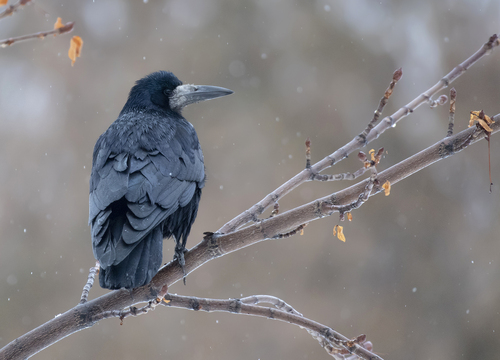 Corvo comune
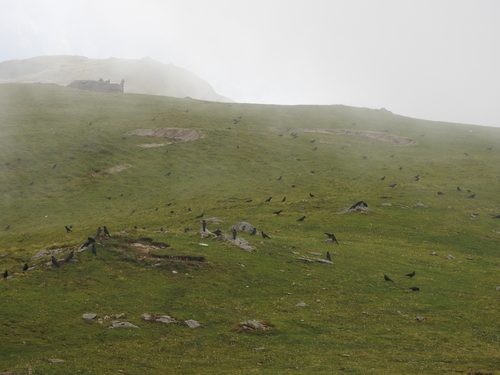 Large-billed Crow
In breve
Il modo più affidabile per separare il Corvo comune dal Large-billed Crow è la presenza di una macchia di pelle chiara e nuda alla base del becco nei Corvi comuni adulti—una caratteristica completamente assente nel Large-billed Crow di qualsiasi età. I Corvi comuni juvenili mancano di questa macchia, rendendoli molto più simili ai corvi, ma mostrano un becco più sottile e appuntito e una piumatura delle cosce più disordinata. In volo, il Corvo comune ha ali proporzionalmente più lunghe e strette e un profilo della testa più arrotondato, mentre il Large-billed Crow appare con un becco più pesante e una testa più profonda. Entrambi sono grandi corvidi completamente neri, ma un'attenta attenzione al motivo del viso, alla struttura del becco e al jizz di solito porterà all'identificazione.
Consigli di identificazione
- La pelle facciale chiara e nuda del Corvo comune adulto: Cerca la macchia biancastra e senza piume alla base del becco e davanti all'occhio—presente solo nei Corvi comuni adulti, mai nel Large-billed Crow. Questo è il miglior segno sul campo.
- Il Corvo comune juvenile manca della macchia nuda: I giovani Corvi comuni hanno un viso completamente piumato come i corvi, quindi non fare affidamento sulla macchia facciale per gli immaturi. Invece, controlla un becco più sottile e appuntito e una piumatura delle cosce più disordinata.
- Struttura del becco: Il Large-billed Crow ha un becco molto più grande, profondo e arcuato, con prominenti setole nere alla base che spesso oscurano le narici. Il becco del Corvo comune è più sottile, più dritto e appare più lungo a causa della pelle nuda, ma è in realtà meno massiccio.
- Forma della testa e jizz: La testa del Corvo comune appare più arrotondata e il viso più allungato, specialmente negli adulti con la macchia nuda. Il Large-billed Crow ha una testa più pesante e profonda e un profilo più minaccioso.
- Forma dell'ala in volo: Il Corvo comune ha ali proporzionalmente più lunghe e strette, dando un volo più galleggiante, quasi simile a quello del corvo. Il Large-billed Crow appare con ali più larghe e più potenti in volo.
- Lucentezza della piumatura: Le piume nere del Corvo comune mostrano una lucentezza blu o blu-viola alla luce del sole, mentre il Large-billed Crow ha una lucentezza viola. Il Corvo comune juvenile può mostrare una lucentezza verdognola e toni bruno-neri sul corpo.
- Piume della gola e del collo: Il Large-billed Crow ha piume della gola allungate e disordinate e basi delle piume del collo di colore grigio chiaro (visibili da vicino). Il Corvo comune ha piume della testa e del collo dense e setose, ma non disordinate.
- Piumatura delle gambe: Il Corvo comune ha piumatura più disordinata e più lasca attorno alle gambe, specialmente visibile quando è posato. Le gambe del Large-billed Crow sono meno ovviamente piumate.
- Colore dell'iride nei juvenili: I juvenili del Large-billed Crow hanno iridi blu fumose, mentre i juvenili del Corvo comune hanno marrone scuro.
- Comportamento sociale: Il Corvo comune è altamente gregario, spesso in grandi stormi e colonie. Il Large-billed Crow è più spesso in coppie o piccoli gruppi, specialmente nelle aree urbane.
- Habitat: Il Corvo comune preferisce terreni agricoli aperti e aree rurali; il Large-billed Crow è più probabile trovarlo in boschi, parchi, giardini e città.
- Vocalizzazioni: I richiami del Large-billed Crow sono più profondi e più risonanti; il Corvo comune è più rumoroso in stormi ma meno profondo nella voce.
- Gamma geografica: Il Corvo comune è Palearctico (dall'Europa alla Siberia); il Large-billed Crow è asiatico (da est a sud e sud-est asiatico). L'overlap è limitato.
- Insidie con gli immaturi: I Corvi comuni juvenili sono il rischio di confusione più probabile—cerca un becco più sottile, cosce più disordinate e comportamento di stormo. Se l'uccello è solitario, massiccio e ha un becco enorme con setole, sospetta il Large-billed Crow.
- Stagione e muta: La macchia facciale nuda nel Corvo comune si sviluppa dopo circa sei mesi; prima di allora, i giovani uccelli possono sembrare molto simili ai corvi. Alla fine dell'estate e in autunno, controlla per differenze sottili nella forma del becco e nella piumatura delle gambe se la macchia facciale è assente.
Taglia
Entrambe le specie sono grandi corvidi e possono sovrapporsi in dimensioni, ma il Large-billed Crow è generalmente l'uccello più pesante e lungo. Il Corvo comune misura in media circa 44–46 cm di lunghezza e 453,5 g di massa [wikidata], mentre il Large-billed Crow varia da 46–59 cm di lunghezza e può pesare da 450 fino a 1.000 g a seconda della sottospecie [wikipedia]. Sul campo, la dimensione da sola è inaffidabile a causa della sovrapposizione, ma il Large-billed Crow appare spesso più robusto, specialmente nel becco e nella testa.
Piumaggio
I Corvi comuni adulti sono unici tra questi due per avere una macchia di pelle chiara e nuda intorno alla base del becco e davanti all'occhio. Questo è il miglior segno di piumaggio e è presente tutto l'anno negli adulti. I Corvi comuni juvenili, tuttavia, mancano di questa macchia nuda e hanno un viso completamente piumato, rendendoli superficialmente simili al Large-billed Crow. I Corvi comuni juvenili mostrano un becco più sottile e appuntito e una leggera lucentezza verdognola nella loro piumatura nera, con toni bruno-neri sul collo posteriore, sulla schiena e sulle parti inferiori. Il Large-billed Crow di tutte le età ha un viso completamente piumato e nero, un becco grande e arcuato con prominenti setole alla base e una lucentezza viola nella piumatura. Le piume della gola del Large-billed Crow sono allungate e disordinate, e le basi delle piume del collo sono di colore grigio chiaro (di solito visibili solo da vicino o quando le piume sono gonfiate). Entrambe le specie hanno iridi marrone scuro e gambe nere, ma i juvenili del Large-billed Crow hanno iridi blu fumose. In volo, le ali del Corvo comune sono più lunghe e strette di quelle del Large-billed Crow, che appare con ali più larghe e più pesanti nel complesso.
Comportamento
I Corvi comuni sono altamente gregari, spesso visti in grandi stormi rumorosi, specialmente attorno a terreni agricoli e campagna aperta. Nido spesso in colonie (rookeries) e raramente sono visti da soli. Il Large-billed Crow è anche sociale ma tende a essere meno coloniale, spesso visto in coppie o piccoli gruppi, ed è più adattabile agli ambienti urbani. Entrambe le specie sono alimentatori audaci e opportunistici, ma il Large-billed Crow è particolarmente noto per la sua adattabilità e persistenza nelle aree urbane, a volte diventando un fastidio. La piumatura più disordinata del Corvo comune attorno alle gambe e la postura più eretta possono essere visibili quando è posato.
Habitat
Il Corvo comune è un uccello del Palearctico, che favorisce la campagna aperta, i terreni agricoli e le aree rurali dall'Europa occidentale alla Siberia orientale. È raramente trovato in foreste dense o centri urbani. Il Large-billed Crow ha una gamma asiatica molto più ampia, dal nord-est asiatico attraverso il sud e il sud-est asiatico, ed è altamente adattabile, prosperando in boschi, parchi, giardini, regioni coltivate e persino aree urbane. Nelle aree di sovrapposizione (ad es., estremo oriente della Russia), la preferenza dell'habitat può aiutare, con il Corvo comune che si attiene ad aree aperte e il Large-billed Crow che è più generalista.
Voce
Le vocalizzazioni non sono un segno primario per la separazione, ma il Large-billed Crow ha un richiamo più profondo e più risonante 'caa-haa-caa', a volte descritto come più complesso e variegato rispetto ai richiami tipici del Corvo comune. Il Corvo comune è generalmente più rumoroso in stormi, ma i suoi richiami sono meno profondi e mancano della risonanza del Large-billed Crow. In pratica, i richiami possono essere difficili da distinguere a meno che tu non sia familiare con entrambe le specie.