

Moretta dal collare vs Moretta tabaccata
Aythya collaris contro Aythya nyroca
Fai un quiz con Moretta dal collare e Moretta tabaccata
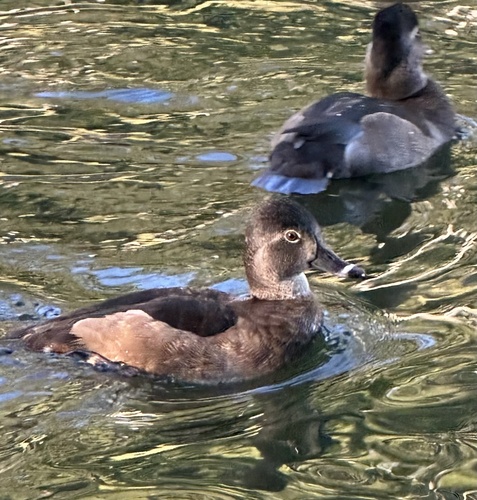 Moretta dal collare
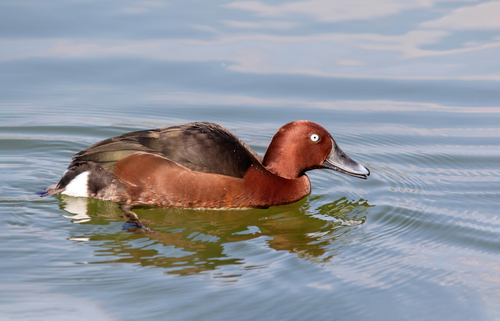 Moretta tabaccata
In breve
Il segno distintivo più affidabile per separare la Moretta dal collare dalla Moretta tabaccata è il motivo e il contrasto di colore sul becco e sulla testa: i maschi adulti di Moretta dal collare mostrano due anelli bianchi distinti su un becco grigio e una testa nera nettamente angolare, mentre i maschi di Moretta tabaccata hanno un becco scuro uniforme e una testa castano ricco. In volo, la Moretta tabaccata mostra un ventre bianco e una macchia bianca sotto le ali, in contrasto con il suo corpo castano scuro, mentre la Moretta dal collare ha una linea bianca sulle ali ma manca di parti inferiori bianche estese. Le femmine di entrambe le specie sono più opache, ma le femmine di Moretta dal collare hanno una testa più angolare e una banda chiara sul becco, mentre le femmine di Moretta tabaccata sono più marroni con un becco scuro e copritail bianco. Entrambe sono anatre tuffatrici di taglia media, ma la Moretta dal collare è notevolmente più pesante e robusta.
Consigli di identificazione
- Motivo del becco (adulti): I maschi di Moretta dal collare mostrano due anelli bianchi audaci su un becco grigio; la Moretta tabaccata ha un becco scuro uniforme. Le femmine di Moretta dal collare hanno una sottile banda chiara sul becco, le femmine di Moretta tabaccata no. Questo è visibile da vicino o in buona luce.
- Forma della testa: La Moretta dal collare ha una testa nettamente angolare e appuntita, particolarmente evidente nei maschi. La Moretta tabaccata ha un profilo della testa più arrotondato.
- Colore della testa e del corpo (maschi): I maschi di Moretta dal collare sono neri e grigi con un petto bianco; i maschi di Moretta tabaccata sono castano scuro in tutta la testa, il petto e i fianchi, con un undertail bianco.
- Colore degli occhi: Il maschio di Moretta tabaccata ha un occhio giallo, mentre la femmina di Moretta dal collare ha occhi marroni con un anello bianco attorno all'occhio. Le femmine di Moretta tabaccata hanno un occhio scuro senza anello.
- Motivo di volo (tutte le età): La Moretta tabaccata mostra un ventre bianco e una macchia bianca sotto le ali in volo, in contrasto con il corpo castano scuro. La Moretta dal collare mostra una linea bianca sulle ali ma manca di parti inferiori bianche estese.
- Copritail: La Moretta tabaccata (entrambi i sessi) ha copritail bianchi puri, spesso visibili quando l'uccello nuota o durante il corteggiamento. La Moretta dal collare non ha questa caratteristica.
- Contrasto tra petto e fianchi: I maschi di Moretta dal collare mostrano un forte contrasto tra il dorso nero e il petto bianco; la Moretta tabaccata è più uniformemente castano con meno contrasto, tranne che per il bianco dell'undertail.
- Piumaggio femminile: La femmina di Moretta dal collare è marrone-grigiastro con una banda chiara sul becco e un anello bianco attorno all'occhio; la femmina di Moretta tabaccata è marrone opaco con un becco scuro e un undertail bianco, priva dell'anello attorno all'occhio.
- Dimensioni e struttura: La Moretta dal collare è più pesante e robusta, con un petto e un collo più robusti. La Moretta tabaccata è più leggera e più compatta.
- Indicatori comportamentali: I maschi di Moretta tabaccata possono esibire arricciando la coda per mostrare una macchia bianca sotto la coda; la Moretta dal collare non mostra questo comportamento.
- Contesto dell'habitat: Se vista in Nord America, la Moretta dal collare è molto più probabile; la Moretta tabaccata è un raro vagabondo. Nel Paleartico, la Moretta tabaccata è la specie attesa.
- Voce: Solo la femmina di Moretta dal collare è descritta come emettente un suono trrr; la voce della Moretta tabaccata non è distintiva nelle note.
- Fagotti misti: La Moretta tabaccata può essere trovata in fagotti misti con altre specie di Aythya, ma è meno sociale della Moretta dal collare.
- Comportamento di corteggiamento: I maschi di Moretta tabaccata spesso arricciano le loro code per mostrare un triangolo bianco sotto la coda, un utile segno comportamentale nella stagione degli amori.
- Trappole: L'anello di collo cannella raramente visibile della Moretta dal collare non è un segno distintivo affidabile; concentrati invece sul motivo del becco, sulla forma della testa e sul contrasto delle parti inferiori.
Taglia
La Moretta dal collare è la più grande e pesante delle due, con una massa corporea media di circa 707,5 g rispetto ai 551,5 g della Moretta tabaccata [wikidata]. Questa differenza è spesso visibile sul campo: le Morette dal collare appaiono più robuste e robuste, specialmente nel petto e nel collo. La Moretta tabaccata è più compatta e leggera. Tuttavia, entrambe rientrano nell'intervallo di dimensioni tipico per le anatre Aythya di media grandezza, quindi la dimensione da sola non è sempre diagnostica a meno che non siano viste fianco a fianco.
Piumaggio
Per gli adulti, il maschio di Moretta dal collare è per lo più nero e grigio con un petto bianco, una linea bianca sulle ali e due anelli bianchi sul becco grigio. La sua testa è nera con una forma angolare evidente. L'anello di collo cannella è raramente visibile. La femmina è marrone-grigiastro con un dorso scuro, una sottile banda chiara sul becco e un anello bianco attorno all'occhio. I maschi di Moretta tabaccata sono castano scuro sulla testa, sul petto e sui fianchi, con un undertail bianco puro e un ventre bianco e una macchia bianca sotto le ali visibili in volo. Il loro becco è scuro e uniforme, e l'occhio è giallo. Le femmine sono di un marrone più opaco, con un occhio scuro e copritail bianchi. In volo, il ventre bianco e il sottogamba della Moretta tabaccata si distinguono, mentre la Moretta dal collare mostra una linea bianca sull'ala ma non lo stesso contrasto delle parti inferiori. I piumaggi giovanili e immaturi non sono descritti in dettaglio per entrambe le specie, ma il forte contrasto tra il sottogamba e il ventre nella Moretta tabaccata è un segno di volo chiave per tutte le età.
Comportamento
Entrambe le specie sono anatre tuffatrici, ma la Moretta tabaccata è meno sociale rispetto ad altre Aythya, anche se può formare grandi fagotti in inverno, spesso mescolati con altre anatre tuffatrici. La Moretta dal collare è anche gregaria durante la migrazione e l'inverno. I maschi di Moretta tabaccata possono esibirsi arricciando la coda per mostrare una macchia bianca sotto la coda. Entrambe le specie si nutrono tuffandosi e galleggiando, ma la Moretta tabaccata è nota per nutrirsi anche di notte oltre che di giorno.
Habitat
La Moretta dal collare è nativa del Nord America ed è comunemente trovata in stagni e laghi d'acqua dolce, specialmente in regioni boschive o boreali. La Moretta tabaccata è nativa del Paleartico, nidificando in una varietà di habitat umidi, spesso in aree più aperte o paludose, e a volte forma colonie su isole o siti protetti. Entrambe preferiscono l'acqua dolce, ma i loro areali non si sovrappongono tranne che come vagabondi rari.
Voce
Le femmine di Moretta dal collare emettono un rumore simile a un trrr. Nessuna vocalizzazione distintiva è descritta per la Moretta tabaccata nelle note fornite, quindi la voce non è un segno distintivo forte per la separazione.
Moretta dal collare · Moretta tabaccata · I miei uccelli difficili