

Rifleman vs Bush Wren
Acanthisitta chloris contro Xenicus longipes
Fai un quiz con Rifleman e Bush Wren
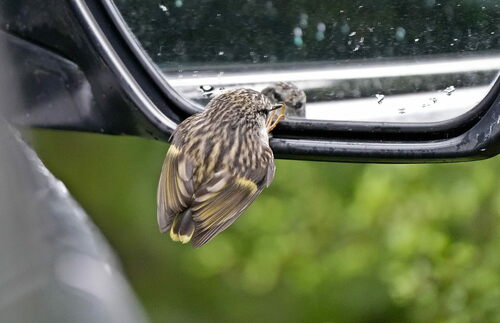 Rifleman
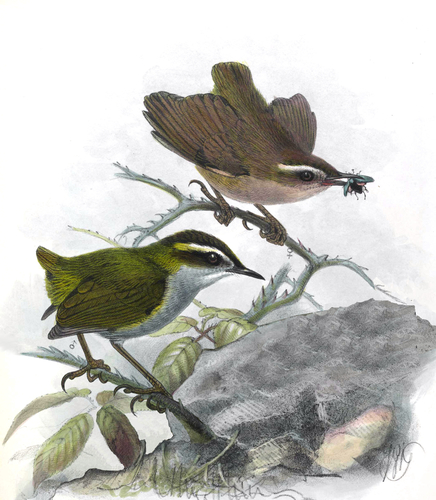 Bush Wren
In breve
Il modo più affidabile per separare il Rifleman dal Bush Wren è cercare la distintiva striscia bianca sopra l'occhio del Rifleman e le sue parti superiori di un verde più brillante, specialmente nei maschi. Il Rifleman mostra anche una coda corta e tozza e un volo rapido, simile a quello di un colibrì, mentre il Bush Wren era quasi incapace di volare e molto più opaco nel complesso. Se vedi un uccello minuscolo e attivo arrampicarsi sui tronchi degli alberi nelle foreste della Nuova Zelanda con un supercilium bianco e un volo rapido e sospeso, è un Rifleman. Il Bush Wren, ora estinto, sarebbe apparso più marrone, più sobrio e si sarebbe mosso in modo goffo o saltellando piuttosto che volando. Entrambi sono piccoli, ma il Rifleman è l'uccello più piccolo della Nuova Zelanda e visibilmente più vibrante nel colore.
Consigli di identificazione
- Striscia sopra l'occhio: Il Rifleman di tutte le età e sessi mostra un chiaro supercilium bianco, che il Bush Wren non aveva. Questo è il miglior segno sul campo, specialmente nelle foreste ombreggiate.
- Colore delle parti superiori: Il maschio Rifleman è di un verde brillante sopra con un groppone giallo-verde, mentre il Bush Wren era sempre di un marrone oliva opaco. La femmina Rifleman è più marrone ma ancora più verde del Bush Wren e mantiene il supercilium.
- Schema delle ali: Il Rifleman ha ali nere, verdi e bianche con una banda gialla sulle penne del volo. Le ali del Bush Wren erano semplici e mancavano di un forte schema o contrasto di colore.
- Coda: Il Rifleman ha una coda molto corta e tozza con una punta bianca; la coda del Bush Wren era anch'essa corta ma non così distintamente tozza o con la punta bianca.
- Forma del becco: Il Rifleman ha un becco lungo, sottile e leggermente ricurvo, particolarmente evidente nelle femmine. Il becco del Bush Wren era più corto e dritto.
- Stile di volo: Il Rifleman vola rapidamente tra gli alberi con un suono simile a un ronzio; il Bush Wren era quasi incapace di volare, muovendosi solo saltellando o con brevi e deboli voli. Se vedi un uccello volare energicamente, è un Rifleman.
- Comportamento di foraggiamento: Il Rifleman si arrampica sui tronchi e sui rami degli alberi in spirale, come un arrampicatore di alberi, poi scivola verso il prossimo albero. Il Bush Wren foraggiava più in basso, in modo più goffo, e non mostrava la stessa arrampicata verticale.
- Parti inferiori: Il Rifleman è bianco sotto, a volte con un lavaggio giallo e fianchi giallastri; il Bush Wren era più pallido sotto ma meno pulito, apparendo spesso più sporco nel complesso.
- Dimensioni: Entrambi sono minuscoli, ma il Rifleman è l'uccello più piccolo della Nuova Zelanda. In un confronto diretto, il Rifleman è leggermente più compatto e con un corpo più rotondo.
- Differenze sessuali: La femmina Rifleman è più marrone e potrebbe essere confusa con il Bush Wren, ma mostra ancora il supercilium e alcune tonalità verdastre. Il becco è più lungo nella femmina Rifleman.
- Habitat: Oggi, solo il Rifleman rimane nelle foreste della Nuova Zelanda. Qualsiasi uccello simile visto ora è un Rifleman.
- Contesto: Il Bush Wren è estinto; qualsiasi confusione è storica o nei reperti museali. Sul campo, tutte le osservazioni sono Rifleman.
- Movimento della coda: Il Rifleman può muovere la sua coda corta; il movimento della coda del Bush Wren era meno distintivo.
- Siti di nidificazione: Il Rifleman nidifica in fori negli alberi, rami o anche cavità nel terreno, ma questo è raramente visibile sul campo.
- Vocalizzazione: Non sono state descritte differenze vocali diagnostiche nelle fonti; fare affidamento su segni visivi e comportamentali.
Taglia
Il Rifleman è l'uccello endemico più piccolo della Nuova Zelanda, misurando 7–9 cm di lunghezza e pesando 6–7 g a seconda del sesso [wikipedia]. Anche il Bush Wren era molto piccolo e similmente minuto, ma il Rifleman è generalmente considerato il più piccolo. Entrambe le specie sono minuscole, ma il Rifleman è particolarmente compatto con una coda più corta e un corpo più rotondo. La differenza è sottile a mano, ma sul campo, la struttura più piccola e delicata del Rifleman e la coda più corta sono indizi utili.
Piumaggio
Per tutte le età, i maschi Rifleman sono di un verde brillante sopra con un groppone giallo-verde, ali nere e bianche con una banda gialla, e una striscia bianca sopra l'occhio. Le femmine sono più marroni sopra ma mostrano ancora il supercilium e alcune tonalità verdastre. Entrambi i sessi hanno parti inferiori bianche, a volte con un lavaggio giallo, e fianchi giallastri. La coda è nera con una punta bianca. Il Bush Wren, al contrario, era molto più opaco nel complesso: marrone oliva sopra, privo delle tonalità verdi o gialle brillanti del Rifleman e senza un supercilium bianco. Le parti inferiori del Bush Wren erano pallide ma meno bianche pulite, e il piumaggio era più uniformemente opaco. Non sono stati descritti segni specifici per età sulle ali o sul volo per nessuna delle due specie, ma lo schema delle ali del Rifleman (nero, verde, bianco con una banda gialla) è più sorprendente di qualsiasi cosa sul Bush Wren. La femmina Rifleman può essere scambiata per un Bush Wren a causa delle loro tonalità più marroni, ma il supercilium e il contrasto delle ali rimangono utili.
Comportamento
Il Rifleman è altamente attivo, spesso visto arrampicarsi sui tronchi e sui rami degli alberi in spirale, simile a un arrampicatore di alberi, e poi scivolare rapidamente verso la base del prossimo albero. Il suo volo è rapido e produce un suono simile a un ronzio. Il Bush Wren era quasi incapace di volare, muovendosi in modo goffo o saltellando piuttosto che volando, e non sarebbe stato visto fare voli lunghi o rapidi tra gli alberi. Le coppie di Rifleman sono territoriali e coprono lo stesso terreno quotidianamente, mentre il comportamento del Bush Wren era più segreto e meno energico. La differenza nella capacità di volo è un importante separatore comportamentale.
Habitat
Entrambe le specie erano endemiche della Nuova Zelanda e preferivano habitat forestali. Il Rifleman è ancora diffuso nelle isole principali, trovato nelle foreste di tawa a bassa quota (Isola del Nord) e nelle foreste di faggio ad alta quota o nelle foreste di podocarpo a bassa quota (Isola del Sud). Il Bush Wren era precedentemente presente su tutte e tre le isole principali e alcune isole offshore, ma ora è estinto. Oggi, qualsiasi uccello minuscolo che foraggia sui tronchi degli alberi nelle foreste della Nuova Zelanda è quasi certamente un Rifleman. Il Bush Wren era più ristretto in tempi recenti a isole offshore prive di predatori prima dell'estinzione.