

Calandro maggiore vs Calandro
Anthus richardi contro Anthus campestris
Fai un quiz con Calandro maggiore e Calandro
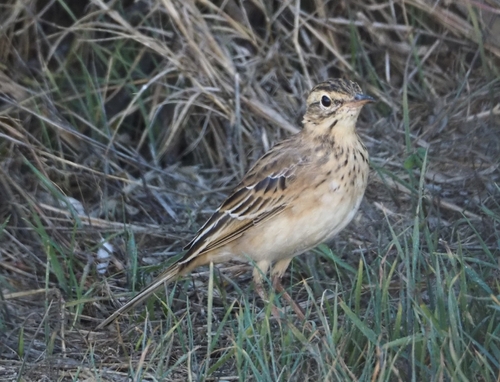 Calandro maggiore
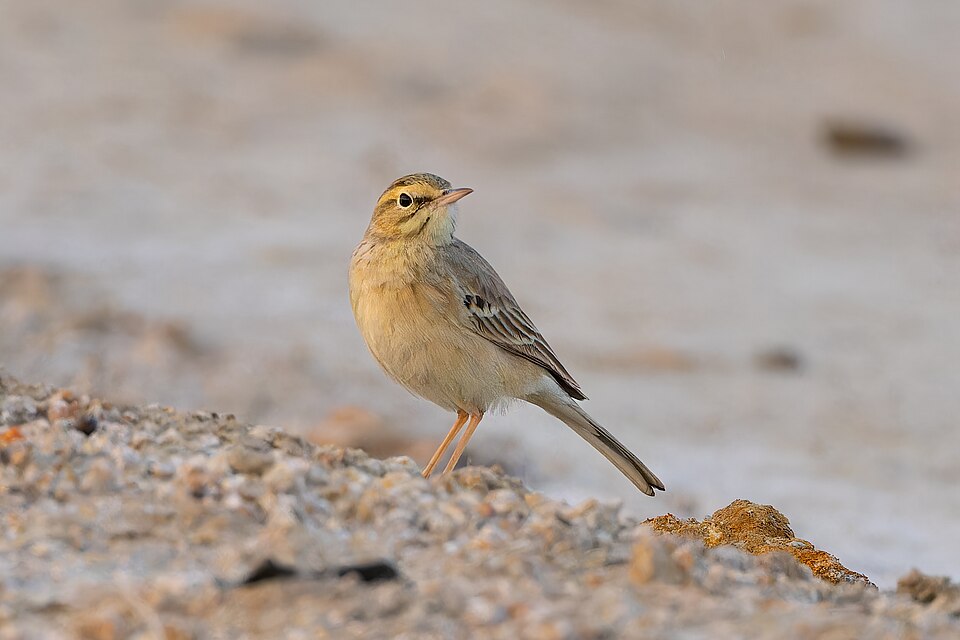 Calandro
In breve
Il segno distintivo più affidabile tra il Calandro maggiore e il Calandro è la struttura complessiva: il Calandro maggiore è notevolmente più grande, con zampe più lunghe e una coda più lunga, con un becco più pesante e lungo e una postura più eretta. Il Calandro è più piccolo, con ali e coda più corte, un becco più stretto e una postura più orizzontale. Entrambi sono pipit di colore sabbia uniforme con striature sottili, ma il Calandro maggiore mostra più striature sopra e sul petto, e ha un pattern facciale più forte e contrastante. In volo, il Calandro maggiore appare più snello e produce un richiamo più aspro e a tono più basso, mentre il Calandro è più compatto con un richiamo a tono più alto. Separarli è difficile, specialmente in autunno e inverno, ma prestando attenzione alla struttura, al pattern facciale e al richiamo si può solitamente risolvere l'identificazione.
Consigli di identificazione
- La struttura è fondamentale: il Calandro maggiore è più grande, con zampe più lunghe e una coda più lunga, con un becco più pesante e lungo e una postura più eretta. Il Calandro è più piccolo, con ali e coda più corte, un becco più stretto e una postura più orizzontale. Questa è spesso la differenza più affidabile sul campo.
- Pattern facciale: il Calandro maggiore ha un volto fortemente marcato, con un supercilium e lore chiari, e una bold striscia oculare scura, strisce moustachial e malar. Il volto del Calandro è più semplice, con meno contrasto e marcature più deboli.
- Striature: il Calandro maggiore mostra striature scure più evidenti sulla parte superiore e sul petto, mentre il Calandro è più sabbioso e meno striato, specialmente sul petto e sul mantello.
- Forma e colore del becco: il Calandro maggiore ha un becco più lungo, pesante e scuro con una base giallastra per la mandibola inferiore; il becco del Calandro è più stretto, più corto e più scuro nel complesso.
- Colore e lunghezza delle zampe: entrambi hanno zampe chiare, ma quelle del Calandro maggiore sono più lunghe e più giallo-marroni, contribuendo al suo aspetto eretto.
- Pattern della coda: il Calandro maggiore ha una coda lunga con piume esterne bianche, che possono essere visibili in volo o quando viene scossa; la coda del Calandro è più corta e meno marcata.
- Strisce alari: entrambe le specie possono mostrare due strisce alari chiare, ma questo non è un forte separatore; concentrati invece sulla struttura e sulle striature.
- Jizz in volo: il Calandro maggiore appare più snello e più ondulato in volo, con una coda e zampe che pendono; il Calandro è più compatto e diretto in volo.
- Richiamo: il Calandro maggiore produce un forte, aspro e esplosivo richiamo 'shreep'; il 'schip' del Calandro è a tono più alto e più morbido. Il richiamo è spesso il fattore decisivo in visioni ambigue.
- Canto: se udito, il canto del Calandro maggiore è una serie monotona di note ronzanti; quello del Calandro è un breve, forte e disillabico 'chir-ree chir-ree'.
- Contesto dell'habitat: nell'Europa occidentale, il Calandro maggiore è un raro vagabondo, solitamente su promontori costieri e isole in autunno; il Calandro è un riproduttore locale in territori aperti e asciutti.
- Confusione stagionale: entrambe le specie possono verificarsi insieme in inverno nel Sud Asia, e entrambe sono pipit semplici; dai sempre priorità alla struttura e al richiamo quando il piumaggio è ambiguo.
- Attenzione alla sovrapposizione con altri grandi pipit: entrambe le specie possono essere confuse con il Calandro di Blyth e il Paddyfield Pipit; se non sei sicuro, concentrati sulla combinazione di dimensioni, struttura, pattern facciale e richiamo.
- Nessun pattern alare distintivo specifico per età: nessuna delle due specie ha un segno unico per i giovani o per il primo inverno per separarli; tutte le età devono essere identificate in base alla struttura, al piumaggio e alla voce.
- Variazione: le sottospecie del Calandro maggiore variano in dimensioni e striature, ma rimangono sempre più grandi e robuste rispetto al Calandro.
Taglia
Il Calandro maggiore è il più grande e pesante dei due, con una lunghezza di 17–20 cm e un'apertura alare di 29–33 cm, rispetto ai 16 cm di lunghezza e 25–28 cm di apertura alare del Calandro. L'unica figura di massa disponibile è per il Calandro (22 g), ma il Calandro maggiore è costantemente descritto come più pesante (25–36 g). Sul campo, il Calandro maggiore appare con zampe e coda più lunghe, con un becco più robusto e lungo, mentre il Calandro è più compatto e più leggero nel complesso.
Piumaggio
Nessun segno specifico per età è descritto per le ali superiori o per il pattern di volo di entrambe le specie, quindi la separazione si basa sul piumaggio e sulla struttura complessivi. Il Calandro maggiore è più marrone sopra con striature scure più evidenti sulla parte superiore e sul petto, e ha due strisce alari chiare formate dalle punte delle copritrici alari. Il suo volto è fortemente marcato, con un supercilium chiaro, lore e una striscia oculare scura contrastante, strisce moustachial e malar. Il Calandro è più semplice e sabbioso sopra, con meno striature nel complesso, specialmente sulla parte superiore e sul petto. Il suo pattern facciale è più debole, privo dei forti contrasti del Calandro maggiore. Entrambi sono chiari sotto, ma il Calandro maggiore appare tipicamente più striato sul petto, mentre il Calandro è più pulito e uniforme. Il colore del becco può aiutare: il Calandro maggiore ha una base giallastra per la mandibola inferiore, mentre il becco del Calandro è più stretto e più scuro nel complesso.
Comportamento
Il Calandro maggiore spesso sta molto eretto, accentuando le sue lunghe zampe e coda, e può apparire snello o allungato quando cammina o corre. Il suo volo è descritto come forte e ondulato. Il Calandro è più propenso ad apparire orizzontale e compatto, sia quando è posato che a terra. In volo, il Calandro è forte e diretto, ma meno ondulato rispetto al Calandro maggiore. Entrambe le specie si nutrono principalmente a terra, prendendo insetti e alcuni semi, e entrambe possono effettuare brevi voli per catturare prede.
Habitat
Entrambe le specie preferiscono territori aperti, ma il Calandro maggiore predilige praterie basse pianeggianti, steppa e terreni coltivati fertili e umidi, specialmente nell'East Palearctic e come migrante nel Sud e Sud-est asiatico. Il Calandro si riproduce in una fascia più ampia del Palearctico, inclusi habitat aperti più secchi dal nord-ovest dell'Africa e dal Portogallo alla Siberia centrale e alla Mongolia interna, e trascorre l'inverno in Africa tropicale e nel subcontinente indiano. In Europa, il Calandro maggiore è un raro ma regolare vagabondo, spesso trovato su promontori costieri e isole, mentre il Calandro è un uccello riproduttore in territori aperti adatti.
Voce
Il Calandro maggiore produce un forte e esplosivo richiamo 'shreep', che è aspro e a tono più basso, in qualche modo simile al cinguettio di un Passero domestico. Il suo canto è una serie di note ronzanti monotone consegnate in un volo di canto ondulato. Il richiamo del Calandro è un 'schip' a tono più alto, meno aspro rispetto a quello del Calandro maggiore, e il suo canto è un breve, forte e disillabico 'chir-ree chir-ree'. Sul campo, il richiamo è un separatore chiave: quello del Calandro maggiore è più aspro e più basso, quello del Calandro è più morbido e più alto.