
Tordo sassello vs Cesena
Turdus iliacus contro Turdus pilaris
Fai un quiz con Tordo sassello e Cesena
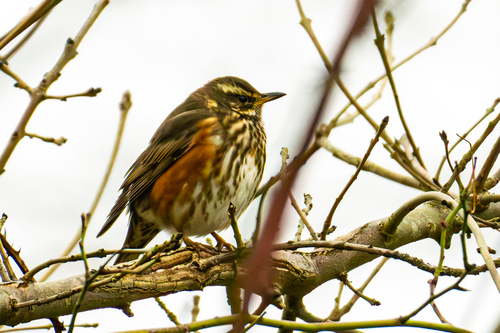 Tordo sassello
 Cesena
In breve
Il segno distintivo più affidabile per separare il Tordo sassello dalla Cesena è il supercilium (sopracciglio) audace e bianco-cremoso del Tordo sassello e i fianchi e l'underwing rosso brillante, rispetto alla testa, al dorso e alla nuca grigio ardesia distintivi della Cesena, e alla sua mancanza di rosso nel piumaggio. In volo, la Cesena mostra copritrici e ascellari bianchi sorprendenti, mentre il Tordo sassello lampeggia con l'underwing rosso. Le Cesene juvenile sono più opache ma mancano ancora del rosso del Tordo sassello. Il Tordo sassello è nettamente più piccolo e più delicato nella struttura, con un dorso marrone uniforme, mentre la Cesena è più robusta con un dorso marrone scuro e un petto pesantemente macchiato. Entrambi sono tordi settentrionali, ma la Cesena è molto più grande e spesso appare in stormi rumorosi.
Consigli di identificazione
- Il supercilium bianco-cremoso del Tordo sassello è audace e sempre presente; la Cesena non mostra mai un sopracciglio forte. Usa questo segno su uccelli posati o a terra di tutte le età.
- I fianchi e l'underwing rossi del Tordo sassello sono diagnostici in tutti i piumaggi; la Cesena non mostra mai rosso. Cerca questo specialmente in volo o quando l'uccello gonfia le piume.
- La testa, la nuca e il dorso grigio ardesia della Cesena sono unici; la testa e il dorso del Tordo sassello sono marroni uniformi. Questo è visibile in tutte le Cesene adulte e juvenile.
- Le copritrici e le ascellari bianche della Cesena lampeggiano in volo, in contrasto con l'underwing rosso del Tordo sassello. Usa questo per gli uccelli spaventati da terra o in volo sopra di te.
- Il petto della Cesena è pesantemente macchiato e bianco-buff, mentre quello del Tordo sassello è bianco con macchie scure più piccole. Le macchie del Tordo sassello sono più ristrette alla parte superiore del petto.
- Il Tordo sassello è più piccolo e snello, con un'apertura alare più corta e una struttura più delicata. La Cesena è notevolmente più robusta e con una coda più lunga.
- Il dorso della Cesena è marrone scuro con toni castano, mentre il dorso del Tordo sassello è marrone uniforme senza castano o grigio.
- Le Cesene juvenile sono più opache ma mostrano ancora la testa grigia e mancano di rosso; i Tordi sasselli juvenile assomigliano agli adulti ma possono essere leggermente più opachi, sempre con il supercilium e i fianchi rossi.
- Il pattern facciale della Cesena include lore nere e sotto-occhio, ma manca del forte sopracciglio del Tordo sassello. Il viso del Tordo sassello è più semplice a parte il supercilium.
- La coda della Cesena è nerastro e arrotondata, con un sottile bordo bianco sulle piume esterne; la coda del Tordo sassello è marrone e meno contrastante.
- Il richiamo della Cesena è un "tsak tsak" duro, spesso emesso in volo o da stormi; il richiamo in volo del Tordo sassello è un fischio chiaro. Ascolta questi quando gli uccelli volano sopra di te.
- La Cesena appare spesso in grandi stormi rumorosi, specialmente in inverno; il Tordo sassello è più spesso solitario o in piccoli gruppi.
- La Cesena sta eretta e appare robusta, mentre il Tordo sassello è più orizzontale e delicato nella postura.
- Negli stormi misti, controlla il rosso e il supercilium per il Tordo sassello, e la testa grigia e l'underwing bianco per la Cesena.
- La sovrapposizione degli habitat è comune in inverno, quindi fai affidamento sul piumaggio e sulla struttura, non sulla posizione, per la separazione.
Taglia
Il Tordo sassello è notevolmente più piccolo e leggero, con una massa media di 62 g rispetto ai 105 g della Cesena. Il Tordo sassello misura 20–24 cm di lunghezza e ha un'apertura alare di 33–34,5 cm, mentre la Cesena è più grande, lunga circa 25 cm con un'apertura alare di 39–42 cm. Sul campo, la Cesena appare più robusta e con una coda più lunga, con una postura più robusta e eretta. Il Tordo sassello è più compatto e snello, spesso apparendo più delicato e agile.
Piumaggio
Le Cesene juvenile e adulte mancano sempre di rosso nel piumaggio, mentre tutte le età del Tordo sassello mostrano fianchi e underwing rossi. In volo, le copritrici e le ascellari bianche della Cesena sono evidenti, in contrasto con l'underwing rosso del Tordo sassello. Le Cesene adulte hanno una testa, una nuca e un dorso grigio ardesia, un dorso marrone scuro e un petto pesantemente macchiato, mentre il Tordo sassello ha un dorso marrone uniforme, parti inferiori bianche con macchie scure e un forte supercilium bianco-cremoso. Le Cesene juvenile sono più opache degli adulti, con striature chiare sulle piume, ma mostrano ancora la testa grigia e mancano di rosso. Entrambe le specie hanno petti macchiati, ma quello della Cesena è più pesantemente marcato e la gola e la parte superiore del petto sono bianco-buff con striature scure audaci. Il supercilium del Tordo sassello è sempre presente e diagnostico, mentre i segni facciali della Cesena sono più diffusi, con lore nere e sotto-occhio ma senza un sopracciglio forte.
Comportamento
Le Cesene sono spesso viste in grandi stormi rumorosi, specialmente in inverno, e sono più propense a nutrirsi in campi aperti o posate in alto sugli alberi. La loro postura eretta e la tendenza a radunarsi in gruppi le rendono appariscenti. I Tordi sasselli sono più riservati, spesso trovati singolarmente o in piccoli gruppi, e possono foraggiare più in basso o in copertura più densa. Entrambe le specie sono migratorie e possono essere viste insieme in stormi misti, ma il comportamento sociale e audace della Cesena contrasta con le abitudini più ritirate del Tordo sassello.
Habitat
Entrambe le specie nidificano nel nord Europa e nel Paleartico, spesso in boschi e cespugli. In inverno, entrambe si spostano a sud e possono essere trovate in habitat simili come campi, siepi e bordi di bosco. La Cesena è più propensa a essere vista in campagna aperta e in stormi più grandi, mentre il Tordo sassello può preferire copertura più densa ed è spesso meno appariscente.
Voce
Il richiamo in volo della Cesena è un "tsak tsak" duro e ripetuto o "tsuk", spesso emesso da stormi in volo o da uccelli posati. Il richiamo in volo del Tordo sassello è una nota fischiante, e il suo canto è una breve serie variata di note chiare o trilled, meno dure rispetto ai richiami della Cesena. Il canto della Cesena è debole e raramente udito, mentre il canto del Tordo sassello è più musicale ma ancora non così ricco come quello del Tordo bottaccio. Negli stormi misti, i richiami duri della Cesena si distinguono.