

Falaropo beccosottile vs Gambecchio collorosso
Phalaropus lobatus contro Calidris ruficollis
Fai un quiz con Falaropo beccosottile e Gambecchio collorosso
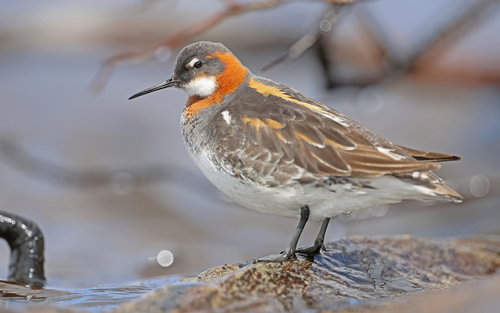 Falaropo beccosottile
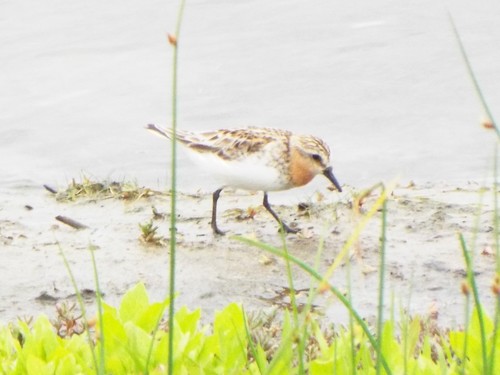 Gambecchio collorosso
In breve
Il segno distintivo più affidabile tra Falaropo beccosottile e Gambecchio collorosso è la struttura e il comportamento unici del phalarope: ha dita lobate, un becco molto fine e dritto, e spesso nuota in piccoli cerchi, anche su acque aperte—diversamente dal stint, che è un tipico piattino con zampe scure, un becco fine ma meno simile a un ago, e non nuota mai. In volo o a riposo, il Falaropo beccosottile mostra una prominente striscia bianca sulle ali (tutte le età), mentre il Gambecchio collorosso ne è privo e mostra invece un'ala semplice. Gli uccelli giovani e non in riproduzione possono essere confusi, ma il phalarope ha sempre una mascherina nera e un motivo della testa più contrastante, mentre il stint ha un volto più semplice. La dimensione è simile, ma il phalarope è leggermente più pesante e lungo. Il contesto è fondamentale: i phalaropi si trovano spesso sull'acqua, a volte lontano dalla costa, mentre i stint si attaccano a fanghi e coste.
Consigli di identificazione
- Striscia bianca sulle ali (tutte le età): Il Falaropo beccosottile mostra sempre una forte striscia bianca sulle ali in volo e a riposo; il Gambecchio collorosso non lo fa mai. Questo è un segno chiave per gli uccelli in volo o quando le ali sono spiegate.
- Dita lobate: Solo il phalarope ha dita lobate, visibili se si vedono bene i piedi (rare nel campo, ma diagnostiche se viste).
- Forma del becco: Il becco del phalarope è molto fine, dritto e simile a un ago; il becco del stint è fine ma leggermente più robusto e si assottiglia meno bruscamente. La lunghezza del becco è simile, ma quello del phalarope appare più delicato.
- Motivo del volto: Il phalarope ha sempre una distintiva mascherina nera (anche in inverno e nel piumaggio giovanile); il stint ha un volto semplice con solo una debole linea scura attraverso l'occhio, mai una macchia audace.
- Comportamento di nuoto: Il phalarope nuota spesso, a volte girando in cerchi; il stint non nuota mai e si nutre sempre camminando o correndo sulla terra.
- Contesto dell'habitat: Il phalarope è spesso visto su acque aperte, a volte lontano dalla costa; il stint è sempre su fanghi, spiagge, o sul bordo dell'acqua.
- Piumaggio da riproduzione (femmina di phalarope): Cerca un collo e un petto superiore castano ricco, un volto nero e una gola bianca nel phalarope; il stint ha un petto arancione e una V bianca sulla schiena, ma un volto semplice.
- Parte superiore giovanile: I giovani del stint hanno un mantello più contrastante con deboli linee bianche lungo la schiena; i giovani del phalarope sono più grigi sopra con una mascherina nera e mancano del motivo sulla schiena del stint.
- Proiezione primaria: Il stint ha una proiezione primaria più lunga (le punte delle ali si estendono ben oltre la coda), dando un aspetto di ali più lunghe; le ali del phalarope sono proporzionalmente più corte.
- Colore delle zampe: Entrambi hanno zampe scure, ma quelle del stint sono spesso più nere; il colore delle zampe non è un forte separatore qui.
- Dimensione e forma: Il phalarope è leggermente più pesante e lungo, con un collo e un corpo più allungati; il stint è più compatto e rotondo.
- Richiamo: Il 'whit' del phalarope è acuto e pulito; il 'stit' del stint è più rauco. Usa solo se sentito bene.
- Comportamento di gruppo: I stint sono altamente gregari, spesso in grandi stormi con altri piccoli limicoli; i phalaropi sono più spesso solitari o in piccoli gruppi, specialmente sull'acqua.
- Stile di alimentazione: Il phalarope si nutre sulla superficie dell'acqua, spesso in movimento rotatorio; il stint esplora e raccoglie rapidamente lungo il substrato.
- Contesto stagionale: Se visto lontano dalla costa o su acque profonde, è quasi certamente un phalarope. Su fanghi costieri, specialmente al di fuori dell'Artico, è probabile che sia un stint.
Taglia
Il Falaropo beccosottile è leggermente più grande e pesante (massa corporea ~37 g) rispetto al Gambecchio collorosso (~26 g), e misura tipicamente circa 18 cm di lunghezza contro i 13–17 cm del stint. Tuttavia, entrambi sono tra i più piccoli limicoli, e la sovrapposizione di dimensioni è considerevole nel campo. Il phalarope può apparire più allungato a causa del suo collo e becco più lunghi, ma la differenza è sottile a meno che non siano visti fianco a fianco.
Piumaggio
- Uccelli giovani e non in riproduzione: Il Falaropo beccosottile (tutte le età) mostra una forte striscia bianca sulle ali in volo e a riposo, e una distintiva mascherina nera su un volto chiaro; le parti superiori sono grigie e marroni con un lavaggio buffo sotto nei giovani. I giovani del Gambecchio collorosso hanno un mantello più contrastante con linee bianche più deboli lungo la schiena, ma mancano di qualsiasi striscia sulle ali; il loro volto è semplice, con una linea scura attraverso l'occhio ma non una mascherina audace.
- Piumaggio da riproduzione: La femmina di Falaropo beccosottile è grigia scura sopra con un collo e un petto superiore castano ricco, un volto nero e una gola bianca; i maschi sono simili ma più opachi. Il Gambecchio collorosso in piumaggio da riproduzione ha un petto arancione non striato bordato sotto da segni scuri, una V bianca sulla schiena e un volto semplice.
- Piumaggio invernale: Il phalarope è grigio sopra, bianco sotto, sempre con una mascherina nera; il stint è grigio semplice sopra e bianco sotto, con un volto meno contrastante e senza mascherina. Entrambi perdono la maggior parte dei toni rugginosi al di fuori della stagione di riproduzione, ma il motivo facciale del phalarope rimane distintivo.
Comportamento
Il Falaropo beccosottile è unico tra i limicoli per il suo comportamento di nuotare in modo galleggiante, spesso girando in cerchi stretti per sollevare prede—comportamento mai mostrato dal Gambecchio collorosso. I phalaropi sono a loro agio su acque aperte, anche in mare, e possono essere visti galleggiare o nutrirsi lontano dalla costa. Il Gambecchio collorosso è strettamente un uccello di riva, nutrendosi raccogliendo lungo fanghi e bordi sabbiosi, muovendosi rapidamente e raramente avventurandosi in acque più profonde. In stormi misti, i stint sono foraggiatori veloci e irrequieti, mentre i phalaropi sono più deliberati e spesso solitari o in piccoli gruppi.
Habitat
Il Falaropo beccosottile nidifica nelle zone umide artiche ma è più spesso visto in migrazione o in inverno su acque aperte, anche lontano dalla costa sugli oceani tropicali—un habitat insolito per un limicolo. Il Gambecchio collorosso nidifica nel nord-est della Russia e sverna su fanghi costieri e spiagge sabbiose nel sud-est asiatico e in Australasia, rimanendo sempre vicino alla terra. Se vedi un piccolo limicolo nuotare o lontano dalla terra, è quasi certamente un phalarope; su fanghi o spiagge, specialmente in stormi misti, è probabile che sia un stint.
Voce
Il Falaropo beccosottile emette un richiamo acuto e alto 'whit' o 'twit'. Il Gambecchio collorosso ha un richiamo rauco 'stit'. Entrambi sono acuti ma il richiamo del phalarope è più pulito e penetrante, mentre quello del stint è più ruvido. Tuttavia, i richiami non sono sempre diagnostici a meno che non siano sentiti bene.
Falaropo beccosottile · Gambecchio collorosso · I miei uccelli difficili