

Red-headed Woodpecker vs Picchio rosso maggiore
Melanerpes erythrocephalus contro Dendrocopos major
Fai un quiz con Red-headed Woodpecker e Picchio rosso maggiore
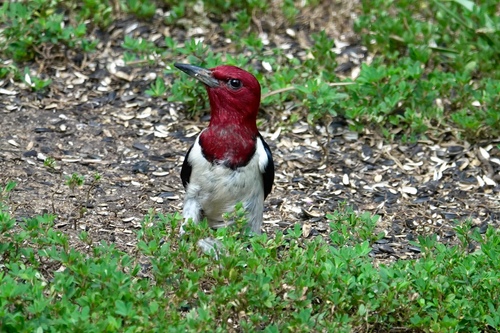 Red-headed Woodpecker
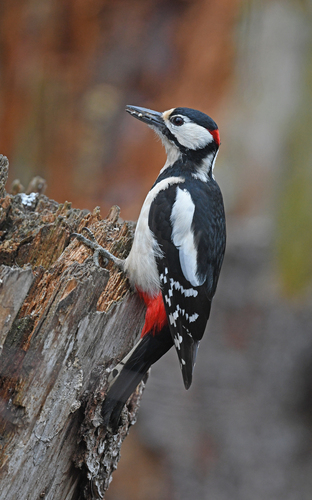 Picchio rosso maggiore
In breve
Il segno distintivo più affidabile è il colore della testa: i Picchi rossi testa rossa adulti mostrano una testa e un collo rossi profondi e solidi, mentre i Picchi rossi maggiori non hanno mai una testa completamente rossa—solo una nuca rossa (maschio) o una corona rossa (giovanile). In volo, i Picchi rossi testa rossa mostrano ampie macchie bianche sulle ali contro ali nere, mentre i Picchi rossi maggiori mostrano barrature bianche e nere sulle ali e una grande macchia bianca sulla spalla. È possibile confusione nei giovanili: i giovani Picchi rossi testa rossa hanno teste grigie, mentre i giovani Picchi rossi maggiori hanno una corona rossa e segni meno definiti. Entrambi sono picchi di dimensioni medie con alcune sovrapposizioni di dimensione, ma il Picchio rosso maggiore è mediamente più pesante. La struttura e il comportamento sono simili, quindi concentrati sul modello della testa e delle ali per un'identificazione sicura.
Consigli di identificazione
- Colore della testa (tutte le età): Il Picchio rosso testa rossa adulto ha una testa e un collo completamente rossi—nessun altro picchio di media grandezza nella sua area mostra questo. Il Picchio rosso maggiore non ha mai una testa completamente rossa: i maschi hanno una nuca rossa, le femmine non hanno rosso sulla testa e i giovanili hanno solo una corona rossa.
- Confusione nei giovanili: I giovani Picchi rossi testa rossa hanno una testa grigia (non rossa), mentre i giovani Picchi rossi maggiori hanno una corona rossa e parti superiori marroni. Se vedi una corona rossa ma non una nuca rossa o una testa completamente rossa, pensa a un giovane Picchio rosso maggiore.
- Modello delle ali in volo (tutte le età): Il Picchio rosso testa rossa mostra una grande e audace macchia bianca sulle ali (da secondarie bianche), molto colpente contro primarie nere e schiena. Il Picchio rosso maggiore mostra barrature bianche e nere sulle ali e sulla coda, con una macchia bianca sulla spalla ma mai un grande pannello bianco.
- Colore della schiena: Il Picchio rosso testa rossa ha una schiena nera solida; la schiena del Picchio rosso maggiore è nera lucida con una grande macchia bianca sulla spalla e ali barrate.
- Parti inferiori: Il Picchio rosso testa rossa ha un ventre e un sopracciglio bianchi puliti; il Picchio rosso maggiore ha parti inferiori bianche ma sempre con un'apertura/ventre rosso (adulti) o un'apertura rosa (giovanili).
- Modello della coda: La coda del Picchio rosso maggiore è barrata di nero e bianco; la coda del Picchio rosso testa rossa è nera solida.
- Modello facciale: Il Picchio rosso maggiore ha lati bianchi sul viso e sul collo, con linee nere che corrono dalla spalla alla nuca e alla base del becco. Il Picchio rosso testa rossa non ha queste strisce facciali e ha una testa rossa semplice (o grigia nei giovanili).
- Differenze sessuali: I sessi del Picchio rosso testa rossa sono identici nel piumaggio. I maschi del Picchio rosso maggiore hanno una nuca rossa, le femmine no; i giovanili di entrambi i sessi hanno una corona rossa.
- Colore del becco: Il Picchio rosso maggiore ha un becco nero ardesia; il colore del becco del Picchio rosso testa rossa non è specificato ma non è un separatore chiave.
- Dimensione: Il Picchio rosso maggiore è mediamente più pesante, ma la sovrapposizione di dimensioni è considerevole; non fare affidamento solo sulla dimensione.
- Habitat e distribuzione: Il Picchio rosso testa rossa è nordamericano, predilige il paese aperto e i boschetti; il Picchio rosso maggiore è eurasiatico, in foreste e parchi. Se visto al di fuori della loro area normale, controlla per vagabondaggio ma usa prima il piumaggio.
- Vista da posato vs. in volo: Negli uccelli posati, concentrati sulla testa e sulle parti inferiori; in volo, cerca la macchia bianca dell'ala (Picchio rosso testa rossa) contro ali barrate (Picchio rosso maggiore).
- Variazione stagionale: Entrambe le specie subiscono una muta post-nuziale, ma questo non produce confusione nei segni distintivi rilevanti per la separazione.
- Trappole comuni: Non confondere il Picchio rosso testa rossa con il Picchio rosso ventre rosso (che ha una corona e una nuca rosse, non una testa completamente rossa, e una schiena barrata). Il Picchio rosso maggiore può essere confuso con il Picchio siriano, ma non con il Picchio rosso testa rossa.
- Quando hai dubbi: Se vedi un picchio di media grandezza con una testa completamente rossa e ampie macchie bianche sulle ali, è un Picchio rosso testa rossa. Se la testa non è completamente rossa e le ali sono barrate, è un Picchio rosso maggiore.
Taglia
Il Picchio rosso maggiore è tipicamente più pesante (media 89 g contro 71,6 g per il Picchio rosso testa rossa), ma entrambi sono simili in lunghezza (Picchio rosso testa rossa: 19–25 cm; Picchio rosso maggiore: 20–24 cm). L'apertura alare è leggermente più lunga nel Picchio rosso testa rossa (42,5 cm) rispetto al Picchio rosso maggiore (34–39 cm), ma questo è sottile sul campo. La dimensione da sola non è un separatore affidabile, anche se il Picchio rosso maggiore può apparire più robusto.
Piumaggio
- Uccelli giovanili/immaturi: I giovani Picchi rossi testa rossa hanno una testa grigia (non rossa), con lo stesso audace modello di ali bianche e nere degli adulti; la macchia bianca dell'ala è estesa e colpente in volo. I giovani Picchi rossi maggiori hanno una corona rossa (non una nuca rossa come i maschi adulti), parti superiori marroni e barrature bianche e nere meno nitide sulle ali; le loro parti inferiori sono bianche sporche con un ventre inferiore rosa. La macchia bianca sulla spalla è presente ma il modello generale è meno definito rispetto agli adulti.
- Adulti: I Picchi rossi testa rossa adulti sono nettamente tricolori: testa e collo rossi solidi, schiena e coda nere, ventre e sopracciglio bianchi, e ali nere con ampi pannelli secondari bianchi. I Picchi rossi maggiori adulti sono variopinti: parti superiori nere lucide con lati bianchi sul viso e sul collo, una grande macchia bianca sulla spalla, piume di volo e coda barrate bianche e nere, parti inferiori bianche con un'apertura/ventre rosso, e (nei maschi) una nuca rossa. Le femmine non hanno rosso sulla testa. Il modello della testa non è mai completamente rosso in nessuna età o sesso.
- In volo: Il Picchio rosso testa rossa mostra una macchia bianca audace sulle ali, in contrasto con primarie nere e schiena. Il Picchio rosso maggiore mostra barrature bianche e nere sulle ali e sulla coda, con una macchia bianca sulla spalla ma senza un grande pannello bianco come il Picchio rosso testa rossa.
Comportamento
Entrambe le specie sono picchi tipici nello stile di foraggiamento e di volo: volo ondulato, arrampicarsi su tronchi e rami, e tamburellare. Non sono state notate forti differenze comportamentali nelle fonti per la separazione sul campo. Entrambi possono essere visti in boschi aperti, ma il Picchio rosso testa rossa è più probabile che venga visto in campagna aperta, inclusi alberi isolati e boschetti, mentre il Picchio rosso maggiore è più spesso in boschi continui o parchi.
Habitat
Il Picchio rosso testa rossa è nativo del Nord America temperato, nidificando in campagna aperta, bordi di boschi e boschetti in tutto il Canada meridionale e negli Stati Uniti centro-orientali. Il Picchio rosso maggiore è una specie eurasiatica, trovata in tutto il Paleartico, inclusi foreste, parchi e giardini dall'Irlanda al Giappone e parti del Nord Africa. Pertanto, la posizione è un forte indizio: in Nord America, un picchio con una testa rossa è quasi certamente un Picchio rosso testa rossa; in Eurasia, il Picchio rosso maggiore è il picchio di media grandezza predefinito con un'apertura rossa e una macchia bianca sulla spalla.
Voce
Il Picchio rosso testa rossa emette un richiamo 'tchur-tchur' e tamburella sul territorio. Le vocalizzazioni del Picchio rosso maggiore non sono descritte nelle note fornite, quindi la voce non è un separatore affidabile basato su queste fonti.
Red-headed Woodpecker · Picchio rosso maggiore · I miei uccelli difficili