

Purple-throated Mountain-gem vs White-throated Mountain-gem
Lampornis calolaemus contro Lampornis castaneoventris
Fai un quiz con Purple-throated Mountain-gem e White-throated Mountain-gem
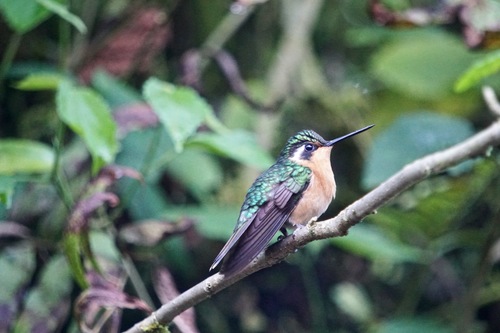 Purple-throated Mountain-gem
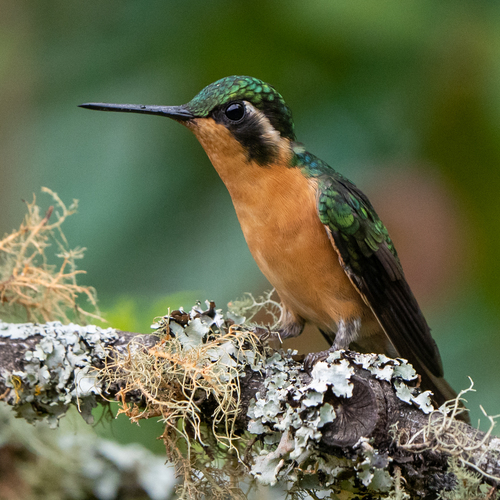 White-throated Mountain-gem
In breve
Il segno di campo più affidabile tra Purple-throated Mountain-gem e White-throated Mountain-gem è il colore della gola e del petto nei maschi adulti: i maschi Purple-throated mostrano un gorget metallico viola o porpora, mentre i maschi White-throated hanno una gola e un mento bianchi. Le femmine sono più difficili da distinguere, ma le femmine Purple-throated hanno un corpo inferiore giallo bruno a buff, mentre le femmine White-throated mostrano un corpo inferiore rugginoso molto più scuro. Entrambe le specie condividono una striscia post-oculare bianca e parti superiori verdi metalliche, ma sottili differenze nel modello della coda e nel colore del corpo inferiore possono aiutare. Gli immaturi di entrambe le specie somigliano alle femmine, quindi è essenziale prestare attenzione al colore del corpo inferiore e al modello della coda.
Consigli di identificazione
- Il colore della gola nei maschi adulti è il segno di campo migliore: I maschi Purple-throated hanno un gorget metallico viola o porpora vivido, mentre i maschi White-throated hanno una gola e un mento bianchi puliti. Questo è diagnostico in buona luce.
- Colore del petto e dell'addome nei maschi: I maschi Purple-throated mostrano un petto verde metallico brillante con fianchi e addome bronzati o grigi. I maschi White-throated hanno un petto superiore verde brillante ma un petto inferiore e un ventriglio grigi scuri distintivi.
- Corpo inferiore delle femmine: Le femmine Purple-throated hanno gole, petti e addomi giallo bruno a buff, mentre le femmine White-throated sono molto più scure sotto, con una gola e un addome rugginosi profondi. Questo contrasto è sottile ma affidabile con buone visuali.
- Copritail: Le femmine Purple-throated hanno copritail bianchi opachi a buff giallo; le femmine White-throated hanno copritail grigi con bordi bianchi o buff. Gli immaturi maschi Purple-throated mostrano copritail grigio bruno con margini bianchi opachi.
- Modello della coda: Entrambe le specie hanno penne centrali della coda verdastre, ma le femmine Purple-throated hanno penne esterne nere con punte grigie chiare, mentre le femmine White-throated hanno penne esterne più chiare. Questo è sottile e meglio visibile su uccelli posati con le code spiegate.
- Corona e parti superiori: Entrambe le specie hanno corone e parti superiori verdi metalliche, ma i maschi Purple-throated possono mostrare una fronte e una corona più bluastre o smeraldine. Questo è un segno di supporto, non primario.
- Modello facciale: Entrambi hanno una striscia bianca a buff chiaro dietro l'occhio e un volto scuro. Il volto è per lo più nerastro nelle femmine Purple-throated, e si notano guance scure nei White-throated, quindi questo non è un forte separatore.
- Becco: Entrambe le specie hanno un becco dritto di lunghezza media e nero. Le femmine di Purple-throated possono avere un becco leggermente più lungo, ma questo non è utile sul campo.
- Uccelli immaturi: Gli immaturi di entrambe le specie somigliano alle femmine adulte. Per i Purple-throated, cerca un mento/gola scuri e copritail grigio bruno con margini bianchi opachi. Per i White-throated, aspettati un corpo inferiore rugginoso e copritail grigi con bordi bianchi/buff. Non è descritto alcun modello distintivo di ala o volo per entrambe.
- Habitat e distribuzione: Se visto in Nicaragua, è Purple-throated. Nella Panama occidentale e nella Costa Rica centro-meridionale, entrambe possono verificarsi, quindi l'habitat non è diagnostico.
- Comportamento: Entrambe le specie sono territoriali sui fiori, con maschi più aggressivi. Questo non è un separatore affidabile.
- Voce: Solo il richiamo del White-throated è descritto; se senti un 'ziit' o 'ziip' alto, potrebbe supportare il White-throated, ma l'assenza di vocalizzazione non è utile.
- Stagione e contesto: Entrambe le specie sono residenti tutto l'anno nei loro territori, quindi la stagione non aiuta.
- Dimensioni: Entrambe sono quasi identiche in dimensioni e peso; non utilizzare questo per la separazione.
- Insidie: Gli uccelli immaturi e femminili sono i più difficili; concentrati sul colore del corpo inferiore e sul modello delle copritail, e utilizza il colore della gola nei maschi ogni volta che è possibile.
Taglia
Entrambe le specie sono molto simili in dimensioni e peso, con il Purple-throated Mountain-gem che misura 10–11,5 cm e pesa 4,5–6 g, e il White-throated Mountain-gem di circa 12 cm e 5–6 g. Sul campo, questa differenza di dimensioni è trascurabile e non è un separatore affidabile. Entrambi hanno un becco dritto di lunghezza media e proporzioni complessive simili.
Piumaggio
- Maschi adulti: I maschi Purple-throated Mountain-gem hanno una corona scintillante verde smeraldo a blu verdastro e un gorget metallico viola o porpora, con un petto verde metallico brillante e una coda blu nera opaca. I maschi White-throated Mountain-gem hanno una corona smeraldina ma un mento e una gola bianchi, con lati del collo e petto superiore verdi brillanti, e un petto/ventriglio grigio scuro. Entrambi hanno parti superiori verdi metalliche e una striscia bianca dietro l'occhio.
- Femmine adulte: Le femmine Purple-throated hanno parti superiori verdi metalliche brillanti, un volto per lo più nerastro e parti inferiori che sono giallo bruno a buff, con copritail bianchi opachi a buff giallo. La loro coda è verdastra centralmente con punte nere e grigie chiare sulle penne esterne. Le femmine White-throated hanno parti superiori completamente verdi brillanti, una gola e un addome rugginosi scuri, e copritail grigi con bordi bianchi o buff. La loro coda è metallica a verde bronzo centralmente, più chiara sulle penne esterne.
- Immaturi: I maschi Purple-throated immaturi somigliano alle femmine adulte ma hanno un mento/gola scuri e copritail grigio bruno con margini bianchi opachi. I White-throated immaturi non sono descritti in dettaglio, ma probabilmente somigliano alle loro femmine adulte. Non è descritto alcun modello distintivo di ala o volo per entrambe le specie, quindi la separazione si basa sul colore del corpo inferiore e della coda a tutte le età.
Comportamento
Entrambe le specie si nutrono di nettare e piccoli artropodi, con maschi che difendono i fiori e sono territoriali. I maschi Purple-throated sono più aggressivi, escludendo anche le femmine dopo il corteggiamento, mentre i maschi White-throated sono dominanti su colibrì più piccoli ma subordinati a quelli più grandi. Le femmine di entrambe le specie sono meno territoriali e si nutrono più ampiamente. Il comportamento di foraggiamento non è separabile in modo affidabile sul campo.
Habitat
Entrambe le specie si trovano negli altopiani della Costa Rica e di Panama, ma il Purple-throated Mountain-gem si estende in Nicaragua, mentre il White-throated è ristretto alla Panama occidentale e alla Costa Rica centro-meridionale. Entrambi abitano foreste di querce, bordi, radure cespugliose e giardini a elevazioni da circa 1.500 m fino alla linea degli alberi. Nelle aree di sovrapposizione, l'habitat non è un separatore affidabile.
Voce
Solo la voce del White-throated Mountain-gem è descritta: richiami acuti 'ziit' o 'ziip' e una canzone frizzante e gorgogliante. Non è disponibile alcuna descrizione vocale per il Purple-throated Mountain-gem, quindi la voce non è un separatore pratico.
Purple-throated Mountain-gem · White-throated Mountain-gem · I miei uccelli difficili