

Purple-throated Carib vs Green-throated Carib
Eulampis jugularis contro Eulampis holosericeus
Fai un quiz con Purple-throated Carib e Green-throated Carib
 Purple-throated Carib
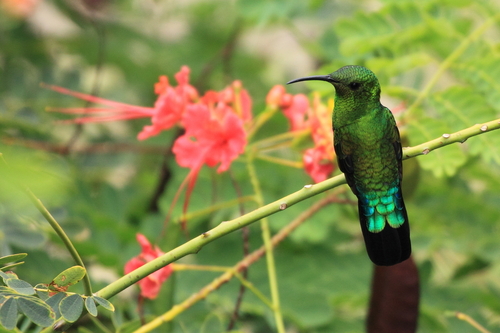 Green-throated Carib
In breve
Il segno di campo più affidabile tra Purple-throated Carib e Green-throated Carib è il colore della gola e del petto: Purple-throated Carib mostra una gola e un petto di un rosso purpureo infuocato negli adulti, mentre Green-throated Carib ha un gorget verde brillante. I Purple-throated Carib immaturi hanno una gola arancione con macchie rosse, che non si vede mai in Green-throated. Entrambe le specie sono simili in dimensioni e struttura, ma il colore della schiena e le sfumature sottili della coda possono aiutare con un'osservazione attenta. La forma del becco è simile, ma le femmine di entrambe le specie hanno becchi più lunghi e più curvi rispetto ai maschi. Sul campo, concentrati sul colore della gola e sul tono della schiena per la separazione più coerente.
Consigli di identificazione
- Colore della gola nei giovani/immaturi: Il Purple-throated Carib immaturo mostra una gola e un petto arancioni con macchie rosse—mai visto in Green-throated Carib. Questo è il miglior segno per i giovani uccelli.
- Colore della gola negli adulti: L'adulto Purple-throated Carib ha una gola e un petto di un rosso purpureo infuocato; il Green-throated Carib ha sempre un gorget verde brillante (a volte con un bordo blu nascosto nei maschi).
- Colore della schiena: Il Purple-throated Carib ha una corona e una schiena nere vellutate, mentre la schiena del Green-throated Carib è verde brillante (più opaca nelle femmine). In buona luce, questo è un segno di campo forte.
- Colore della coda: Entrambi hanno code metalliche, ma quella del Purple-throated Carib è blu-verde, mentre quella del Green-throated Carib è blu scuro fino a quasi nera in scarsa luce.
- Pancia e vent: Il Green-throated Carib ha una pancia nera e un'area ventrale verde; le parti inferiori del Purple-throated sono dominate dalla gola/petto purpureo-rossa, con meno contrasto rispetto alla pancia.
- Forma del becco: Entrambe le specie hanno un becco di lunghezza media, leggermente ricurvo nei maschi; le femmine di entrambe hanno becchi più lunghi e più fortemente curvi. La forma del becco non è un forte separatore a meno che il sesso non sia noto e le differenze siano estreme.
- Differenze sessuali: Entrambe le specie hanno un piumaggio maschio/femmina simile, ma le femmine hanno becchi più lunghi e più curvi. Non fare affidamento sul piumaggio per determinare il sesso di nessuna delle specie sul campo.
- Colore delle ali: Il Purple-throated Carib ha ali di un verde dorato brillante; il colore delle ali del Green-throated Carib non è descritto come distintivo, quindi usa questo segno con cautela.
- Dimensioni: Il Purple-throated Carib è leggermente più pesante in media, ma la sovrapposizione delle dimensioni è estesa. Usa solo come segno di supporto.
- Voce: Il Green-throated Carib emette un forte 'chup!' o 'chuwp!' e produce rumori di rattling/whirring con le ali durante le dispute. Se senti questi richiami, è più probabile che sia Green-throated, ma il silenzio non è diagnostico.
- Habitat: Se sei a Porto Rico, ci si aspetta solo il Green-throated Carib. Altrove, entrambe le specie possono verificarsi insieme, specialmente nelle Piccole Antille.
- Trappole di illuminazione: In scarsa luce, la coda blu-verde del Purple-throated e la coda blu scuro del Green-throated possono entrambe apparire scure, quindi non fare affidamento solo sul colore della coda a meno che non sia ben vista.
- Colore della schiena in ombra: La schiena verde del Green-throated può apparire più scura in ombra profonda, ma dovrebbe comunque contrastare con la schiena nerastra del Purple-throated in un confronto diretto.
- Bordo del gorget: Il bordo blu sul gorget del Green-throated Carib di solito non è visibile sul campo; non usarlo come segno primario.
- Comportamento alimentare: Entrambe le specie difendono territori floreali e si nutrono di insetti; il comportamento non è un separatore, ma il contesto (ad esempio, giardino vs foresta) può supportare un'identificazione se combinato con il piumaggio.
Taglia
Entrambe le specie sono grandi colibrì per la regione, con lunghezze sovrapposte (10.5–12 cm per Green-throated, 11–12 cm per Purple-throated). Il Green-throated Carib è leggermente più leggero in media (massa corporea 6.2 g per Wikidata), mentre i maschi del Purple-throated Carib possono raggiungere fino a 12 g. La dimensione da sola non è un segno di campo affidabile, ma un individuo molto robusto è più probabile che sia Purple-throated, specialmente se si trova all'estremità superiore della gamma di peso.
Piumaggio
La separazione tra giovani e immaturi è semplice: i giovani Purple-throated Caribs hanno una gola e un petto arancioni con macchie rosse, una caratteristica mai mostrata dal Green-throated Carib a qualsiasi età. Negli adulti, il Purple-throated Carib ha una corona e una schiena nere vellutate, una gola e un petto di un rosso purpureo infuocato, ali di un verde dorato brillante e una coda metallica blu-verde. Gli adulti del Green-throated Carib hanno una schiena verde brillante (più opaca nelle femmine), un gorget verde brillante (con un bordo blu di solito nascosto nei maschi), pancia nera, vent verde e una coda blu scuro che può apparire nera in scarsa luce. Entrambi hanno code metalliche, ma la coda del Green-throated è più scura nel complesso. Il colore della schiena è un segno secondario utile: nerastro nel Purple-throated, verde nel Green-throated. Entrambi i sessi di entrambe le specie sono simili, ma i becchi delle femmine sono più lunghi e più curvi.
Comportamento
Entrambe le specie si nutrono di nettare e piccoli artropodi, spesso difendendo territori ricchi di fiori. I maschi di entrambe le specie difendono i territori tutto l'anno, mentre le femmine lo fanno principalmente al di fuori della stagione riproduttiva. Entrambe le specie catturano insetti in volo e raccolgono dalla vegetazione. I loro comportamenti di foraggiamento e territoriale sono molto simili, quindi il comportamento non è un forte separatore.
Habitat
Entrambe le specie si trovano nelle Piccole Antille, ma il Green-throated Carib si verifica anche a Porto Rico. Il Green-throated si adatta bene a giardini e crescita secondaria vicino all'abitazione umana, mentre il Purple-throated è residente nella maggior parte delle isole delle Piccole Antille e può essere un vagabondo più lontano. La sovrapposizione dell'habitat è estesa, quindi il contesto è solo debolmente utile a meno che non si sia a Porto Rico, dove si verifica solo il Green-throated.
Voce
Il Green-throated Carib emette un forte 'chup!' o 'chuwp!' e durante le dispute, produce rumori di rattling e whirring con le ali. Nessuna vocalizzazione distintiva è descritta per il Purple-throated Carib nelle fonti, quindi i richiami sono solo debolmente diagnostici.
Purple-throated Carib · Green-throated Carib · I miei uccelli difficili