
Purple Roller vs Broad-billed Roller
Coracias naevius contro Eurystomus glaucurus
Fai un quiz con Purple Roller e Broad-billed Roller
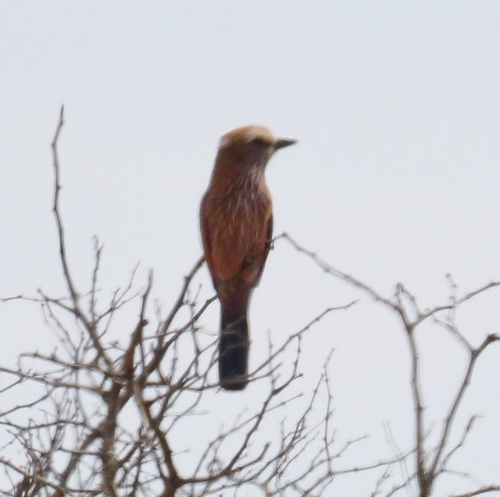 Purple Roller
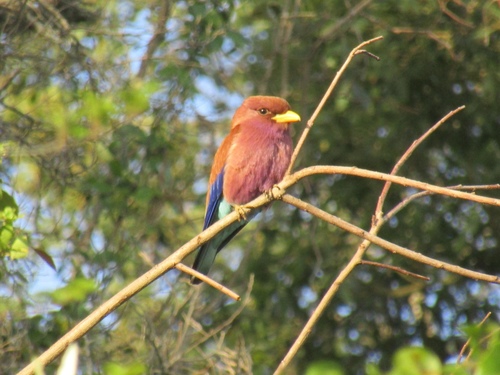 Broad-billed Roller
In breve
Il segno di campo più affidabile tra il Purple Roller e il Broad-billed Roller è la colorazione generale e l'impressione di volo: il Purple Roller appare grande, di un marrone opaco con un supercilio pallido e parti inferiori striate di porpora, mentre il Broad-billed Roller è più piccolo, con un dorso marrone caldo, un petto lilla e lampi di blu brillante sulle ali e sulla coda in volo. I giovani Broad-billed Rollers sono più opachi ma mostrano ancora blu nelle ali, a differenza del Purple Roller, che rimane più uniformemente marrone e striato. Anche il colore del becco è un separatore chiave: il Broad-billed Roller ha un becco giallo brillante e evidente, mentre il becco del Purple Roller è scuro. Nelle viste in posizione perpendicolare, cerca il supercilio bianco e la macchia sulla nuca del Purple Roller rispetto al volto semplice e ai toni caldi del Broad-billed Roller.
Consigli di identificazione
- Colorazione del volo (tutte le età): Il Broad-billed Roller mostra un blu brillante nelle ali e nella coda in volo, anche nei giovani, mentre il Purple Roller non mostra mai blu: il suo volo è complessivamente di un marrone opaco.
- Colore del becco (adulti e giovani più grandi): Il Broad-billed Roller ha un becco giallo brillante, facilmente visibile a riposo o in buona luce. Il becco del Purple Roller è scuro e meno evidente.
- Schema facciale (adulti): Il Purple Roller ha un supercilio bianco distintivo (sopracciglio) e una macchia bianca sulla nuca, entrambi assenti nel Broad-billed Roller, che ha un volto semplice e marrone caldo.
- Colore e striature delle parti inferiori (adulti): Il Purple Roller ha parti inferiori rosa-porpora con forti striature bianche. Il Broad-billed Roller ha un petto e un collo anteriore lilla, con il resto delle parti inferiori marroni e meno striate.
- Colore della corona (adulti regionali): I Purple Rollers settentrionali hanno una corona rugginosa, gli uccelli meridionali una corona verde oliva; il Broad-billed Roller ha una testa marrone caldo.
- Luminosità generale: Il Broad-billed Roller è più colorato e contrastante, specialmente in volo. Il Purple Roller è più opaco e uniforme.
- Forma della coda: Entrambi hanno code squadrate, quindi questo non è un separatore.
- Dimensione e massa: Il Purple Roller è significativamente più grande e pesante; questo può essere evidente quando visto con altri uccelli o se entrambe le specie sono presenti.
- Comportamento di posizionamento: Il Purple Roller spesso si posa molto in alto e in modo esposto, cercando prede, mentre il Broad-billed Roller può essere più inattivo e meno evidente fino al tardo pomeriggio.
- Gruppo vs solitario: I Broad-billed Rollers possono riunirsi in gruppi, specialmente quando si nutrono di insetti in sciame; il Purple Roller è più spesso solitario o in coppie.
- Habitat: Il Purple Roller predilige il thornveld secco e aperto; il Broad-billed Roller è più tipico di boschi e margini forestali più umidi.
- Voce: Ascolta il duro e ripetuto 'ka' del Purple Roller rispetto al 'k-k-k-k-k-r-r-r' stridulo del Broad-billed Roller.
- Confusione giovanile: I giovani Broad-billed Rollers sono più opachi ma mostrano ancora blu nelle ali e nella coda; i giovani Purple Roller non sono descritti in dettaglio ma dovrebbero mancare di blu e rimanere striati e marroni.
- Supercilio e macchia sulla nuca: Il supercilio bianco e la macchia sulla nuca del Purple Roller sono unici tra questi due, utili nelle viste in posizione perpendicolare.
- Indizi contestuali: Se visti in un paese molto secco e spinoso, è più probabile che sia un Purple Roller; in boschi più umidi, ci si aspetta un Broad-billed Roller, specialmente al di fuori delle regioni più secche.
Taglia
Il Purple Roller è notevolmente più grande e pesante, raggiungendo i 35–40 cm di lunghezza e una media di 168 g di peso, rendendolo il più grande roller africano. Il Broad-billed Roller è più piccolo, con 29–30 cm e 104 g. Questa differenza di dimensione è spesso evidente se entrambe le specie sono viste insieme o con uccelli di riferimento familiari, ma può essere sottile a distanza o in isolamento.
Piumaggio
- Giovane/immaturo: I giovani Broad-billed Rollers sono più opachi degli adulti, con un petto pallido, ma mostrano ancora blu nelle ali e nella coda durante il volo. I giovani Purple Rollers non sono descritti in dettaglio, ma la specie nel complesso è molto più opaca, con parti superiori marroni e parti inferiori striate di rosa-porpora, prive di qualsiasi lampo blu.
- Adulto: Il Purple Roller è complessivamente di un marrone opaco con un supercilio bianco, una macchia bianca sulla nuca, una corona rugginosa o verde oliva (a seconda della regione) e parti inferiori striate di rosa-porpora. Le ali sono lunghe e arrotondate, ma mancano di blu. Gli adulti del Broad-billed Roller hanno un dorso e una testa marrone caldo, un collo anteriore e un petto lilla, e blu brillante nelle ali e nella coda, particolarmente evidente in volo. Il becco è giallo brillante nel Broad-billed, scuro nel Purple Roller.
- Volo: Il Broad-billed Roller è sorprendente in volo a causa del forte contrasto tra il dorso marrone e le ali/coda blu, mentre il Purple Roller rimane opaco e marrone senza blu. Entrambi hanno code squadrate, ma solo il Broad-billed mostra blu.
Comportamento
I Purple Rollers spesso si posano in modo evidente in cima agli alberi spinosi o ai pali, cercando prede, e sono territoriali, a volte inseguendo aggressivamente altri uccelli. Il loro volo di esibizione comporta dondolamenti e rotolamenti con un richiamo rauco. I Broad-billed Rollers sono più inattivi durante il giorno, diventando attivi nel tardo pomeriggio per nutrirsi di insetti in sciame, a volte in grandi gruppi. Bevono in volo come le rondini e sono meno probabili da vedere da soli. Entrambe le specie possono inseguire gli intrusi, ma la ricerca di cibo in gruppo è più tipica del Broad-billed.
Habitat
Il Purple Roller preferisce il thornveld secco e il paese aperto, spesso in regioni aride o semi-aride, ed è più probabile trovarlo in habitat più secchi. Il Broad-billed Roller nidifica in tutta l'Africa tropicale e Madagascar, evitando solo le regioni più secche, ed è associato a boschi più umidi e margini forestali. Durante la stagione secca, i Broad-billed Rollers migrano verso zone equatoriali più umide. È possibile un sovrapposizione degli habitat, ma il Purple Roller è un uccello di paesi più secchi e aperti, mentre il Broad-billed Roller predilige aree boschive più umide.
Voce
Il Purple Roller ha un richiamo duro e stridente 'ka' o 'gaa', ripetuto rapidamente e uniformemente, spesso emesso durante i voli di esibizione. Il richiamo del Broad-billed Roller è un suono ringhiante 'k-k-k-k-k-r-r-r-r-r'. Entrambi sono rumorosi, ma la voce del Purple Roller è più dura e monotona, mentre quella del Broad-billed è più stridula o ringhiante.
Purple Roller · Broad-billed Roller · I miei uccelli difficili