

Ballerina bianca vs Prispolone
Motacilla alba contro Anthus trivialis
Fai un quiz con Ballerina bianca e Prispolone
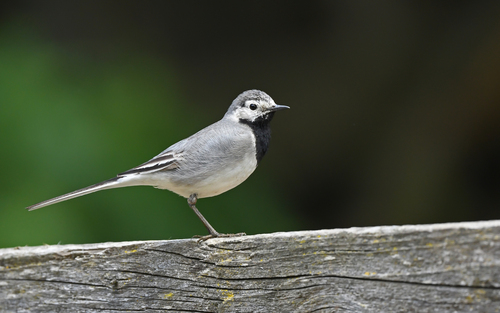 Ballerina bianca
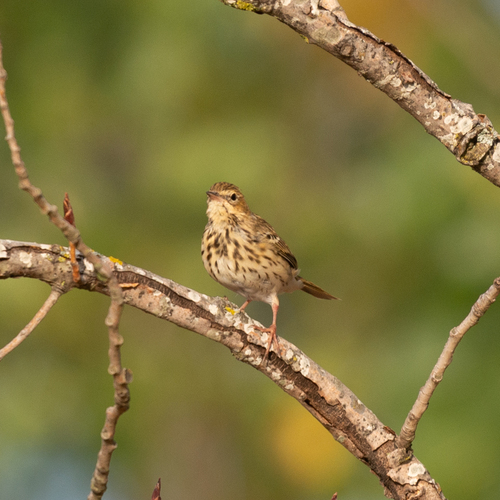 Prispolone
In breve
The most reliable way to separate Pied/White Wagtail from Tree Pipit is by structure and behavior: wagtails have a longer, constantly wagged tail and a slimmer, more upright stance, while pipits are chunkier with a heavier bill and rarely wag their tails. In flight, wagtails show strong black-and-white contrasts on the wings and tail, while Tree Pipits are more uniformly brown and streaked. Juvenile and first-winter wagtails, especially the British 'Pied' form, can appear darker above, but still lack the pipit's streaked back and breast. Perched, wagtails look sharper and more monochrome, pipits softer and more patterned. If you see a bird in a tree, check for the pipit's heavier bill and streaked underparts versus the wagtail's cleaner, whiter look.
Consigli di identificazione
- Tail length and wagging: Wagtails have a noticeably longer tail that is constantly wagged; Tree Pipits have a shorter tail and rarely wag it. This is reliable at all ages and seasons.
- Wing and tail pattern in flight: Wagtails show bold black-and-white contrasts on the wings and especially the tail (white outer tail feathers); Tree Pipits are brown and streaked above, with no strong wing or tail contrast. This is especially useful for juveniles and first-winters.
- Underparts: Tree Pipit has a buff breast with clear dark streaks/spots and a white belly; wagtails have cleaner, whiter underparts with little or no streaking, though some subspecies or ages may show a dark bib or breast patch.
- Back and upperparts: Tree Pipit is brown above with dark streaks; wagtails (especially 'Pied') can be dark grey or black above, but never streaked like the pipit. Even juvenile wagtails lack the pipit's strong streaking.
- Bill shape: Tree Pipit has a heavier, broader-based bill; wagtail's bill is finer and more pointed. This is subtle but can help with good views.
- Perching behavior: Tree Pipits often perch in trees or on wires; wagtails are more likely to be seen on the ground, low perches, or near water.
- Song flight: Only Tree Pipit performs the parachuting song flight from a tree, with a drawn-out, descending song. Wagtails do not display this way.
- Habitat: Wagtails are common in open, wet, or urban habitats; Tree Pipits are found in open woodland, heath, or areas with scattered trees and low scrub, rarely in towns.
- Posture: Wagtails stand more upright and look slimmer; pipits are chunkier and more horizontal.
- Sex and season: Male wagtails in breeding plumage are especially crisp black-and-white; females and juveniles can be greyer or duller, but still lack pipit streaking. Tree Pipit shows little seasonal change, always streaked.
- Voice: Tree Pipit's call is a strong 'spek'; wagtail's call is a high 'tsit' or 'chissick'.
- Confusion risk: Juvenile wagtails, especially 'Pied', can appear dark above and may be confused with pipits at a glance, but always lack the pipit's streaked back and breast.
- Ground vs tree: If the bird is feeding on the ground in the open, wagtail is more likely; if singing from a tree or parachuting down, it's a Tree Pipit.
- Feeding behavior: Wagtails walk or run rapidly, often chasing insects; pipits walk or hop more slowly.
- Local abundance: In urban or wetland settings, wagtails are much more likely; in open woodland with scattered trees, especially in spring/summer, check for Tree Pipit.
Taglia
Tree Pipit is slightly heavier (body mass ~23.5g [wikidata]), with a chunkier build and heavier bill. Pied/White Wagtail is slimmer and more delicate overall, with a longer tail relative to body size. Both are small passerines, but the wagtail appears more elongated and less robust than the pipit.
Piumaggio
Juvenile and first-winter Pied/White Wagtails (especially the British 'Pied' form) can be quite dark above, but they never show the strong brown streaking of Tree Pipit. Wagtails of all ages have a sharp contrast between black, grey, and white in the wings and tail, especially obvious in flight; the white outer tail feathers are diagnostic. Tree Pipit is brown above with dark streaks and has a buff breast with clear blackish spots or streaks, fading to a white belly. The wagtail's underparts are much cleaner, usually white with little or no streaking except for possible dark bib or breast patches in some plumages. In winter, wagtails may show more grey or dull tones, but never the pipit's streaked, warm-buff look. Sex differences are minor in the field for both species, but male wagtails in breeding plumage can be especially crisp black-and-white.
Comportamento
Pied/White Wagtails are almost always seen wagging their long tails up and down, both when feeding and when perched. They often walk or run on the ground with a quick, purposeful gait, and are frequently found near water, open ground, or urban areas. Tree Pipits are less likely to wag their tails and tend to walk or hop in a more subdued fashion. They are much more likely to perch in trees or on wires, and their display flight (rising and parachuting down with a drawn-out song) is diagnostic. Wagtails rarely perch high in trees and are more often seen on the ground or low perches.
Habitat
Pied/White Wagtail is highly adaptable, found in open country, urban areas, near water, and even on buildings. It is not restricted to woodland. Tree Pipit, in contrast, breeds in open woodland, heath, or areas with scattered trees and low scrub, avoiding urban areas and preferring places with a mix of grass, bracken, and medium-sized trees. If the bird is in dense woodland or open moorland with scattered trees, Tree Pipit is more likely; wagtails are more likely in open, wet, or human-modified habitats.
Voce
Tree Pipit's call is a strong, sharp 'spek', quite different from the wagtail's more delicate, high-pitched calls. The Tree Pipit's song flight is distinctive: it rises from a tree, then parachutes down with a drawn-out, descending song. Pied/White Wagtail has a simple, high-pitched 'tsit' or 'chissick', and does not perform a song flight like the pipit. If you hear a strong, repeated 'spek' or see a parachuting song flight, it's a Tree Pipit.