

Gabbiano di Pallas vs Gabbiano corso
Ichthyaetus ichthyaetus contro Ichthyaetus audouinii
Fai un quiz con Gabbiano di Pallas e Gabbiano corso
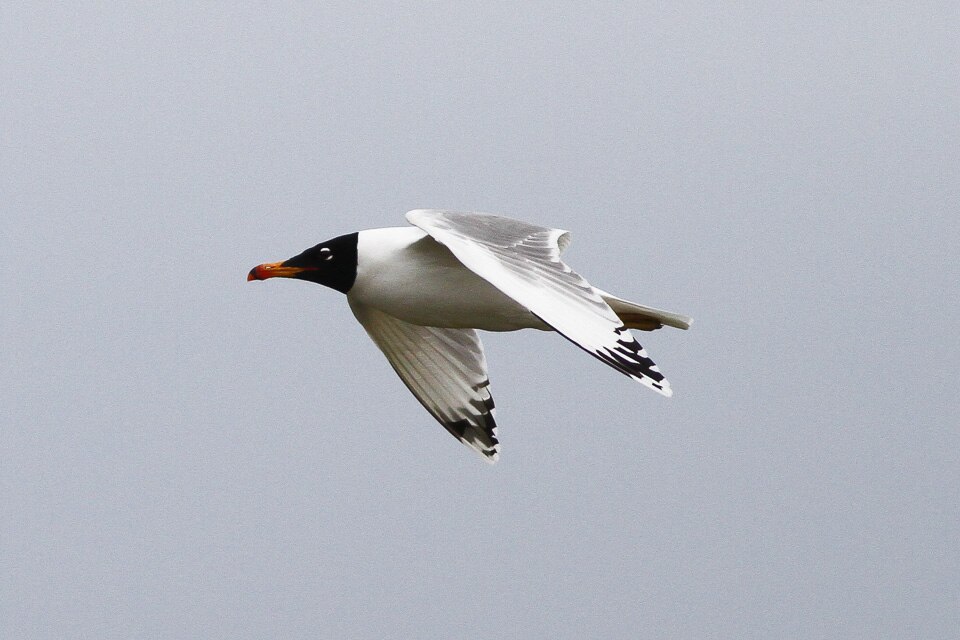 Gabbiano di Pallas
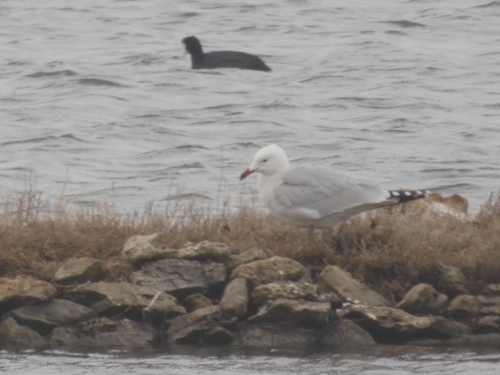 Gabbiano corso
In breve
The most reliable separation between Pallas's Gull and Audouin's Gull is the combination of size and head pattern: adult Pallas's in summer have a bold black hood, while Audouin's never shows a full black hood at any age. In all plumages, Pallas's Gull is much larger and more robust, with a heavier bill and longer legs. In flight, note the wingtip pattern: Pallas's shows large white 'mirrors' at the wingtips, while Audouin's has a 'string of pearls'—small white spots. Leg and bill color also differ: Pallas's has yellow legs and an orangey-yellow bill with a red tip, while Audouin's has grey-green legs and a short, deep red bill. Immature birds can be tricky, but Pallas's is always bulkier with a darker mask through the eye.
Consigli di identificazione
- Size and bulk: Pallas's Gull is much larger and heavier than Audouin's. If you see a truly massive gull with a heavy build, favor Pallas's.
- Head pattern (adults, summer): Only Pallas's Gull shows a full black hood in breeding plumage. Audouin's never has a black hood—its head remains white or only faintly smudged.
- Head pattern (non-breeding and immatures): Pallas's always shows a dark mask through the eye, even when not hooded; Audouin's never shows this mask, remaining pale-headed.
- Bill color and shape: Pallas's has a long, orangey-yellow bill with a red tip; Audouin's has a short, stubby, deep red bill. Bill color is a strong separator in adults.
- Leg color: Pallas's Gull has yellow legs; Audouin's has grey-green legs. This is reliable in adults but can be hard to see at distance.
- Wingtip pattern (adults): In flight, Pallas's shows large white 'mirrors' at the wing tips; Audouin's shows a 'string of pearls'—a row of small white spots. This is best seen in good light when the bird is banking or landing.
- Upperparts: Both are grey-backed, but Pallas's is a shade paler and appears more massive overall.
- Juvenile/immature confusion: Immature Pallas's can look similar to other large gulls but is always bulkier and shows a darker head mask; Audouin's immatures are slimmer and lack any hood or mask.
- Structure: Pallas's is longer-legged and heavier-billed than Audouin's. Audouin's looks more delicate and has a shorter primary projection relative to its size.
- Habitat context: If seen well inland, Pallas's is far more likely. Audouin's is almost always strictly coastal or pelagic.
- Behavior: Audouin's rarely scavenges and often feeds at night out at sea; Pallas's behaves more like a typical large gull, often seen loafing or scavenging.
- Geographic range: Audouin's is restricted to the Mediterranean and nearby coasts; Pallas's has a much broader Eurasian range.
- Voice: If heard, Pallas's has a deep, harsh 'aargh' cry. Audouin's voice is not described here, so absence of this call may help but is not definitive.
- Flock composition: If seen with other gulls, Pallas's will stand out for its size; Audouin's blends in more with medium-sized gulls.
- Pitfalls: In poor light or at great distance, size and head pattern are most reliable. Beware of immature large gulls lacking full adult features—focus on bulk, head mask, and bill/leg color when possible.
Taglia
Pallas's Gull is dramatically larger than Audouin's Gull. With an average body mass of about 1394 g (males up to 1600 g), Pallas's is the world's largest black-headed gull and the third largest gull overall. It measures 55–72 cm in length with a 142–170 cm wingspan. Audouin's Gull is a large gull by Mediterranean standards but is noticeably smaller and more slender than Pallas's, lacking its massive bulk and heavy proportions. If seen together, Pallas's towers over Audouin's.
Piumaggio
- Juvenile/Immature (first-winter to third-year): Pallas's Gull immatures rapidly acquire grey upperparts and show a dark mask through the eye, a vestige of the adult hood. Audouin's immatures do not develop a hood or mask; their head is paler and more uniform. Both take four years to reach adult plumage, but Pallas's always appears bulkier and darker-headed at distance.
- Adult breeding: Pallas's Gull is unmistakable with a full black hood, grey wings and back, large white mirrors at the wingtips, yellow legs, and an orangey-yellow bill with a red tip. Audouin's adult is much plainer-headed (white with a faint smudge at most), has a short, deep red bill, grey-green legs, and a distinctive 'string of pearls'—small white spots—on the wing tips instead of large mirrors.
- Non-breeding adult: Pallas's loses the full hood but retains a dark mask through the eye; Audouin's remains pale-headed with no dark mask.
Comportamento
Pallas's Gull is a typical large gull, often seen in mixed flocks, and can be found both inland and along coasts. It is more likely to scavenge and is less strictly tied to marine fish than Audouin's. Audouin's Gull is a specialist fish eater, rarely scavenges, and is strictly coastal and pelagic—often feeding at night far out at sea or slowly patrolling near beaches, sometimes dragging its legs to increase drag. Audouin's is less likely to be seen inland or away from the sea.
Habitat
Pallas's Gull can be found in a wider range of habitats, including large inland lakes, rivers, and coastal areas across Eurasia. Audouin's Gull is restricted to the Mediterranean, western Saharan Africa, and the Iberian Peninsula, breeding on small islands and sticking closely to marine environments. Audouin's is highly localized and rarely wanders far from its breeding range, while Pallas's can be more widespread.
Voce
Pallas's Gull has a deep, harsh 'aargh' cry, typical of large gulls. Audouin's vocalizations are not described in the provided notes, so voice is not a reliable separator here unless the deep, harsh quality of Pallas's is noted.
Gabbiano di Pallas · Gabbiano corso · I miei uccelli difficili